

Where The Hunt For Gollum Movie Fits In Tolkien's Lord Of The Rings Timeline
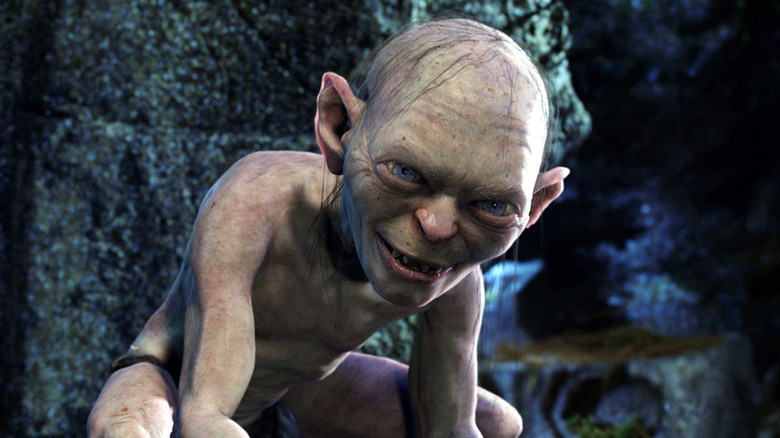
Expect plenty of buzz when "The Lord of the Rings: The Hunt for Gollum" releases in theaters in late 2027, with Andy Serkis back to direct the film (and play Gollum, of course). Some of his "Lord of the Rings" co-stars are also in the mix to possibly return as several of the characters we might see in the movie. Indeed, the list of characters who could come back is fairly extensive, partly because of the time period "The Hunt for Gollum" is set in — essentially, between "The Hobbit" and "The Lord of the Rings" movies.
That's right, this isn't like Amazon Studios' "The Rings of Power" series, which takes place thousands of years before Peter Jackson's iconic trilogy. Also, if you're being technical, "The Hunt for Gollum" will probably overlap and run parallel to "The Fellowship of the Ring" part of the time, too. A lot is going on here, for sure. The good news is that there's a decent amount of literary source material from J. R. R. Tolkien that Serkis, Jackson, and the rest of the crew will theoretically use to stitch a story together.
Let's break down the timeline, look at the source material the new movie will pull from, and take a step back and see if this idea really has the legs to go the distance (or not).
The Hunt for Gollum comes between (and overlaps) two trilogies
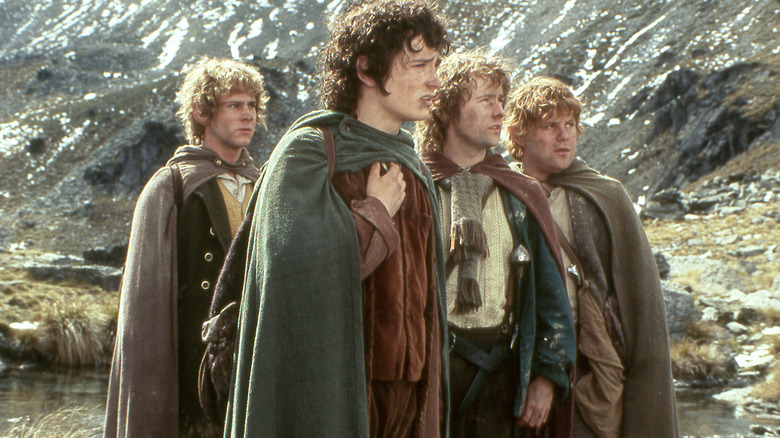
The source material is there for a Gollum-focused story, but it's scattered, thanks to J. R. R. Tolkien's typical ensemble writing style. Nevertheless, that seems to be the direction we're going with the new movie. Rather than look at things through the lens of a larger group or time period, "The Lord of the Rings: The Hunt for Gollum" is going to focus on a single character, the titular ring-obsessed wretch known as Gollum (or Sméagol in his earlier life).
When news first broke about the movie, Andy Serkis told Deadline that the film will explore Gollum's psychology. Peter Jackson added, "We really want to explore [Gollum's] backstory and delve into those parts of his journey we didn't have time to cover in the earlier films." Similarly, "Lord of the Rings" writer Philippa Boyens (who is returning for the new movie) was asked by The Playlist about the plot and the characters it could bring back, and she said: "It does center on Gollum/Sméagol, so it's a little bit of an origin story going on, but when you delve into it [...] you see the layers and layers of story that's underneath there and how interconnected they all are." The Playlist added that the movie "essentially runs parallel to the events of the 'The Fellowship Of The Ring.' Specifically, the film is set after Bilbo's 111th birthday party and before the Mines of Moria."
When you put all of this together, you get a story that is doing three things at once. It's kind of set up as a sequel to "The Hobbit, but at the same time, it functions as a prequel to "The Lord of the Rings." It also overlaps with the first half of the first film in that trilogy.
What is the source material for The Hunt for Gollum?
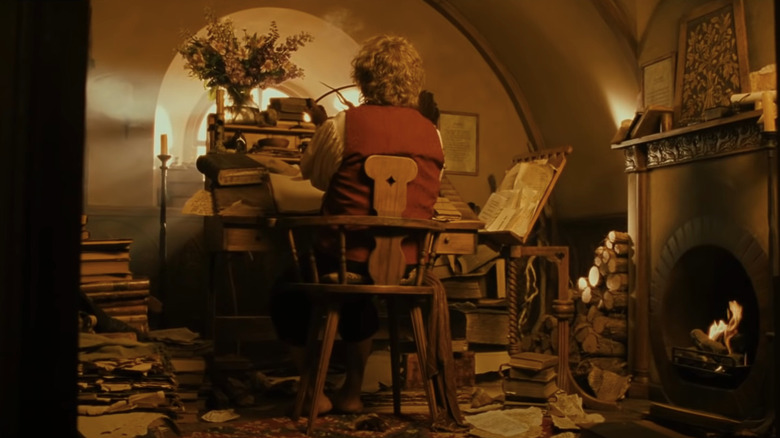
Philippa Boyens' comment about "layers" of J. R. R. Tolkien's source material is important. The author often created multi-layered stories that he would reference at different points in his writings. That's how they turned the 200-page book "The Hobbit" into a full-blown trilogy — by roping in stories from other areas of Tolkien's legendarium.
In that sense, there is a lot for Peter Jackson and company to pull from, starting with Gollum's basic story. We meet him in the riddle game with Bilbo in "The Hobbit." After that, he comes up in a few conversations before he re-enters the story in "The Two Towers." In that gap, there are plenty of hints regarding his whereabouts and the people interacting with him. If you're specifically looking for information that fills that Gollum-sized hole between the events in "The Hobbit" and "The Lord of the Rings," there are two sections of text in "The Fellowship of the Ring" that will likely be the central source material for the upcoming film.
Gandalf and Frodo's conversation about Gollum's past
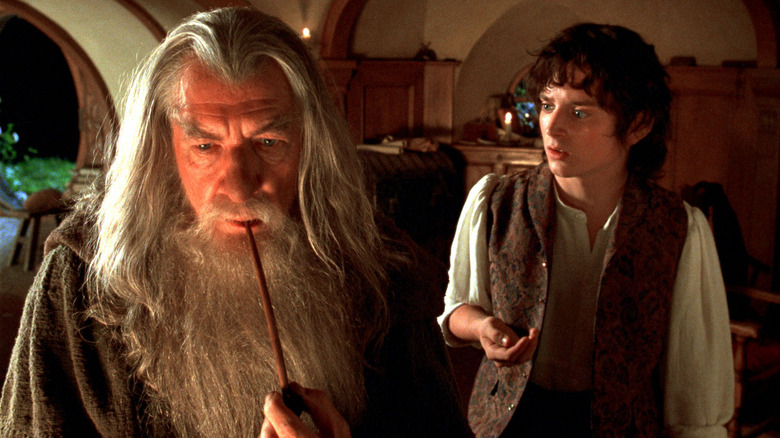
Early in "The Lord of the Rings: The Fellowship of the Ring," Gandalf (Ian McKellen) shows up and tells Frodo (Elijah Wood) all about his Ring. In the book version of that crucial set-up, the Wizard gives Frodo some critical backstory on how Gollum got the One Ring. The explanation gives us some key revelations. We find out about how Gollum's backstory starts with finding the Ring, killing his friend for it, and getting cast out from his family home.
This is a crucial part of the "psychological" element, as it provides background on Gollum's uniquely warped and unstable character. This shifts the perspective from the monstrous terror in "The Hobbit" to the pitiably addicted creature we meet in "The Lord of the Rings." J. R. R. Tolkien also gives us bits and pieces about Gollum's early origin that they could use to start a "The Lord of the Rings: The Hunt for Gollum" movie before getting into the post-Bilbo's birthday stuff.
In this passage, Gandalf also reveals that Gollum left the Misty Mountains after Bilbo took the Ring. He tracked the Hobbit through Mirkwood to the Lonely Mountain, found out the thief had already headed back home, and tried to follow him to the Shire. On his way there, he was pulled off track by another calling, one coming directly from the Dark Lord Sauron himself.
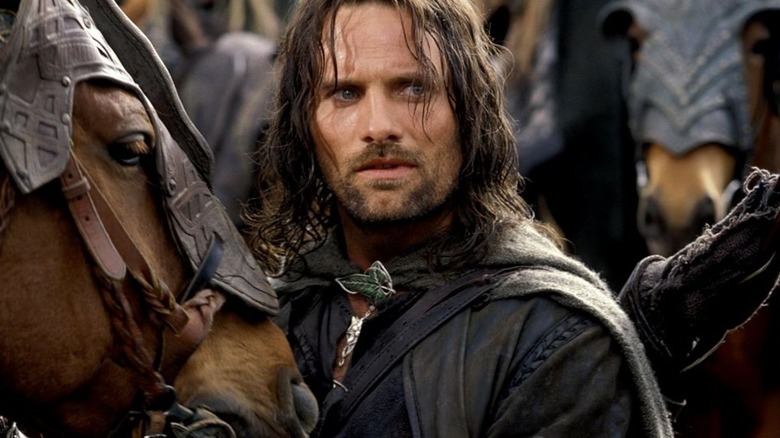
This is where the "hunt" part of the story takes place. First the Wood-elves track Gollum. Then, Gandalf recruits Aragorn to chase his trail straight toward Mordor. Eventually, the Ranger captures Gollum and embarks on a grueling return journey to bring him back to the Woodland realm. There, in a frighteningly out-of-character part of the story, Gandalf interrogates and even tortures him to learn about what he's been up to.
Gandalf's revelations at the Council of Elrond
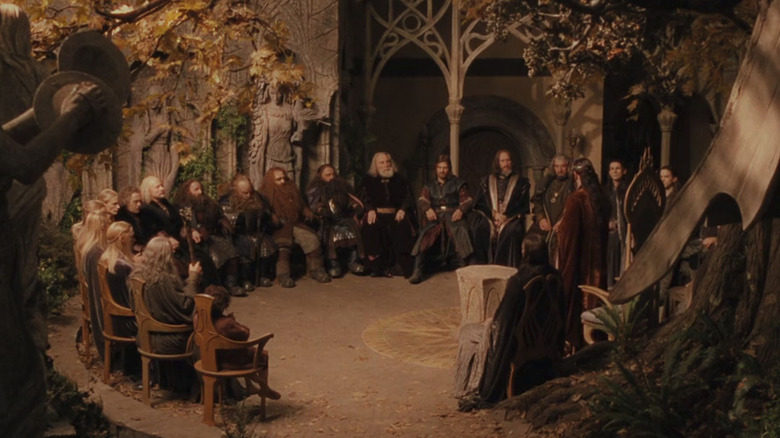
The rest of the "The Lord of the Rings: The Hunt for Gollum" story, as it pertains to Gollum, is recounted at the Council of Elrond, where, in the book, Legolas tells everyone that Gollum has escaped. The Elven princeling shares how his guards were ambushed by Orcs, and Gollum escaped by hiding in a tree and then running off with his liberators. This sets the stage for Gollum to track the Fellowship of the Ring after they leave Rivendell. He chases them right into Moria, through Lothlorien, and down the Great River, until Frodo and Sam finally catch and tame him early in "The Two Towers."
Another important area of source material for the "Hunt for Gollum" story is in the appendices for "The Return of the King," which talks about a younger Aragorn, who does the hunting of said Gollum. In other areas, he talks about Sauron's shift from his guise as the Necromancer and his slow build up in Mordor before the War of the Ring — again, something that is highly relevant to Gollum's inter-trilogy story.
While it isn't obvious where the new movie might end, it's clear that there's plenty of Gollum's story that takes place either between the two trilogies or during the main narrative of "The Lord of the Rings." The movie can take its time moving through his Middle-earth-hopping adventures, from Mirkwood to Mordor and back again. Who knows, maybe they'll even use some artistic liberty to bring a popular fan theory to life that suggests Gollum does reach the Shire and even murders Frodo's parents.
Is The Hunt for Gollum a good idea for a standalone movie?
There's clearly enough source material for a "The Lord of the Rings: The Hunt for Gollum" movie. If the writing team is clever, they can stitch different aspects of J. R. R. Tolkien's writings into a coherent story that takes place after "The Hobbit" and right into "The Lord of the Rings." But is it a good idea to do that in the first place?
There's a reason all three films of the "Lord of the Rings" trilogy are in the top 11 of IMDB's top 250 movies of all time list. Each one is spectacular in its own way, and the magic that made that possible was, in many ways, a unicorn event. It's not every day that you get the right people with the right inspiration at the right time with the right resources.
Even though they weren't terrible, the marked step down in quality with "The Hobbit" movies is a great example of how you can't just recreate the same magic as the original trilogy by putting similar ingredients together a decade later.
And yet, that's exactly what they're doing a quarter of a century after the first three films came out. We obviously won't know what we're getting until the end of 2027, but assuming that the formula will work again is a big ask. Will Andy Serkis and company have the patience to blend practical and video effects the way they did back in the day, or will they lean too much on CGI, like they did in "The Hobbit?" Can they get the right cast members back? Can they recast or add the right new ones? For fans of "The Lord of the Rings" films, it's an uncomfortable question — and one they won't get an answer to for a long while yet.