

What Is Astrophage From Project Hail Mary?

Contains spoilers for "Project Hail Mary"
One of the most important elements of the stunning space adventure movie "Project Hail Mary" is the tiny life form called Astrophage. This is the alien microbe that both threatens humanity and provides the source for its salvation. But what is Astrophage, exactly?
Astrophage is a microscopic form of life that lives on the surface of stars like a mold or an algae. It can travel for light years through space, attracted to light like the proverbial moth to a flame. It absorbs light in vast quantities, which is why stars are its food of choice. This diet of starlight gives the lifeform its name: Astrophage means "star eater" in Latin.
The microbe uses stored energy to move through space at up to 0.92 times the speed of light. This happens by converting its stored mass back into energy in the form of Petrova-wavelength light. It isn't sentient, which is why Grace jokes that it's very different from the Vulcans dropping by to say hello (interestingly, Spock's fictional home planet in Star Trek is technically in the same star system as Rocky's).
Astrophage is both the problem and the solution

Astrophage is a central part of author Andy Weir's story — for both good and bad reasons. The bad side of things is obvious. Astrophage kills the sun. More accurately, it dims the sun. If Astrophage were left to devour the solar system's energy source, over time, the drop in overall temperature would kill off humanity and most life on Earth.
Another uncomfortable element is the incredible amount of power that Astrophage contains. By soaking up enough energy to travel at close to light speed, the little specs are supercharged, so much so that when a tiny sample releases its energy in a misguided experiment, it's enough to wipe out a building and two key scientists in the Project Hail Mary mission. Suffice it to say, this space algae is both deadly and dangerous. But Astrophage has its good side, too.
The alien microbe opens up opportunities for giant leaps forward in science. We see Astrophage used as a heat sink to regulate temperatures. It also protects Rocky from radiation in his spaceship. Most importantly, Astrophage's zippy 0.92 light speed capabilities allow both Grace and Rocky to send ships to the space mold's home star system of Tau Ceti, where they discover the microbe's predator, Taumoeba, which they can use to contain the Astrophage outbreak on their respective stars.
How Astrophage breeds
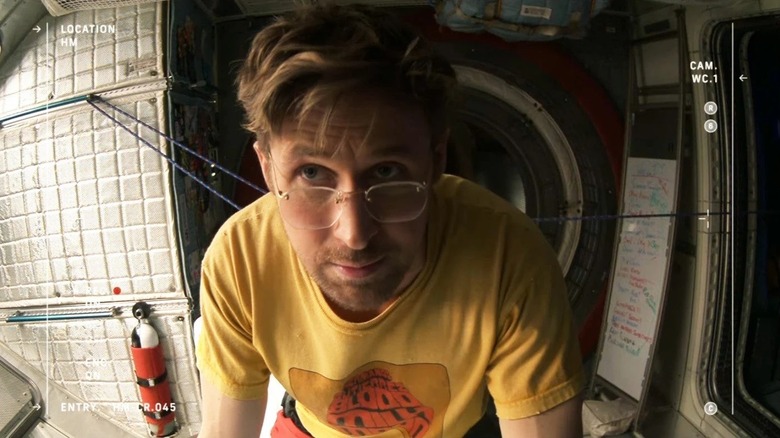
One critical part of Astrophage for Grace and Rocky is its life cycle. The Eridians and humans need to produce vast quantities of the stuff to fuel their spaceships. The humans do this by paving part of the Sahara desert and using the energy to feed their Astrophage. The planet Erid is much hotter, so the Eridians just fill up metal containers with Astrophage and drop them in their water, where it gets all of the energy it needs. But what exactly is happening when the Astrophage reproduces?
When Astrophage breed in space, they fill up on energy from a local star source and then head to the nearest planet with a lot of carbon dioxide to reproduce. Grace explains this process in detail early in the book. "Astrophage hang out on the surface of the sun gathering energy via heat," he says. "Then, when they have enough, they migrate to Venus to breed, using that stored energy to fly through space using infrared light as a propellant."
Grace also explains what happens when the little guys get to their breeding world in the book. "Our heroic Astrophage reaches the upper atmosphere of Venus, collects the CO2 it needs, and can finally reproduce," he says. "After that, both parent and child return to the sun, and the cycle begins anew." It all seems so simple when put like that, but this little alien microbe is anything but. It may not be sentient, but Astrophage essentially functions as a character in Weir's story.