

Stanley Kubrick's Underrated '50s Film Noir Is Streaming For Free
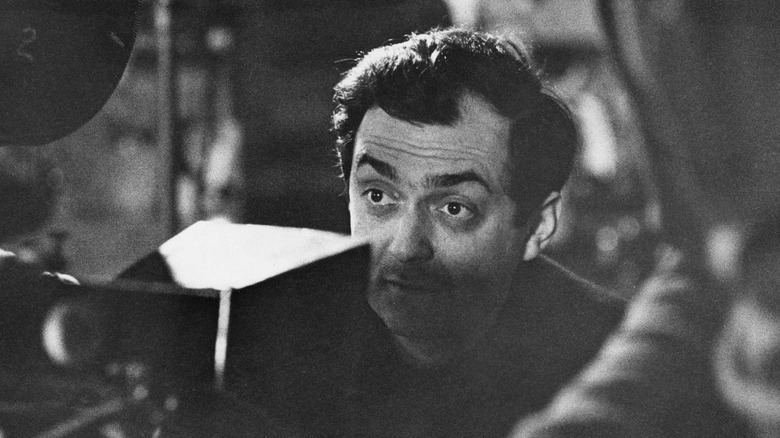
Before becoming the visionary behind "2001: A Space Odyssey," "Barry Lyndon" and "Eyes Wide Shut," Stanley Kubrick started from the bottom. His debut feature "Fear and Desire," while not nearly as awful as its reputation suggests, was considered such a failure in Kubrick's eyes that he tried to burn every copy. He was much softer on his sophomore effort "Killer's Kiss," but still considered it an amateur effort. While the 1955 film is a far cry from his best work, it's still a gorgeously photographed noir that deserves more credit. You can see for yourself, as "Killer's Kiss" is currently available for free on Tubi.
Akin to other great noirs, "Killer's Kiss" opens with an internal monologue from an individual wondering how they got themselves into such a mess. It's here where we meet Davey Gordon (Jamie Smith), a middleweight boxer who once had posters all over New York advertising his bouts in the ring. He's not very good, sadly, and usually winds up sulking in his barren apartment. The only light Davey receives is from the glow of Gloria Price (Irene Kane), a taxi dancer who lives across from him. After witnessing a man toss Gloria around, the pair decide to skip town and build a new life together. But Gloria's abusive boss Vincent Rapallo (Frank Silvera) doesn't intend on making it easy for them. What "Killer's Kiss" lacks in innovation, it more than makes up for with its mood and atmosphere.
Stanley Kubrick had a lot to prove with Killer's Kiss
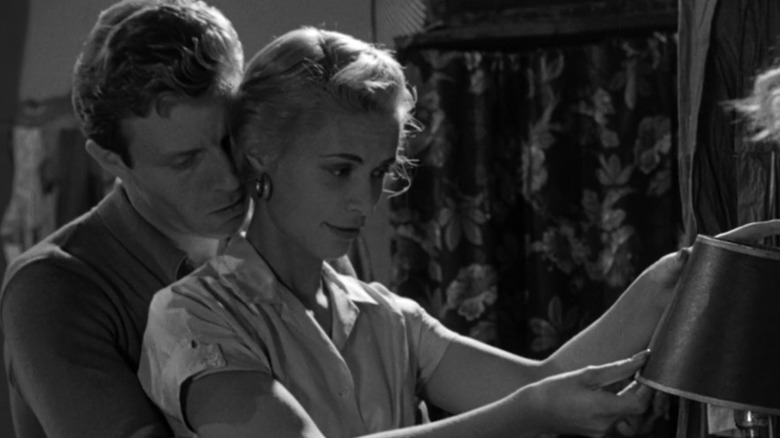
"Killer's Kiss" was a herculean effort, as Stanley Kubrick directed, shot, and edited the film. He also co-produced alongside Morris Bousel, a Bronx-based pharmacist who gained the credit after investing $40,000 into the venture. Barring the downer ending Kubrick had envisioned, United Artists liked what they saw. They not only gave him $100,000 for the distribution rights, but an additional $100,000 to make "The Killing" the following year.
We probably wouldn't have the following four decades of Kubrick masterpieces if not for the folks who saw a visionary with loads of promise. "Fear and Desire" failed because Kubrick's experimentation with the form ultimately added up to a pretentious student film. "Killer's Kiss," on the other hand, was Kubrick showing that he could make a straightforward genre movie. Noirs like 1949's "The Set-Up" proved that boxers and their plight for relevancy made them prime subjects for crime stories. Kubrick already had some experience with the sport, having directed the 1951 short documentary "Day of the Fight" a few years earlier. Both would secure spots among the best boxing movies of all time.
Killer's Kiss offers a glimpse into who Kubrick would become
At first glance, "Killer's Kiss" feels at odds with Kubrick's filmography. The trademark perfectionism on full display in works like "The Shining" is noticeably absent here. But the film's ramshackle construction is a feature, not a bug. Kubrick transcends his characters' cardboard archetypes by framing them within the lyrical, dream-like language of poverty row film noir, such as a memorable scene where Ruth Sobotka, a dancer and Kubrick's wife, performs a ballet amid Gloria's recounting of her backstory.
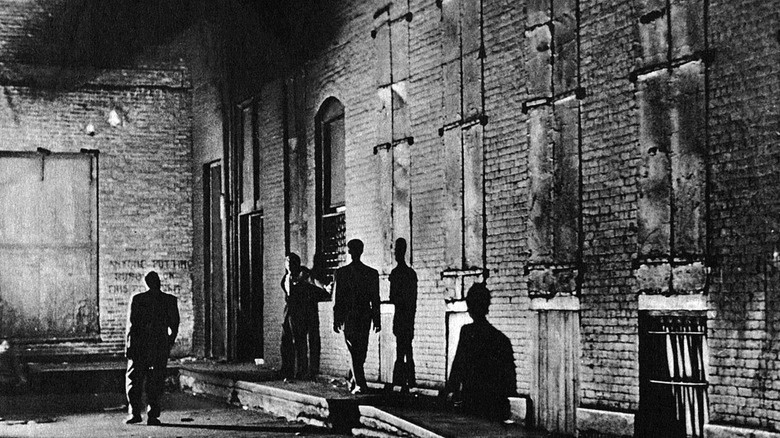
Nevertheless, "Killer's Kiss" stays true to the inherent lived-in quality of 1950s New York. Back alleys are presented from low-angle shots that make them feel as majestic as the most historic cathedrals. Empty warehouses are coated in dust and creaky elevators. Devotees of late night Turner Classic Movies bumpers will certainly recognize the jazzy rhythm of Gloria's dance hall.
Impossible framing, such as a long take of Jamie Smith running across rooftops as the fog-coated Manhattan bridge looms in the background. add weight and scope to an otherwise small story. "Killer's Kiss" would probably have a better reputation if it withheld dialogue altogether. The fight between Davey and Vincent in the mannequin factory is solely scored by the sounds of whacks and heavy breathing. Building upon these qualities ultimately helped Kubrick go from a no-name filmmaker to one of the greatest directors of all time.