

10 Box Office Flops That Got Super Bowl Commercials
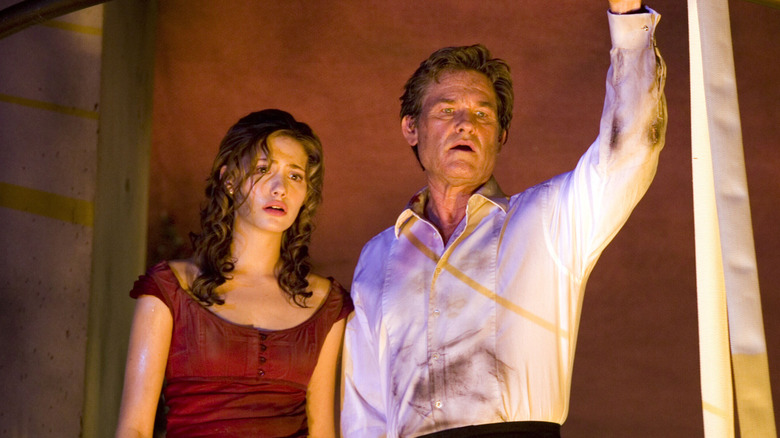
As the 12 best movies trailers of 2025 can attest, sometimes the build up to a new motion picture can be an artform unto itself. Great trailers and TV spots radiate with personality and show impressive skills in the worlds of editing and atmosphere. Hollywood clearly understands the importance of these promotional entities, given the momentous significance placed on motion picture marketing.
Few avenues, though, allow that importance to be as tangible as the annual deluge of Super Bowl movie commercials. Ever since the iconic ad for "Independence Day" during the 1996 sports event, film studios have embraced Super Bowl movie commercials as a vital way of marketing the most important motion pictures in a given year. Tons of buzz surrounds these commercials, though that doesn't mean every single movie promoted at the Super Bowl eventually becomes a box office sensation.
On the contrary, these 10 box office flops that were preceded by Super Bowl commercials prove that it takes more than just Big Game advertising to make a lucrative feature. Larger forces and audience apathy eventually doomed these projects at the center of costly marketing maneuvers. Studios and marketers clearly once had immense hopes for these 10 features, as seen by the very existence of these Super Bowl ads. That makes these 10 commercials bittersweet time capsules reflecting lofty hopes and dreams for then-forthcoming features that failed to meet those expectations.
Mars Needs Moms
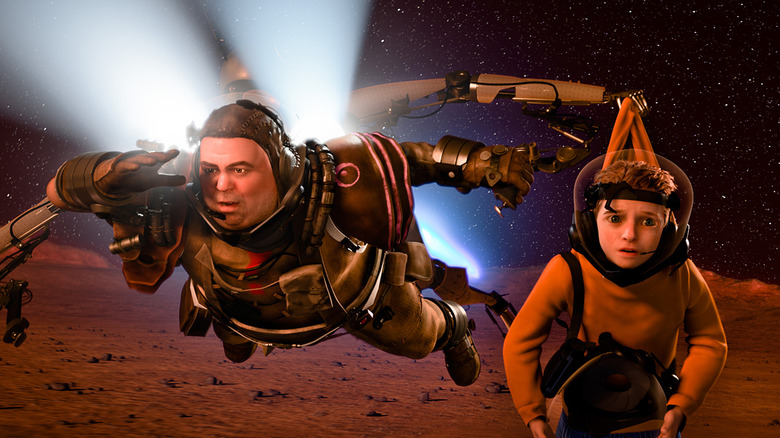
If viewers stuck around until the final moments of Super Bowl XLV in 2011, they would be rewarded with some premium grade nightmare fuel in the form of a special look at Disney's then-imminent new family film "Mars Needs Moms." This motion-captured animated title, hailing from ImageMovers Digital, got a splashy promo push alongside other films that eventually became the biggest box office titans of that year, including "Transformers: Dark of the Moon," "Fast Five," and "Super 8."
As has become legend, though, "Mars Needs Moms" wouldn't come close to reaching the financial heights of those films. In March 2011, "Mars Needs Moms" opened to an abysmal $6.91 million, despite launching in a little over 3,100 theaters. Eventually, its domestic gross stalled out at $21.3 million. Despite costing $150 million, audiences thoroughly rejected this sci-fi yarn.
But how could this title not flop? For one thing, it opened just one week after "Rango," which was still one of the biggest movies in America. Meanwhile, its ads and trailers didn't offer any memorable gags or material that could make it resonate with anyone beyond the youngest possible audience members. Then there was the egregiously creepy animation style. Those eerie-looking humans make it no surprise that the primary "Mars Needs Moms" poster only showed its lead character from the back.
All those hideous characters couldn't have made that Super Bowl commercial very appealing to the uninitiated. Disney wasting cash on a "Mars Needs Moms" Super Bowl ad was like setting money on fire.
Novocaine
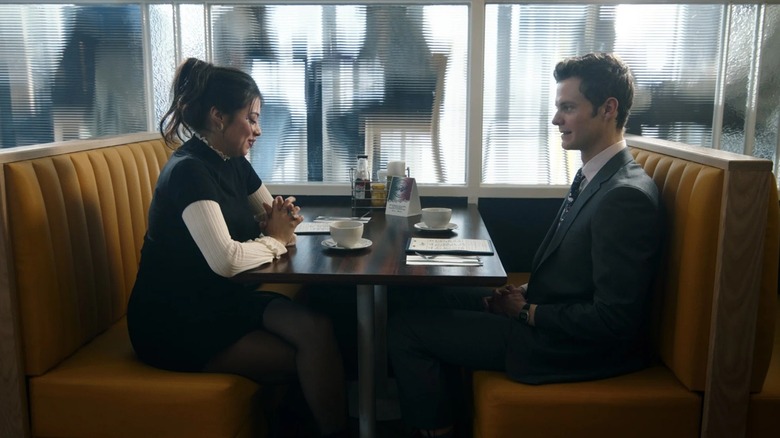
Leading man Jack Quaid and the whole "Novocaine" team went above and beyond trying to make this action/comedy a must-see event. That included heavy promotional pushes at sports events, where it was presumed the film's target audience of young males would be watching intently. For instance, Quaid strapped on a neck brace and applied special effects makeup to channel, in an eye-catching fashion, his "Novocaine" character's deeply bruised exploits.
Right alongside all of that was a Super Bowl commercial for the film, which tried cramming in a lot of visual gags and action beats to sell viewers on the feature. There was nothing especially wrong with the "Novocaine" Super Bowl ad, but it failed to separate itself from other wacky R-rated action comedies with hints of romance like "Deadpool." More pressingly, it was trying to establish itself in the earliest weeks of 2025, which were flooded with wry takes on romance movies (like "Heart Eyes") or lighthearted action films (like "Love Hurts").
This meant that "Novocaine" needed more than just a routine Super Bowl commercial to leave an impression. Unfortunately, the film's Big Game presence wasn't especially memorable and didn't make much of a difference for its eventual box office run. Grossing only $19.86 million domestically and roughly $14 million internationally, "Novocaine" came up short compared to pre-release expectations.
Alas, "Novocaine" ended up proving no amount of heavy-duty sports promos can turn a movie that audiences are ambivalent about into a must-see.
Skyscraper

July 2018's "Skyscraper" was the rare Dwayne Johnson star vehicle to not be rooted in pre-existing IP, like "Jumanji," "Rampage," or "Fast & Furious." Unsurprisingly, this meant drastic marketing measures were taken to make sure this motion picture could stand out in a summer landscape crawling with sequels and franchise fare. Thus, Universal Pictures launched the "Skyscraper" marketing campaign during 2018's Super Bowl with a commercial and (online) a longer trailer.
These were high-profile launchpads to get people excited for a movie where The Rock had to scale a massive building that was going up in flames. There was just one problem: nothing in the marketing looked especially interesting. The drably-colored and grim commercials and trailers established "Skyscraper" as a movie way too grounded and lacking in over-the-top characteristics for its own good.
"Skyscraper" was promoted as a film with minimal appeal to younger audiences, which cut off a core demographic of any Dwayne Johnson film. This man's biggest films have been ones resonating with youngsters, like the "Jumanji" and "Moana" installments. The decidedly dour "Skyscraper," meanwhile, offered nothing for this population. No matter how many eyeballs saw "Skyscraper's" marketing materials, it was always going to struggle overcoming that fatal flaw.
While "Skyscraper" wasn't a financial cataclysm, its $304.8 worldwide gross and especially $68.42 million in total domestic box office left much to be desired. The biggest possible marketing launch for "Skyscraper" just couldn't erase larger issues caked into this movie's DNA.
Ambulance
Every Michael Bay movie has overlapping motifs. One factor binding many of these titles is their use of Super Bowl commercials. Multiple "Transformers" installments, including "Transformers: Revenge of the Fallen," kicked off their respective marketing campaigns at this event. Even back in the early 2000s, "Bad Boys II" was promoted at the Super Bowl, while a 60-second "Armageddon" commercial also populated this sports extravaganza in the '90s. Basically, Bay movies are as chummy with the Super Bowl as Dorito's adverts or pop star performances.
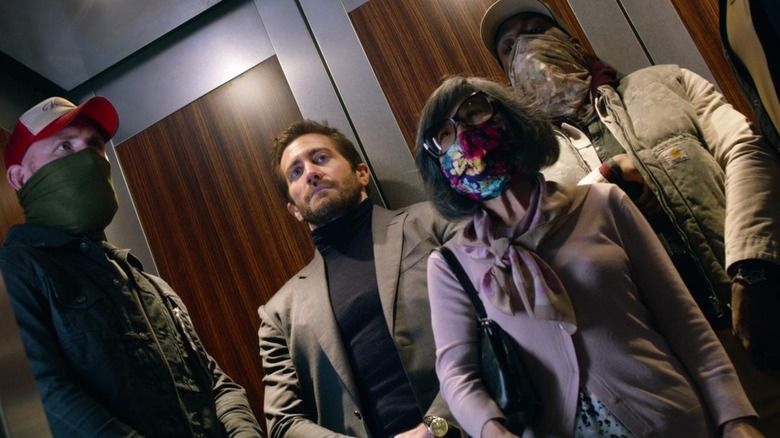
Unsurprisingly, in 2022, Bay's non-sequel title "Ambulance" got its own Super Bowl commercial. This commercial was actually quite clever in structure, starting out with gigantic text reading "It was a quiet day in Los Angeles" before the first six words vanish. Subsequently, the words Los Angeles gradually transform into the "Ambulance" title, while voice-over snippets from Yahya Abdul-Mateen II and Jake Gyllenhaal's characters establish the dramatic stakes of the project (the former individual wants to "get back to [his] wife," for instance).
This distinctive and well-made ad, unfortunately, couldn't help "Ambulance" at the box office. That Michael Bay was not the same filmmaker of 20 years earlier. By 2022, the last non-"Transformers" movie that exceeded $55 million domestically was still 2003's "Bad Boys II." Neither his name nor the film's inherent concept stood out as a must-see for audiences. Gyllenhaal's mixed box office track record made it unsurprising that "Ambulance" only made $52 million worldwide on a $40 million budget, despite a commendable Super Bowl commercial.
Dungeons & Dragons: Honor Among Thieves
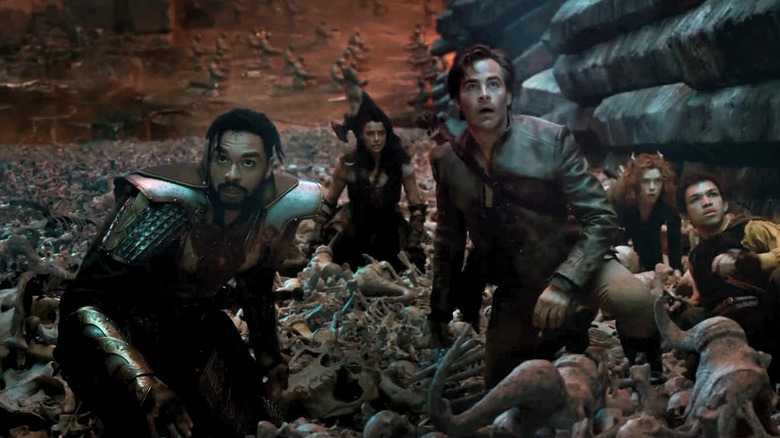
Fairly or not, the big problem "Dungeons & Dragons: Honor Among Thieves" faced in becoming a mainstream hit was in winning over average moviegoers who might think anything "Dungeons & Dragons" was too "nerdy." Given that Paramount Pictures and other financiers put in $150 million into this tentpole release, they clearly needed more than just die-hard "Dungeons & Dragons" players to show up to theaters. Thus, major marketing efforts were taken to make this property look as accessible as possible to the broader public, including a swanky Super Bowl commercial.
In hindsight, this ad made the mistake of emphasizing only action and vibrant sound effects (like beasts chomping at each other or gigantic waves crashing against shores), as well as bits of generic action blockbuster dialogue like "We're facing the greatest threat the world has ever known." This just made "Honor Among Thieves" look like any run-of-the-mill blockbuster rather than something distinctive you had to witness on the big screen.
Even more frustratingly, the final film was widely commended for delivering solid gags that didn't slide into snarky self-parody, exceptional practical effects work, and compelling characters. Highlighting those more unique qualities in a Super Bowl commercial could have helped convince the skeptics to take a chance on a "Dungeons & Dragons" movie. Instead, "Honor Among Thieves" tapped out at $93.54 million domestically and $207.85 million worldwide, a poor result for such a pricey table-top game adaptation.
Tomorrowland
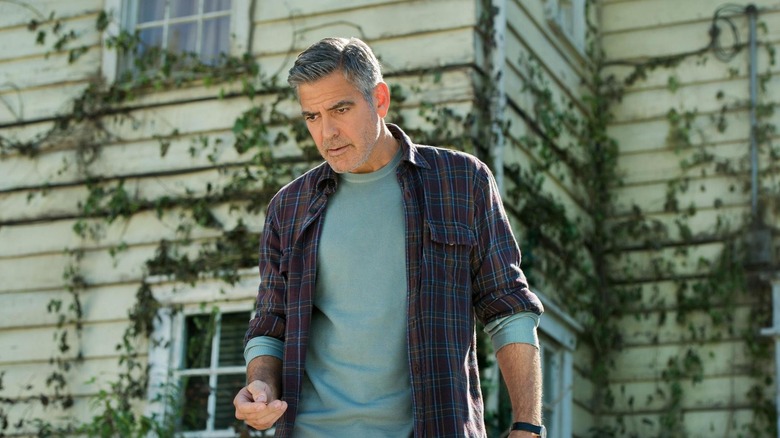
Walt Disney Pictures initially had supreme confidence in Brad Bird's "Tomorrowland" movie. The marketing campaign began a whopping seven months before its release, while the Mouse House gave the project a $180-$190 million budget. Further reaffirming the studios' hopes that this would be the latest Bird box office hit (following "The Incredibles" and "Ratatouille") was the decision to give this project a Super Bowl commercial.
This "Tomorrowland" ad kept a tight lid on the film's plot (fitting for a feature co-written by Damon Lindelof) while emphasizing Bird's credentials as the filmmaker behind "The Incredibles" and "Mission: Impossible – Ghost Protocol." The TV spot concluded with George Clooney's character announcing "Buckle up!" as a rocket ship zips off into orbit. One of many strange details about this Super Bowl ad was that it failed to clarify that this rocket was the Eiffel Tower, which would've made this visual significantly more arresting.
Furthermore, the cryptic qualities made the commercial unfortunately thin and lacking in specifics. The Super Bowl might just not be an ideal spot for original movie commercials light on specific plot details or surface-level razzle-dazzle, especially since they'll be competing for attention against big blockbuster sequel movie ads.
Despite all these big promotional moves, "Tomorrowland" only grossed $93.4 million domestically and $206.62 million worldwide. That lengthy and high-profile marketing campaign only led to a gargantuan flop.
Cowboys & Aliens
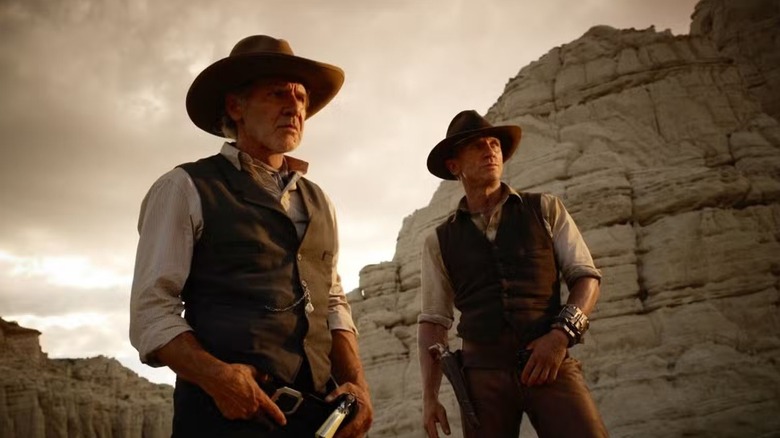
When one ranks every Daniel Craig movie from worst to best, it becomes extra abundant that this British performer has had an incredible career going well beyond James Bond and Benoit Blanc. One of the more unfortunate titles in his filmography, though, is "Cowboys & Aliens," an entry in the long list of movies and TV shows you didn't realize were based on comic books. This project was tortured from the start when its debut trailer infamously garnered laughs from audiences once its title card dropped.
Considering that the initial trailer debuted eight months before the film's premiere, Universal Pictures and DreamWorks were surely hoping a lengthy marketing campaign could get people accustomed to the title. What's initially funny might be routine and compelling a few months later. Part of normalizing "Cowboys & Aliens" came from giving the feature a Super Bowl commercial. This piece of marketing hammered home Craig and Harrison Ford's presence as well as UFO's blasting the heck out of an Old West town at night.
Packed with the sounds of alien ships rattling and guns being drawn out of holsters, the "Cowboys & Aliens" Super Bowl ad didn't give audiences any characters to cling to. It also epitomized a problem with the final film: a lack of fun. Why was everything so dimly-lit and dour? Unsurprisingly, the $163 million budgeted "Cowboys & Aliens" failed to make a splash at the box office. That Super Bowl ad was as effective as a gunslinger fighting a Xenomorph.
Poseidon
Some movie studios are annual fixtures of the Super Bowl. Walt Disney Pictures and Universal Pictures, for instance, constantly show off their new movies year in and year out. Other studios, though, stand on the sidelines and are indifferent to this sporting event. Warner Bros. especially has been almost entirely M.I.A. from the Super Bowl for the last two decades (save for when "The Flash" started its marketing campaign with a Super Bowl commercial in 2023).
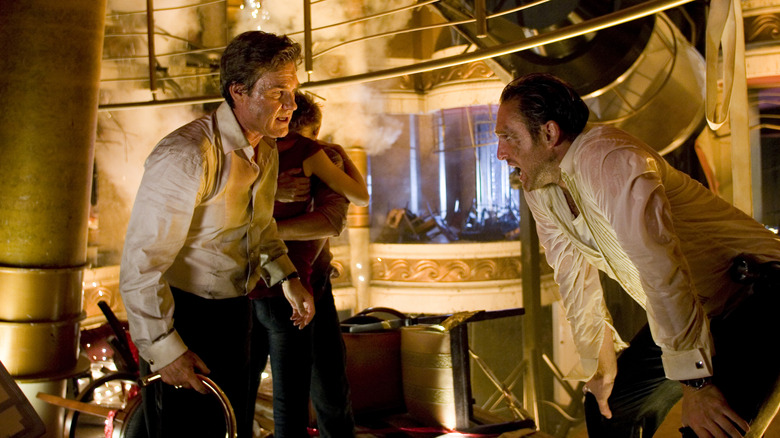
Ironically, though, Warner Bros. was once a constant supplier of Super Bowl movie ads, with titles like "The Matrix" and "Batman Begins" making memorable appearances at the event. In 2006, the disaster movie remake "Poseidon" was one of several Warner Bros. titles to get a Super Bowl commercial. The clear hope here was that "Poseidon" would follow in the footsteps of "Independence Day" and "Armageddon" as costly disaster films whose Super Bowl ads preceded lucrative box office runs.
Unfortunately, for all the souls involved in financing "Poseidon," audiences had no interest in the final product. Spending oodles of cash to emphasize the "Poseidon" brand name during the Super Bowl did nothing to amplify audience interest in this waterlogged boondoggle. "Poseidon" only made $60.67 million domestically and $181.67 million worldwide on a $160 million budget.
After this "Poseidon" debacle, Warner Bros. began eschewing Super Bowl movie promotions the following year in 2007. We'll never know if "Poseidon" directly inspired that marketing shift, but it sure is a fascinating coincidence.
Battleship
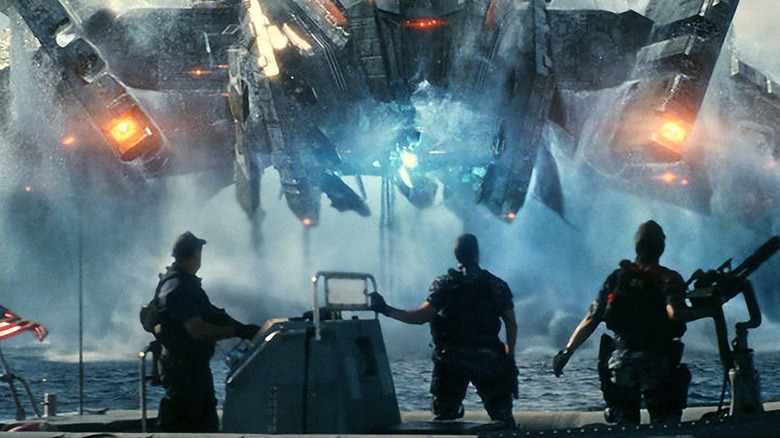
A normal traffic jam turns into a nightmare in the span of 10 seconds in the opening of the "Battleship" Super Bowl commercial, which depicts a circular alien craft crashing into a bunch of cars stuck on the freeway. From there, the action shifts to the water, with Liam Neeson's character discovering alien ships on the ocean before a montage of sci-fi action cinema chaos unfolds. Good luck deciphering any names or personalities of the human characters in this commercial. The emphasis is instead focused on explosions and alien ships doing cool stuff.
There are several weird traits in this "Battleship" trailer, including that Neeson gets the most screentime of any human character despite playing a disposable supporting player in the final film. Even more oddly is how many big action beats (like an alien ship whipping off a helicopter's tail rotor or a building collapsing) are divorced from the ocean. Shouldn't a film called "Battleship" promise exclusively chaos on the open seas?
Instead, the "Battleship" Super Bowl commercial harkened back to the "Transformers" movies, right down to name dropping that franchise in the ad's opening seconds. This just made the property look like a rerun of old blockbusters, which didn't serve it well at the box office. Eventually, this Peter Berg directorial effort could only muster $313.47 million worldwide on a mammoth $220 million budget. All the puzzling creative choices in "Battleship's" Super Bowl commercial couldn't keep this project from sinking financially.
Titan A.E.
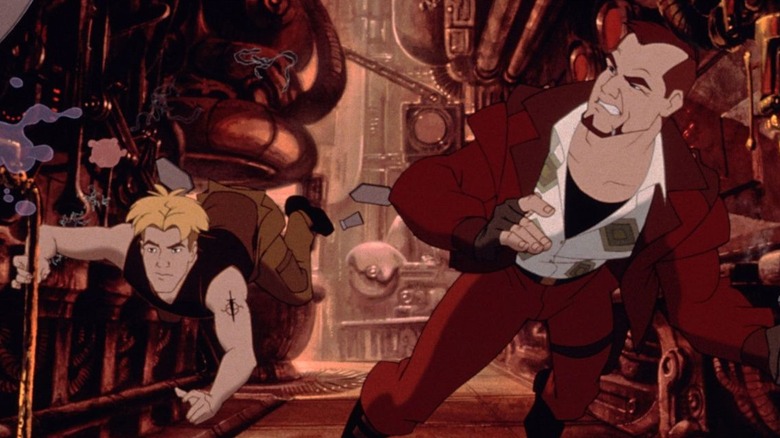
The "Titan A.E." Super Bowl commercial starts off on a cute note by imploring viewers to imagine "a world without the Super Bowl" before showing a football field, then cutting to "Titan A.E.'s" aliens blowing up Earth. This opening allowed the central narrative hook of "Titan A.E." (it's a cosmic adventure taking place eons after Earth was wiped out) and the Super Bowl to gel together, a fine start for a Big Game ad.
From there, Creed's "Higher" (which was everywhere in the broader "Titan A.E." marketing campaign) kicks in and a voice-over announcer declares that "Titan A.E." is "the next generation of filmed animation." Right then and there, this Super Bowl commercial was a dud. What on Earth does that statement mean? It's too cumbersome-sounding and made this June 2000 action film sound like a corporate event, not an escapist romp. The "Titan A.E." Super Bowl ad began on a strong note before crashing and burning with that convoluted narration.
Unfortunately, "Titan A.E.'s" problems didn't end with a poorly-conceived Super Bowl commercial. This $75 million budgeted enterprise flopped at the box office, with just $22.75 million domestically and $36.75 million worldwide. One of the biggest animated movie bombs of all time, "Titan A.E." also joined the unfortunate group of historic bombs that bankrupted studios thanks to its devastating impact on 20th Century Fox Animation. That bizarre Super Bowl ad was an unfortunate omen of the challenges that laid in wait for "Titan A.E."