

12 Most Rewatchable Episodes Of The Simpsons
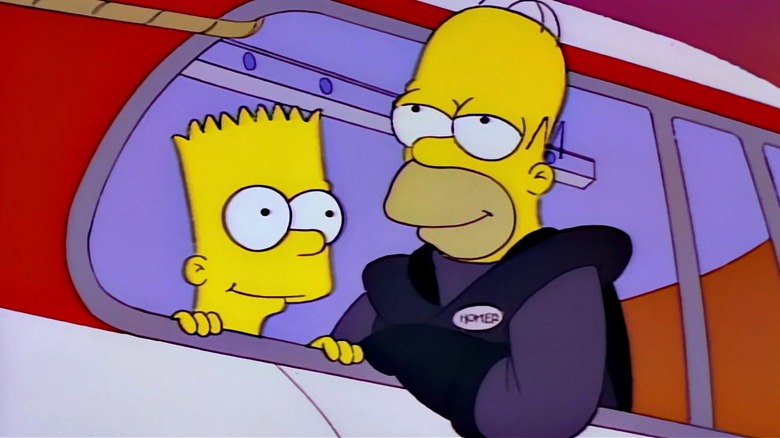
With over 800 episodes and counting, you won't be short on "Simpsons" content during a marathon. The TV institution has put the titular family into every situation imaginable. The family has traveled to every continent on Earth. Homer and Marge have experienced every form of marital discord a couple can go through. And "The Simpsons" has been on for so long, it's freakishly predicted the future on multiple occasions.
Of course, just because "The Simpsons" has hundreds of episodes doesn't mean they're all good. Any fan will tell you the golden era ended while Bill Clinton was still in office (usually around Season 9), so you may grow weary of Bart's antics if you do too much of a deep dive afterwards.
Fortunately, that golden era really was something special, and there are plenty of episodes you can watch repeatedly without growing tired. This is slightly different from the best episodes of "The Simpsons." This list focuses on pure entertainment value, with episodes that have a dozen gags a minute. They will leave you in stitches on the first watch, but viewing them over and over reveals new jokes every time that only elevates their quality.
Flaming Moe's (Season 3, Episode 10)
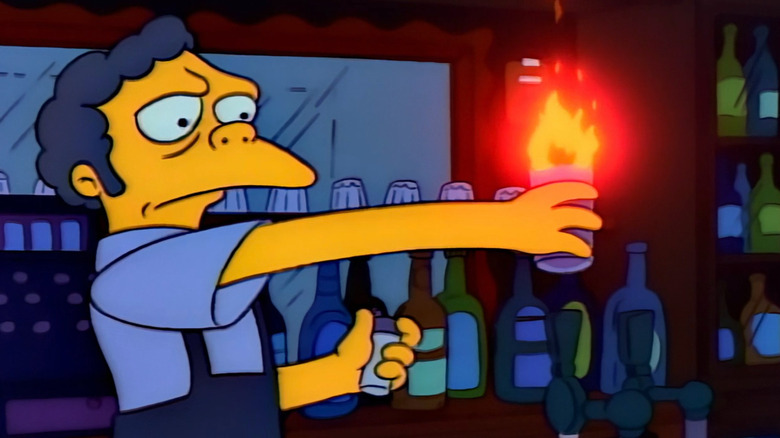
Moe Syszlak is one of the best characters on "The Simpsons" outside of the main family, and he really came into his own with Season 3's "Flaming Moe's." The series was still toying with its voice and tone in its earliest eras, but by Season 3, everything was beginning to fire on all cylinders. Moe finally branched out from simply being the bartender Homer vents to his problems about. We could finally see a surprising amount of depth from him when he steals and gets rich off a recipe Homer has for an amazing drink. Meanwhile, Homer laments simply giving it away.
The central conflict is engaging, and leads to one of Homer's best rants to Marge when she insists he should just be happy he made something people like. But what really makes this episode stand out is how the whole thing feels like one giant party (complete with an Aerosmith concert). Moe's Tavern, usually a dull, dreary place, suddenly becomes alive. We see folks from Springfield interacting with people we've never seen them with before. For the first time, the town truly feels alive.
"Flaming Moe's" isn't just a funny episode. It's the first time you really got a sense this show could be something bigger than a mere family sitcom.
Homer at the Bat (Season 3, Episode 17)
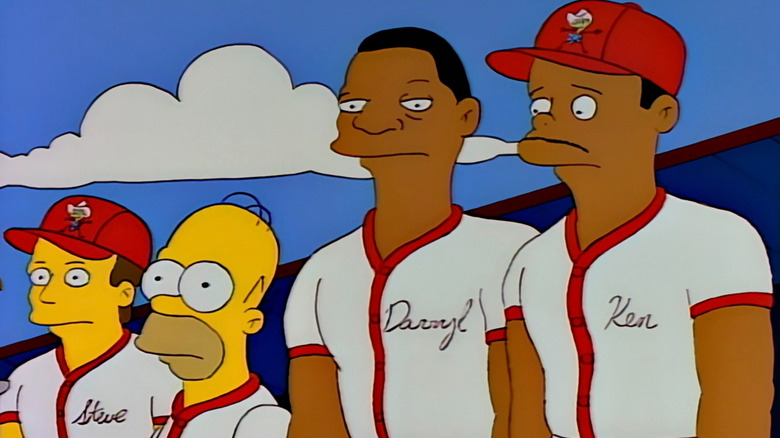
You don't need to be a sports fan to enjoy Season 3's "Homer at the Bat." With a bat he carved himself, Homer leads his team to a winning softball season. We finally get to see something he's actually good at for a change, but to ensure he wins a million dollar bet, Mr. Burns brings in nine professional baseball players to perform in his employees' places.
"The Simpsons" has had some truly bizarre celebrity cameos over the years, and one could argue that later episodes rely too heavily on them. The great thing about "Homer at the Bat" is that the athletes, all voicing themselves, don't detract from Homer's story. The episode uses them for some gags and gets them out of there, with practically all of them meeting some horrific fate to prevent them from playing in the championship game, like Ozzie Smith falling into an interdimensional abyss.
The celebrities are just there to bounce jokes off of while Homer's feeling of getting replaced drives the emotional core. Besides, there's a joke from this "Simpsons" episode that actually saved the lives of two children, so it's worth a watch just to appreciate that.
Mr. Plow (Season 4, Episode 9)
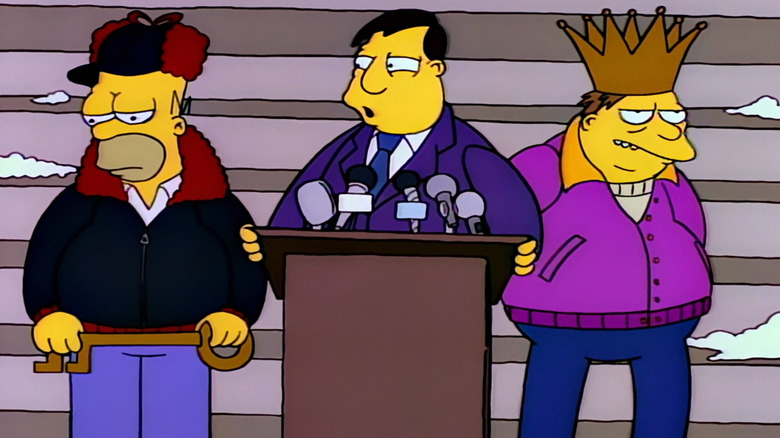
Casual fans probably know "Mr. Plow" best for Homer's catchy jingle: "Call Mr. Plow, that's my name. That name again is Mr. Plow." But that genuinely only scratches the surface of how great the episode is. It manages to cram in so much story in so little time, starting with Homer wrecking both of the family's cars. This leads to one of Homer's funniest line deliveries as he comes up with a lie to explain how Moe's isn't a bar: "It's a pornography store. I was buying pornography."
Homer then purchases a snow plow and contends with getting his new business off the ground. Miraculously, he finds success, only to have it stolen by Barney who begins a rival snow plow business. There's no single conflict in the episode, as numerous things get in Homer's way, whether buying a car or making money with his new venture.
Plus, "Mr. Plow" makes great use of its guest stars — Adam West and Linda Ronstadt. Neither one overstays their welcome, delivering some absurd line and then getting out of dodge. "Mr. Plow" showed how "The Simpsons" was unlike anything else. It didn't need to settle for one plot or conflict; it could repeatedly change things up without ever losing steam.
Marge vs. the Monorail (Season 4, Episode 12)
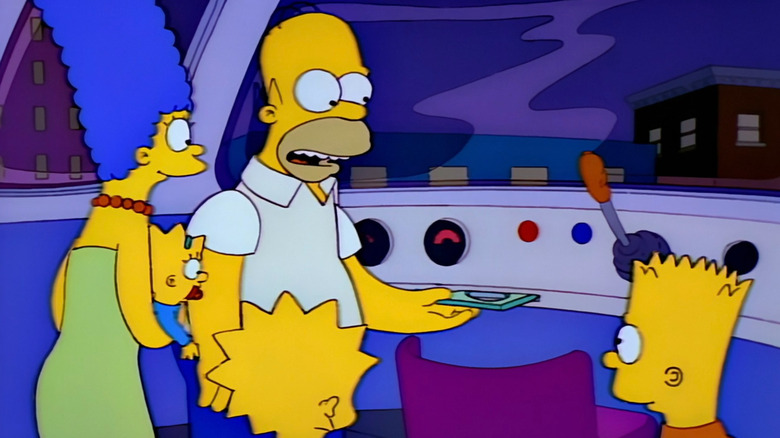
The Simpson family has traveled through time and been abducted by aliens, whether you want to consider such installments canon or not. But it's clear nothing is too zany for the show these days, making it almost quaint that Season 4's "Marge vs. the Monorail" was seen as such a departure from the show's tone when it initially aired, and it mostly just involved Springfield getting a monorail courtesy of huckster Lyle Lanley, voiced by the impeccable Phil Hartman.
Written by Conan O'Brien, who was inspired by an unusual billboard of a monorail, "Marge vs. the Monorail" thrives in the absurd, whether it's a random squirrel that can shoot lasers out of its eyes or multiple towns devoting themselves wholly to Lyle's monorails only to face financial ruin. That's nothing to say of Lyle's big musical number, which riffs on "The Music Man," and is simultaneously catchy and hilarious.
All those jokes serve as sugar to help the episode's message go down more easily. There are always con men promising something extraordinary when all they're trying to do is scam innocent people out of their money. Up until its final moments, "Marge vs. the Monorail" doesn't let up for a second.
Last Exit to Springfield (Season 4, Episode 17)
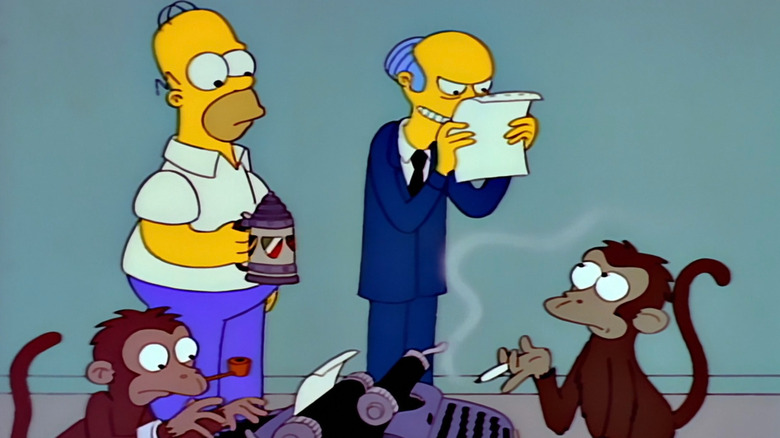
In those early years, "The Simpsons" was at its best when it mostly consisted of a bunch of quick gags with a loosely tied-together plot thrown into the mix. That's why "Last Exit to Springfield" is such an enduring classic. The episode sees Homer become a union leader at the power plant, fighting to retain the company's dental plan so Lisa can get braces. Of course, watching Homer and Mr. Burns engage in contract negotiations would be boring, so the episode is mostly an excuse to throw in a bunch of non-sequiturs that still hold up.
Mr. Burns gives Homer a tour of his home, including a room where monkeys try to create the greatest novel ever. Lisa has a psychedelic sequence after getting exposed to laughing gas. And Grampa Simpson tells a story about tying an onion to his belt. Any one of these jokes would be enough to make "Last Exit to Springfield" instantly memorable, and yet they all happen in a span of 23 minutes. Even if you've never seen this episode before, you'll find no shortage of clips that have become memes.
And when it seems Mr. Burns will break his employees' spirits, they come together in a stunning show of worker solidarity by the end. Ultimately, "Last Exit to Springfield" is a fun romp, where 10 gags are strung together over the course of a single minute, and all hit their mark perfectly.
Cape Feare (Season 5, Episode 2)
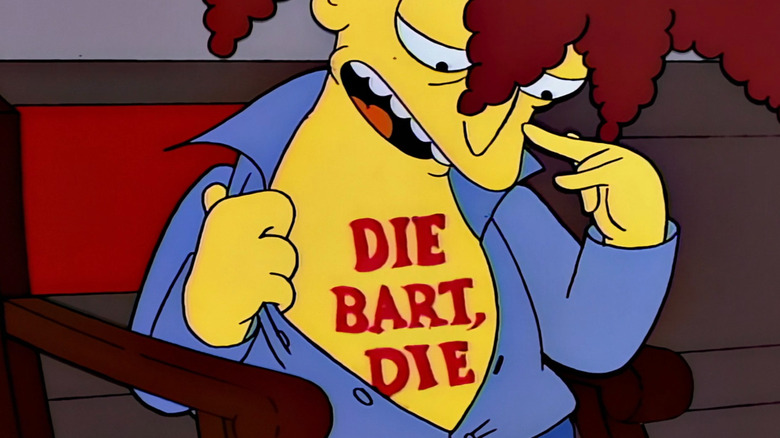
"Cape Feare" is a rare treat for "Simpsons" fans in that it plays out as a full-on thriller. Bart receives threatening letters from an anonymous source, only to discover it's Sideshow Bob, whose crimes he's thwarted on several occasions up to that point. Even if you haven't seen a Sideshow Bob episode before, the story explains it all, and besides, all you really need to know is that a lunatic wants to kill Bart.
"Cape Feare" is a darker episode of "The Simpsons." Bob's letters are written in blood, and when he corners Bart at the end, he's tied up the other family members on their new houseboat they got after going into witness protection. The astonishing thing is how the episode never loses its sense of humor. As the other Simpsons are tied up, Lisa comments that Homer's been drugged since he's still out cold, only for Marge to respond, "No, he hasn't," delivered with a tone anyone who lives with a heavy sleeper will identify.
It's rare for "The Simpsons" to make sequel episodes, but Sideshow Bob's wealth of potential make his continuing escapades an exception. He infuses the show with a sense of menace, but he'll also step on rakes for a minute straight, meaning it's hard to hate the guy completely.
Homer the Vigilante (Season 5, Episode 11)
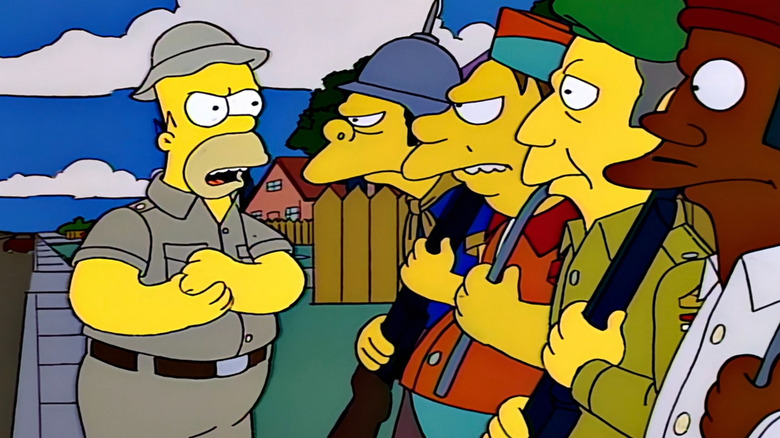
A cat burglar steals Lisa's saxophone (and a ton of other items around the neighborhood), so Homer forms a neighborhood watch to catch him in "Homer the Vigilante." The only problem is they get sidetracked by their new power, which Homer happily abuses. The episode basically consists of a string of vignettes, like everyone reacting to their possessions gone missing or Homer and his posse pushing around people who haven't broken the law.
"Homer the Vigilante" takes full advantage of its animated medium. There are a ton of great set pieces that just wouldn't be possible on a live-action sitcom, like when Professor Frink showcases a new home security system where the house lifts up on hydraulic legs and runs away. It's a silly gag that only lasts for a few seconds, but it's so good (along with its subsequent callback).
But then you have the emotional throughline of Lisa being disappointed in her father getting sidetracked from locating her saxophone. It grounds the story so that you're not merely watching a bunch of silly nonsense (not that that would necessarily be a bad thing). But we get fed up with Homer's abuses right alongside Lisa, making the final reveal of who the burglar is all the more satisfying.
Itchy & Scratchy Land (Season 6, Episode 4)
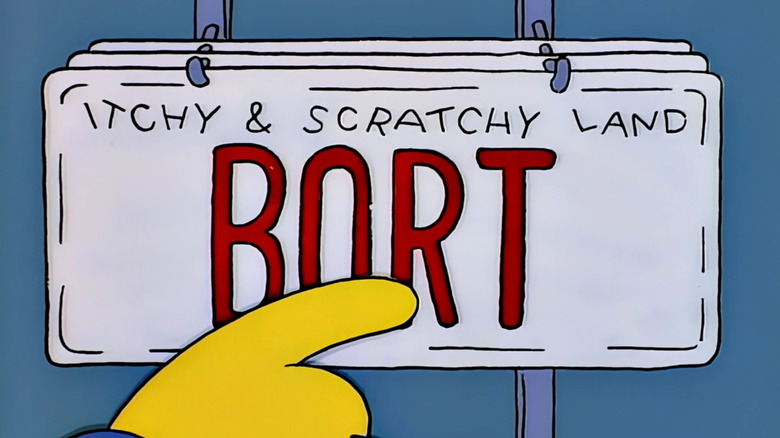
Anyone who's ever grown annoyed on a Disneyland trip will surely relate to Season 6's "Itchy & Scratchy Land." The Simpson family head to the theme park celebrating the violent cartoon-within-a-cartoon. You know an episode's great where even the set-up is full of outstanding gags. The Simpsons go on a road trip to the park, and everything from Flickey's diner to Homer's shortcut lands perfectly.
But the main attraction (no pun intended) is Itchy & Scratchy Land itself. Bart locating a "Bort" license plate with no "Bart" plates has become a great inside joke amongst "Simpsons" fans. In fact, when you go to "The Simpsons" part of Universal Studios, you'll find Bort license plate keychains in the gift shop (assuming they haven't sold out). The episode's riffing on Disneyland is superb, including some particularly pointed barbs at the Walt Disney stand-in Roger Meyers Sr.
And leave it to "The Simpsons" to go full "Westworld" by the end where robots begin attacking humans. Early "Simpsons" really knew how to keep viewers on their toes, completely changing the driving force of the plot halfway through in a way that still felt organic.
Treehouse of Horror V (Season 6, Episode 6)
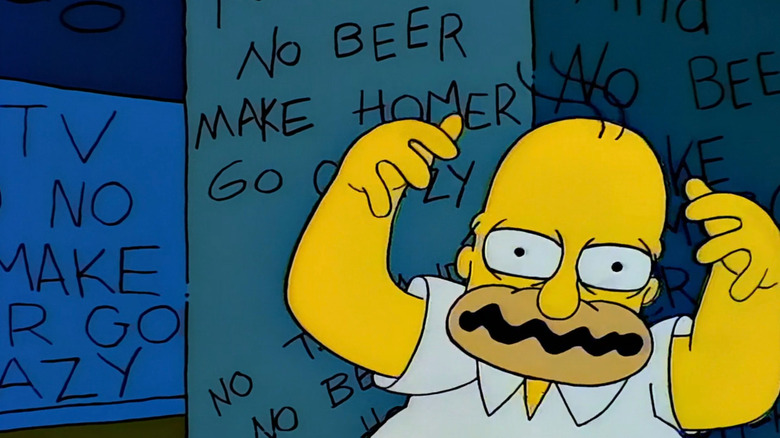
There's no shortage of fantastic "Treehouse of Horror" specials. Even when the overall quality of "The Simpsons" declined, those typically remain standouts of their respective seasons. It's hard to pick just one to include among the most rewatchable "Simpsons" episodes, but the gold standard is easily "Treehouse of Horror V."
The episode contains three separate segments: A "Shining" parody, a riff on time travel, and a story where teachers eat the students of Springfield Elementary. That last one could make for a good horror film all on its own, complete with David Lynch-esque dream logic where a giant blender materializes out of nowhere to threaten Bart, Lisa, and Milhouse.
With three very different storylines, "Treehouse of Horror V" never feels like it's repeating the same story beats. As soon as you grow tired of one segment, you're onto something entirely different. Each portion has something unnerving, but with a quick joke to undermine any horror, you'll never be scared for too long.
Lemon of Troy (Season 6, Episode 24)
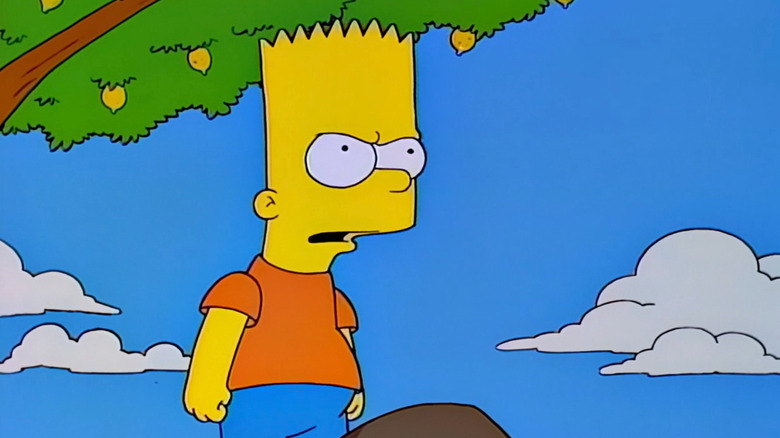
Season 6's "Lemon of Troy," which sees Bart and his friends defend Springfield's honor by taking back a lemon tree the kids in nearby Shelbyville stole, is a masterclass in the comedic callback. The episode has countless jokes and ideas presented early on that get a satisfying payoff much later.
For instance, Bart refuses a hoverbike ride with Professor Frink to write his name in wet cement. Later, Bart could use a hoverbike to get out of a jam, only for Frink to appear and chastise him. In class, Bart isn't paying attention when Mrs. Krabappel is teaching about Roman numerals, only for Bart to encounter Roman numerals when trying to escape from a tiger pen. You'll want to rewatch this episode immediately to catch all of the foreshadowing you missed the first time, and gain an appreciation for how dedicated the "Simpsons" writers were in the process.
"Lemon of Troy" adds much-needed texture to Springfield. Bart teams up with a cohort of youngsters, and Homer does the same with all of the other dads to find them. It makes a simple town rivalry feel epic, while giving Bart a noble cause for a change.
A Fish Called Selma (Season 7, Episode 19)
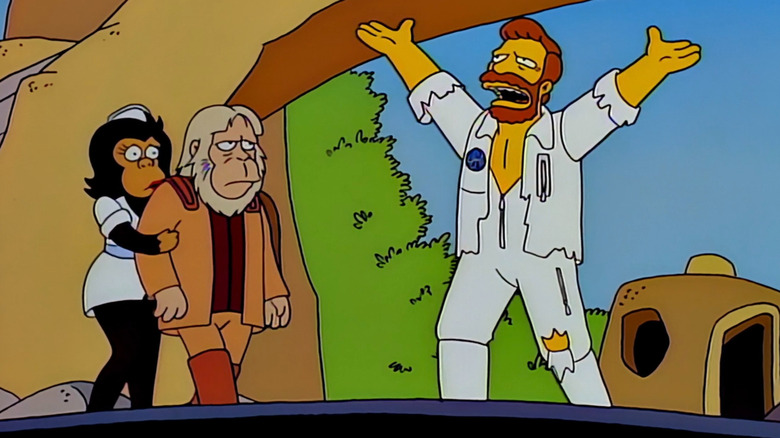
Let's not kid ourselves: "A Fish Called Selma" is instantly rewatchable thanks to "The Planet of the Apes" musical number alone. Troy McClure singing "I hate every ape I see / From chimpan-A to chimpanzee" will never not be amazing. And yet, the sequence doesn't feel out of step in the slightest, only strengthening an already incredible episode.
Troy was a minor character throughout the show, but he finally gets the spotlight as he uses Selma Bouvier to revive his flailing acting career. The episode skewers Hollywood dynamics where it's more about public perception than an actor's talent, and Jeff Goldblum makes a stellar appearance as Troy's sleazy agent.
Part of the joy of making Springfield such an expansive place is that there's room to do odd stories like this. The Simpsons themselves don't factor too much, although Homer becomes integral to the plot later. Instead, we get a great showcase for Phil Hartman as Troy, and the story gives Selma a lot more depth than what we've seen previously as a woman who desperately wants to start a family the right way.
22 Short Films About Springfield (Season 7, Episode 21)
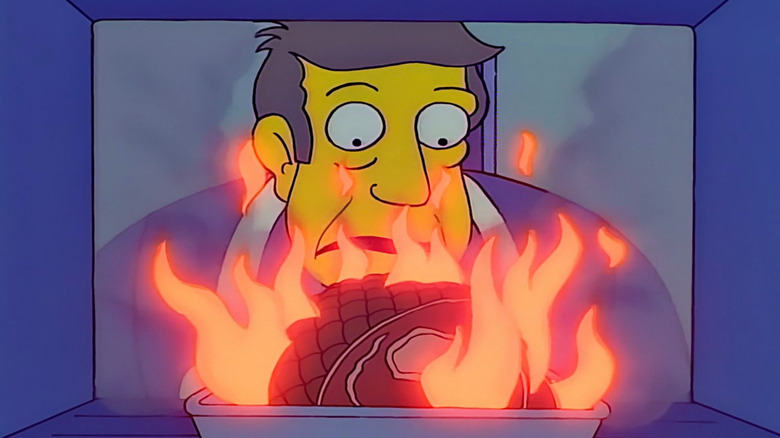
"Treehouse of Horror" episodes feature three separate stories. Meanwhile, "22 Short Films About Springfield" has something new happening practically every minute, so there's never any time to slow down.
This episode is probably best known these days for the "steamed hams" memes it birthed. Countless edits and remixes of the sequence where Principal Skinner faked his day through a luncheon with Superintendent Chalmers have been made, including a live-action versionin the style of "My Dinner with Andre." When your "Simpsons" marathon is over, you can spend just as much time getting through all these inspired recreations.
Ultimately "22 Short Films About Springfield" encapsulates what makes so many "Simpsons" episodes rewatchable. Every viewing reveals something new to appreciate, and a sequence you didn't care about as a kid takes on new meaning years later, ultimately making this and the other episodes listed here worthy of seeing over and over again.