

5 Stephen King Movies That Were Ruined By Their Endings
A movie can do absolutely everything right for the majority of its runtime, but if it doesn't stick the landing in its finale, it is all for naught. It's like having an A in a class for an entire semester and then absolutely bombing your final exam. From twists that feel unearned, to setting up the sequel in lieu of a satisfying conclusions, to cheap movie endings that upset audiences, there are a number of ways that a movie's home stretch can go badly. This is a phenomenon that has found its way into a handful of adaptations of Stephen King stories.
What's especially disappointing in that regard is that so many Stephen King movies are just awful all around, so when one of the good ones falls apart at the end, it's all the more frustrating. How much each of these movies were truly ruined by their bad endings varies, from simply robbing the film of being otherwise subjectively flawless, to retroactively souring the entire thing. And in more than one of these examples, it felt like the screenwriters were trying too hard to surprise fans of the book by coming up with a different ending just for the sake of doing so; but in the process, they came up with a worse ending instead of a better one.
Needless to say, we won't even be attempting to avoid spoilers here, neither for the movies in question nor the stories they were adapted from.
Secret Window (2004)
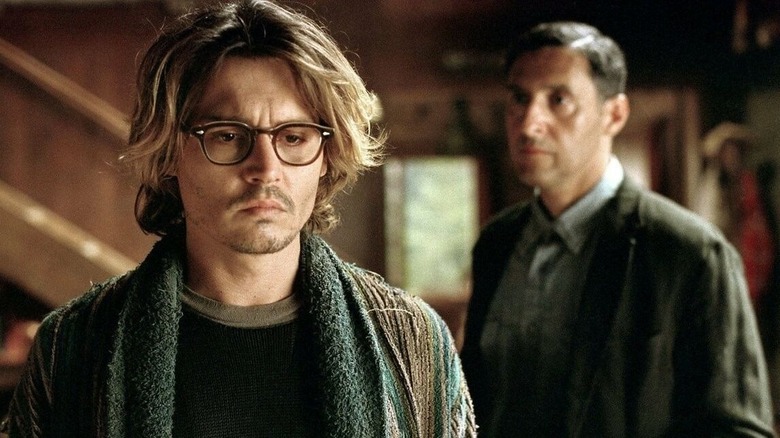
Based on a Stephen King novella from his 1990 collection "Four Past Midnight," the 2004 film "Secret Window" sees Johnny Depp make his King adaptation debut as struggling writer Mort Rainey. Mort has moved to a cabin in the woods in order to get away from his professional and personal problems — the latter of which heavily revolve around his recent divorce — only to be terrorized by a creepy farmer named John Shooter (John Turturro).
Shooter claims that Mort has been plagiarizing his work, accusations that Mort initially tries to brush off. But Shooter won't be dismissed, and gets increasingly dangerous in his mission to expose Mort as a fraud. In the original story, it is revealed that Mort truly was a plagiarist, and that Shooter was a spirit of vengeance that Mort inadvertently created through his intense guilt. That is to say, Mort and Shooter were two individual entities. But the movie did what 75% of all psychological thrillers did for the next decade after "Fight Club," and just had Mort "become" Shooter without realizing it — and did bad things "as" Shooter in the process.
It seems like a minor difference, but it takes the more supernatural bent of the book's ending and turns it into yet another easy "the villain was the protagonist all along" ending that had already gotten stale by that point. It's too bad, because it betrays what was otherwise a solid performance by Depp. As the Rotten Tomatoes critical consensus says, "Depp is quirkily entertaining, but the movie runs out of steam by the end."
The Boogeyman (2023)
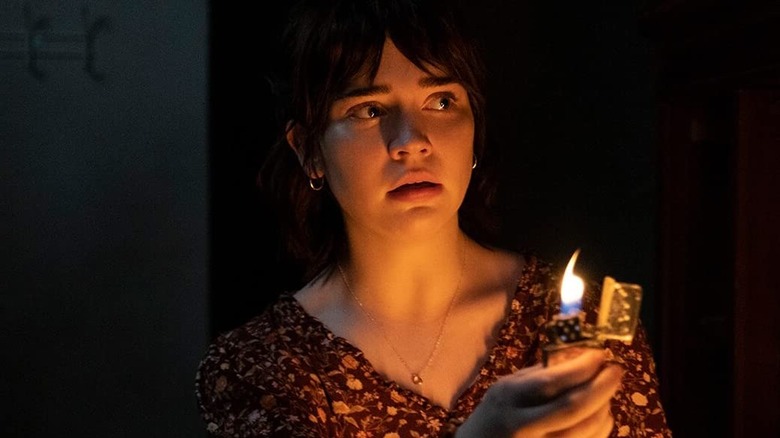
Stephen King adaptations have been experiencing something of a golden age in the 2020s, including what is thus far the highest-rated of all time in terms of critics with the 2025 thriller "The Long Walk." Another recent entry that has seen positive appraisal from critics and audiences alike is "The Boogeyman," the 2023 horror film that went all the way back to the 1973 short story of the same name for its source material. It centers around a recently widowed therapist and father of two who find themselves haunted by a supernatural demon that specifically targets those suffering trauma-related grief.
The reviews for "The Boogeyman" tended to sing its praises... for the most part. Where the critics seem to be in almost unanimous agreement is the movie's ending, which fails to deliver on the movie's otherwise extremely effective build up of expertly-crafted tension. In his review for CNN, Brian Lowry writes, "As is so often the case with these movies, the buildup is generally more terrifying than the payoff." Zeroing in more specifically on the final battle with the titular creature, The Times' Kevin Maher described the scene in question as "a silly climactic confrontation."
Essentially, rather than having the characters best the creature in some sort of complex, psychological manner, they literally take him down with a flamethrower like some absurd action movie. While flamethrowers obviously aren't dealbreakers in and of themselves for the horror genre — see "Alien" or "The Thing" — it just isn't handled well in "The Boogeyman." Instead, it just feels like something that someone came up with at the last minute and went with it.
The Mist (2007)
Frank Darabont seemed like the perfect guy to adapt "The Mist" to film, based on Stephen King's 1980 novella of the same name, as he was the writer and director of two previous King adaptations. And not just any adaptations, but "The Shawshank Redemption" and "The Green Mile," both of which got Oscar nominations for best picture, as well as best adapted screenplay nominations for Darabont himself.
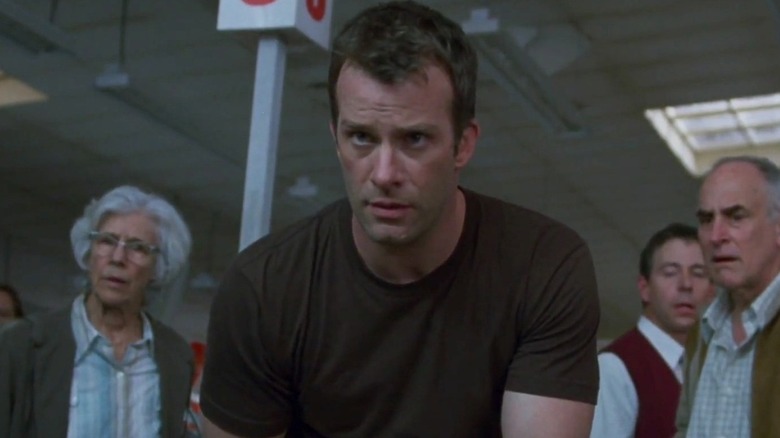
A group of people find themselves trapped in a grocery store, surrounded by a mysterious fog that has brought with it horrifying creatures. At the center of this group is David Drayton (Thomas Jane), who is with his son, Billy (Nathan Gamble). As supplies run out and everyone begins turning on each other, David takes his son and a few fellow survivors and decide to chance it, driving out into the mist in search of safety. And that is where the original book ends, with the car driving off and the passengers of the car hearing of a possible safe haven that they then head towards.
Well, in an example of a moment in a Stephen King adaptation that went too far, Darabont ended the movie differently. Instead, everyone gives up and decides that ending their lives is a better alternative than letting the monsters rip them apart. But there aren't enough bullets for everyone, so David uses them on everyone — including his son — and decides to just let the monsters take him. But then he sees that the mist is lifting and that everything is returning back to normal. Though some, King included, praised the movie's changed ending, it was extremely divisive and many argued that it was just shocking for the sake of being shocking rather than feeling creatively warranted.
Apt Pupil (1998)
The following slide includes references to suicide.
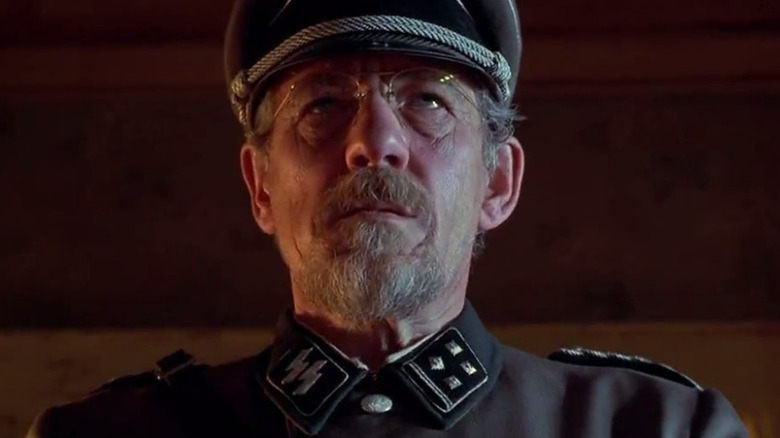
"Apt Pupil" tells the story of an American high schooler named Todd Bowden (Brad Renfro) who befriends his elderly German neighbor Arthur Denker (Ian McKellen). Except that Arthur Denker is actually Kurt Dussander, who changed his name and fled to America to avoid being prosecuted for war crimes committed as a Nazi soldier in World War II.
But Todd isn't horrified by this revelation. In fact, when Todd learns of Kurt's true identity, he blackmails Kurt into telling him stories of the things he did in WWII through threat of turning him in. In the process, Todd becomes fascinated by Kurt, his history, and the dark ideals he still shares. Recalling those days awakens the evil in Kurt, and he begins to commit crimes, some of which Todd helps him with. In the process, Kurt has tutored Todd in his academic studies, turning him into not only an A student but the school valedictorian.
Ultimately, Kurt kills himself and Todd gets away with the whole thing, successfully distancing himself from any confirmed association with Kurt or his crimes. In contrast to the original story, where Todd is shot to death during a shooting spree, the fact that Todd simply gets away with it and is free to just go on with his life wasn't well received. People claimed it was a cop out, and rendered Todd's transformation and actions ultimately meaningless. Even worse, given the eventual misconduct allegations that would come out against the movie's director, Bryan Singer — some of which were said to occur during the production of "Apt Pupil" – that he more or less got away with for many years, it makes the movie ending all the more uncomfortable in retrospect.
If you or someone you know is struggling or in crisis, help is available. Call or text 988 or chat 988lifeline.org.
The Shining (1980)
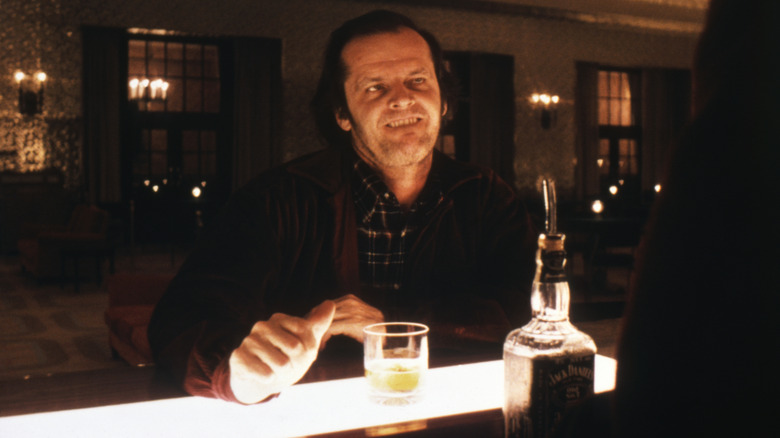
Everyone knows by now how Stephen King really felt about Stanley Kubrick's adaptation of "The Shining." Despite it generally being hailed as a masterpiece — though it took some time to get there after initially meeting a lukewarm at best reception from critics — King has never been shy about discussing all the reasons he thinks the movie fell short of and betrayed his original story. Chiefly among those reasons is King's assertion that the movie version of Jack Torrance (Jack Nicholson) doesn't descend into madness. He's already there right from the start; which, in King's eyes, renders the whole journey meaningless.
King is arguably more entitled to critique the film version of "The Shining" than anyone else, and his opinion on the movie obviously carries a little more weight than others'. All that being said, he's in the minority of the general consensus on the movie, which has made numerous lists of the best horror movies of all time. Still, even those who sing the movie's praises have to concede that the way it ended could've used some tweaking.
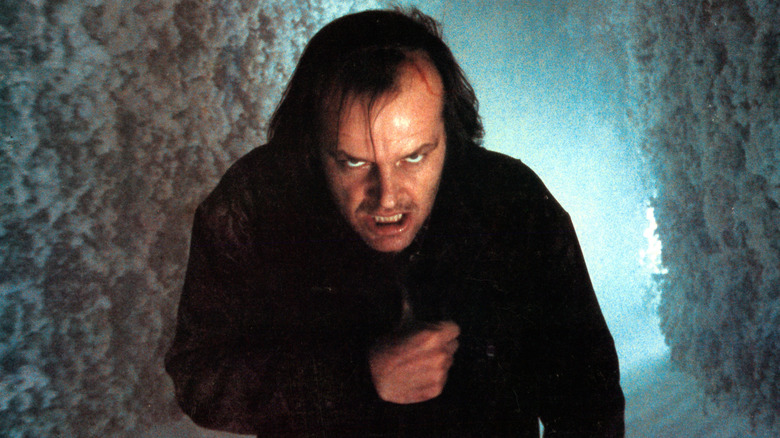
Jack is chasing his family through the hedge maze of The Overlook Hotel, and it being the dead of winter, it's literally chilly on top of being metaphorically so. And after his family eluding him for long enough, Jack simply freezes to death. It feels anticlimactic for a movie that is all about slow-build tension and working towards an ultimate showdown being Jack and his family. King himself sums it up by pointing out that the ending just reinforces the coldness of Kubrick's film and the way it keeps the audience at a distance, which King says misses the point entirely.