

10 Star Trek Episodes That Were Ahead Of Their Time
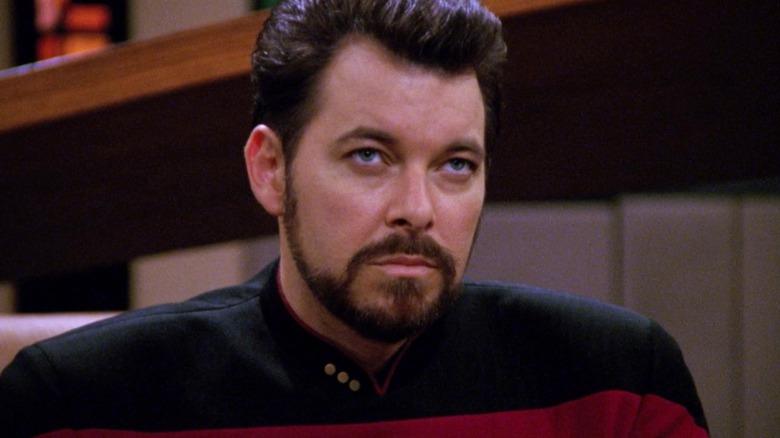
Science fiction is always at its best when it looks ahead, with some sci-fi movies and TV shows capable of predicting the future. But "Star Trek" might be the franchise that does it best, with a thoughtful approach to peering into humanity's future. Because when "Star Trek" explores the years to come, it's not looking at our literal future. Yes, the show is set centuries from where we are today, but it also maps the future of the human condition: Who we are today, where we're going as a society, and who we'll be in our hearts and minds as we grow, learn, and change. To that point, "Star Trek" has long been ahead of its time, both in terms of predicting the future and in how it examines humankind.
Beginning in the 1960s, the "Star Trek" franchise has had more opportunities than most to serve up pioneering stories that pave the way for new ideas and present audiences with something they've never seen before. In time, those same ideas are picked up by others — intentionally or not — and may become commonplace. But diehard fans recognize that "Star Trek" often did it first, presenting thought-provoking ideas that broader society wasn't yet ready to embrace.
From 1966 to today, we've found 10 "Star Trek" episodes that were well ahead of their time. Don't be surprised if we find more as history continues to wind itself forward — "Trek" is just that kind of show.
Death Wish (Star Trek: Voyager)
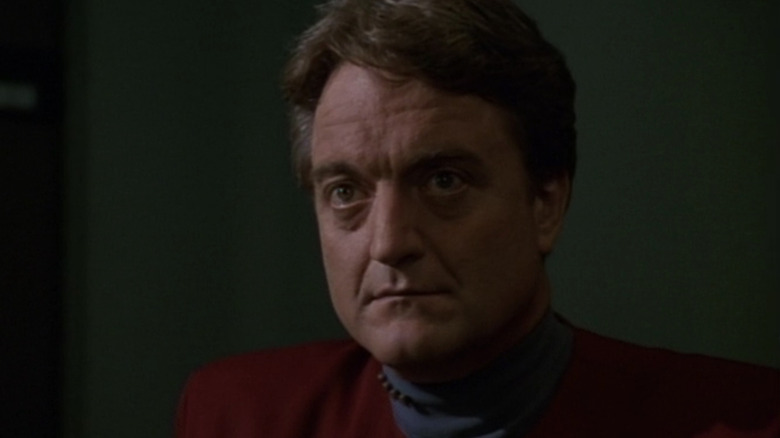
Despite taking place in the distant Delta Quadrant, you might be surprised to learn how many guest stars from other "Star Trek" shows appear in "Star Trek: Voyager." The Season 3 episode "Death Wish" was one of these. The episode is among the best on-screen "Star Trek" crossovers, and it saw the return of Q (John de Lancie), the cosmic trickster who menaced Captain Picard (Patrick Stewart) on "The Next Generation." But the crux of this story involved Quinn (Gerritt Graham), another members of Q's race, who wants to end his own life — a crime among his people.
A courtroom episode that puts Quinn at the center of a hearing to determine his right to asylum aboard Voyager, the episode's discussion of assisted suicide is controversial, to say the least. It was a story taken from current events, too, as it was then that Dr. Jack Kevorkian was on trial for helping terminally ill patients end their lives on their terms. But it's not just the open and frank discussion of the issue that makes this one ahead of its time. It's that the episode states, unequivocally, that individuals should have the right to take their life — which was certainly not the prevailing opinion at the time.
Since 1996, when the episode aired, there are now 12 states in America (and Washington D.C.) with 'death with dignity' laws on the books. The first one, in fact, was passed within a year of "Death Wish" airing, while other countries like Canada, Belgium, and Spain all have similar laws that allow for medically assisted death under certain conditions.
If you or someone you know is struggling or in crisis, help is available. Call or text 988 or chat 988lifeline.org
Homefront/Paradise Lost (Star Trek: Deep Space Nine)
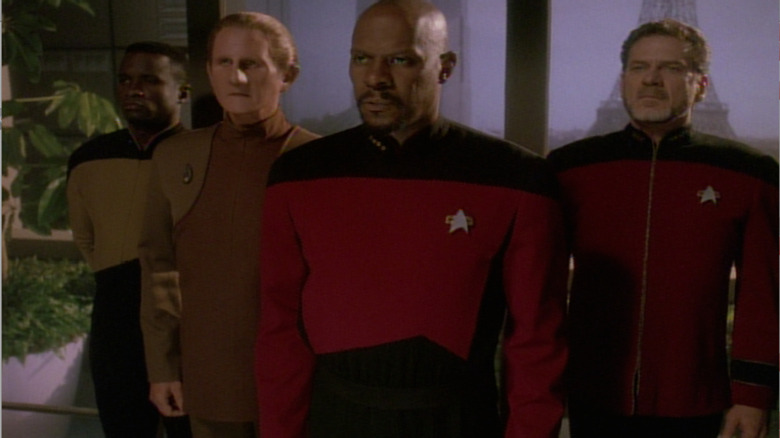
In 2001, following the terrorist attacks on September 11th, everything in American culture changed. That included television. Many dramas got darker, influenced by the rampant fear and paranoia of post-9/11 America. Even "Star Trek" wasn't immune, with the prequel series "Enterprise" producing a heavy story about a devastating attack on Earth that forced Starfleet into crossing ethical lines in search of justice (and resulting in some of "Enterprise's" most underrated episodes). But "Star Trek: Deep Space Nine" did something similar, too — six years earlier.
Years before 9/11, the episodes "Homefront" and "Paradise Lost" begin with a sudden attack on the Federation by the Dominion. A bomb detonates at Starfleet's headquarters amid a diplomatic summit with rival powers. This prompts Earth to enact sweeping security measures, including blood screenings of personnel and their families to secure facilities against shapeshifting alien infiltrators. While Admiral Leyton (Robert Foxworth) defends these measures as necessary for security, others are shocked at how they are being forced to sacrifice their freedom and privacy to become a surveillance state, with new laws that threaten their personal liberties.
While many shows, including "Star Trek," had told stories about terrorism and overzealous police states, this story has eerie similarities to what would later happen in post-9/11 America. The resulting paranoia over another attack led to controversial new surveillance laws like the Patriot Act, and other clandestine efforts would be uncovered by whistleblowers like Edward Snowden.
The Measure of a Man (Star Trek: The Next Generation)
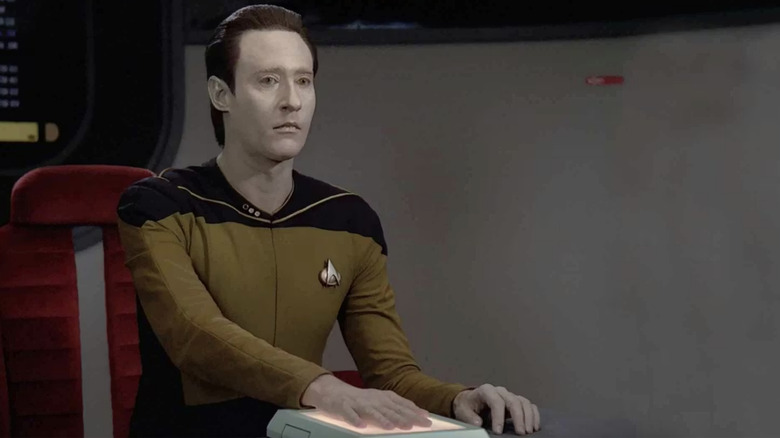
In the late '80s, personal computers were still relatively new, and it would be years before they became a household item. Most people didn't even understand what computers could do, let alone how they worked, and artificial intelligence wasn't a term that the average TV viewer was familiar with. Yet, in the "Next Generation" episode "The Measure of a Man," the series examines an issue that nobody but science fiction writers could have dreamed up: The rights of a computer as a living being.
The episode, from the show's second season, introduces us to a cyberneticist named Bruce Maddox (Brian Brophy), who intends to disassemble the android Lt. Commander Data (Brent Spiner) in an effort to duplicate him. But when Data refuses to submit, Maddox charges that Data isn't a person, and thus cannot refuse the procedure. Nor can he resign from Starfleet to escape what would be a fatal command. To settle the matter, Captain Picard must argue before a court to prove that Data is a sentient person, with the same rights and privileges as anyone else in the Federation.
While we might still be some time away from a real court case to decide if a computer can make decisions about its own existence, we're probably not as far away as one might think. Artificial intelligence is rapidly progressing, and some media outlets like The Hill suggest that we should have legislation in place before it becomes a problem.
The Ultimate Computer (Star Trek: The Original Series)
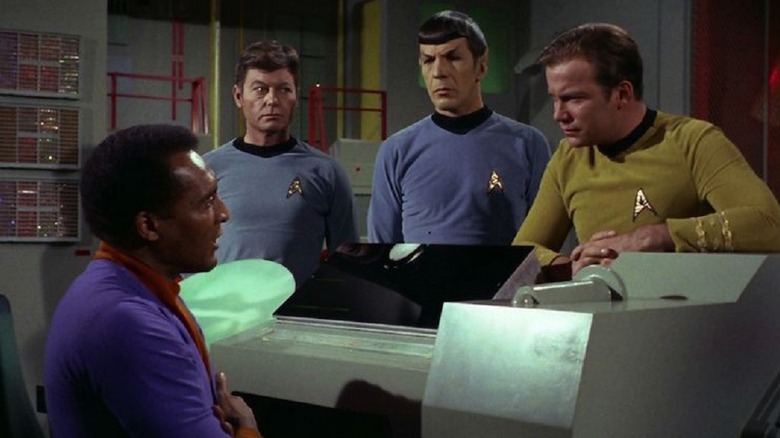
When the original "Star Trek" was airing on NBC, computers were nearly magical to the average person. Computers were the size of entire rooms, and were used for only the most challenging mathematical and scientific research. The computer age was still in its relative infancy — personal computers didn't exist, there was no internet, and barely any networking of any kind. Yet, "Star Trek" used a computer every episode, and the Season 2 installment "The Ultimate Computer" (an episode that begs for a modern remake) went further than most.
Decades before computers were mainstream technology, and before stories of AI takeovers became common in Hollywood — with another sci-fi movie ahead of its time, "Colossus: The Forbin Project" still years away — "The Ultimate Computer" addressed the dangers of unchecked technology replacing human labor. It introduces scientist Richard Daystrom (William Marshall) and his plan to install a new, revolutionary computer system on the Enterprise that will make a human crew nearly obsolete. With an advanced intelligence, he claims, the computer can make decisions faster and better than any person could. Unfortunately, its programming doesn't work as intended and lives are lost.
Long before "computers going haywire" stories became popular — even a year before "2001: A Space Odyssey" hit theaters — "The Ultimate Computer" told a story about an ego-driven tech genius whose obsession with proving his technology blinds him to the very real dangers that his work poses. Does this sound familiar?
A Private Little War (Star Trek)
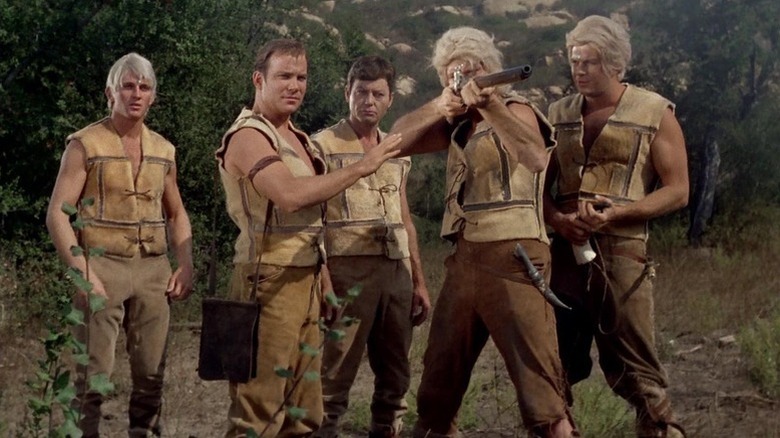
The Vietnam War, fought from the mid 1950's through the mid-70's, was at its peak in 1966 when the original "Star Trek" was airing. The war had been ongoing for years at the time, but it was only fairly recently that any significant anti-war sentiment began gaining steam. And though the war proved to be a broad canvas for Hollywood in the '70s and '80s, leading to some of the best war stories in cinema, "Star Trek" might have been among the first to openly criticize American Imperialism on network television. But many fans may not have realized it, because the message was relayed through science fiction allegory in the 1967 episode "A Private Little War."
Scripted by series creator Gene Roddenberry, himself a military veteran who served in World War II, "A Private Little War" is a clear anti-war story that uses the Klingons as a stand-in for the Russians, while Captain Kirk and Starfleet represent America and its Western allies. Caught in the middle is an alien world that takes the allegorical place of Vietnam, where the Klingons have been aiding one side of an internal war because the planet holds valuable resources. Now, Kirk begins arming the opposing side, escalating a conflict that soon forces him to reevaluate the entire situation.
A rare '60s story to take a jab at America's global influence and the West's imperialistic attitudes long before Vietnam protests reached their peak, "A Private Little War" didn't hold back.
The Outcast (Star Trek: The Next Generation)
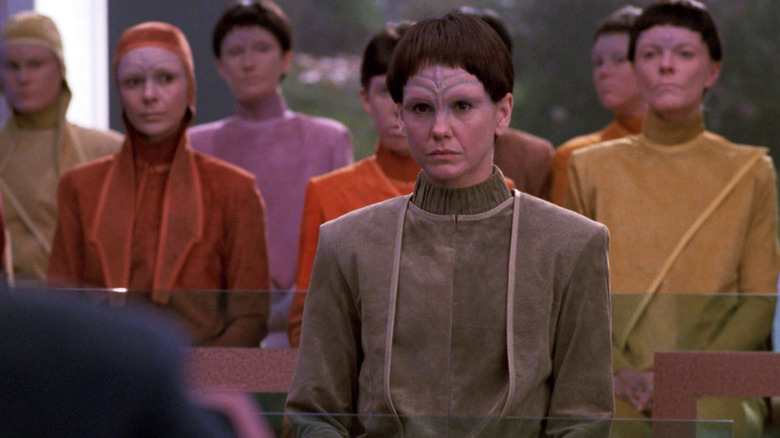
"Star Trek" has a long history of exploring controversial and even taboo subjects, with early episodes like "Let That Be Your Last Battlefield" and "A Private Little War" getting seriously political as they examine issues of war and race relations. Decades later, the sequel series "Star Trek: The Next Generation" aired an episode titled "The Outcast" that once again took a look at a touchy subject before most TV dramas were ready to do the same. It's an episode that uses an alien race called the J'Nai to make a statement about gay rights — years before most shows were talking about the topic.
In the episode, Riker (Jonathan Frakes) is assigned to a mission alongside a J'Nai scientist named Soren (Melinda Culea). The J'Nai, he learns, have no gender at all; androgynous, by our terms. But as Soren explains, on rare occasions, a person on their world is born with an inclination towards either male or female. This makes them pariahs, or worse, forced into institutions that seek to curb their inclinations. And Soren is one of them, identifying as a woman.
The episode, aired in 1992, has its issues by today's standards and has faced some criticism. The episode's star, Jonathan Frakes, whose character falls in love with Soren, felt the allegory would have worked better if a man had played her — but the episode is still far ahead of its time in how it talks about gender. Riker, a stand-in for the audience, is told about what it means to be neither a man nor a woman, beginning a discussion about non-binary identities that is more important than ever.
Babel (Star Trek: Deep Space Nine)
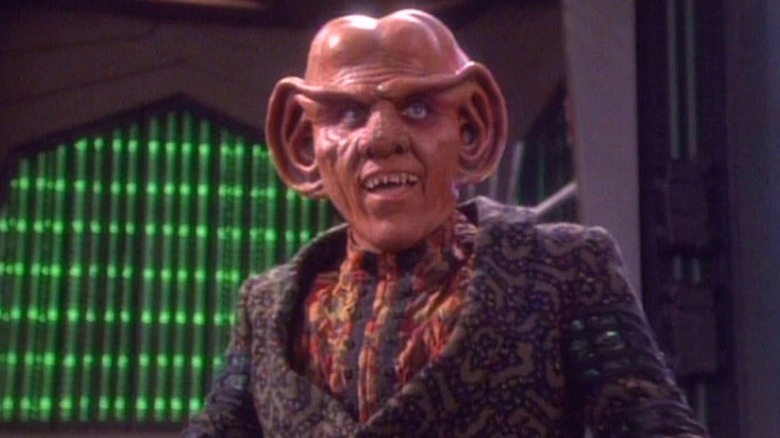
In 2020, much of the world was forced to deal with a pandemic that ravaged populations, killing millions, and altering the way we live our lives. At the height of the pandemic, governments around the world took drastic measures to attempt to halt the spread of the virus, with many choosing to close businesses and enforce curfews. Though many sci-fi stories have cautioned about what might happen in the event of a global pandemic, the "Star Trek: Deep Space Nine" Season 1 episode "Babel" was ahead of its time in portraying how a society would deal with those restrictions.
"Star Trek: Deep Space Nine," is set on a space station that is its own living community, complete with businesses, shops, restaurants, and living quarters — an island, functionally. So when a virus strikes the station, Commander Sisko (Avery Brooks) opts to do what many did amid COVID-19: closing all but essential services and putting the station under quarantine.
The problem is, for local Ferengi bartender Quark (Armin Shimerman), this means halting business and cutting his profits. And as many did during COVID, the capitalist Ferengi continues selling food, considering himself an essential service. In doing so, he inadvertently — but predictably — winds up spreading the virus further, until it threatens to infect everyone.
The Offspring (Star Trek: The Next Generation)
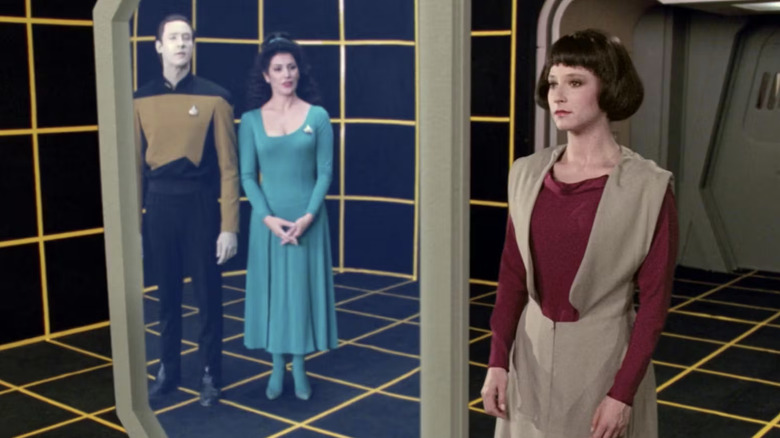
When "Star Trek: The Next Generation" began, Data is described as the only one of his kind. We later meet his evil twin brother Lore, one of the best villains in "Star Trek," but it's in the Season 3 episode "The Offspring" that Data attempts to create another being like him — an android named Lal (Hallie Todd). It's a story that is surprisingly ahead of its time in several ways, not the least of which is a story point that sees the newly-emerged android choose their own gender.
So radical an idea was self-selected gender that it didn't even register as a discussion point. These days, the very notion of choosing your gender is controversial, as the rights of transgender people has become a hot-button issue worldwide. But long before the term became commonplace, "The Offspring" depicts Lal — who also decides on their own name — as having the option of being male or female.
There are still some antiquated ideas here, like the idea that there could only be male or female (which is especially odd as there are alien races in "Star Trek" with more than two genders) — or Counselor Troi's comment that their gender cannot be altered later. Still, the fact that it even addresses the notion at all is well ahead of its time, considering it aired in 1990.
Virtuoso (Star Trek: Voyager)
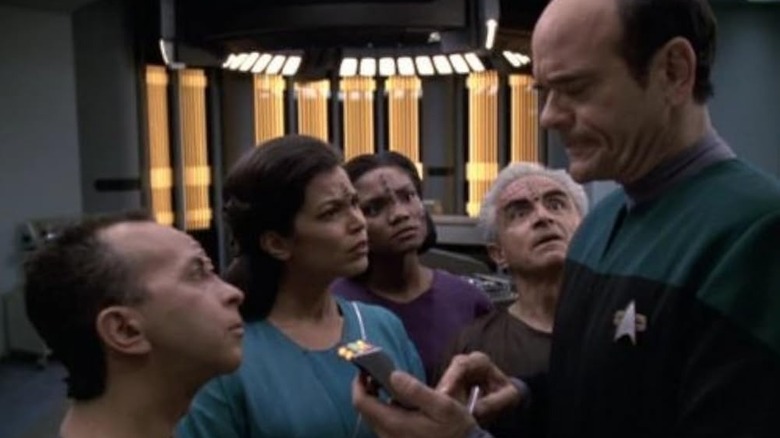
As time marches on and new social and technological developments progress, even episodes that are decades old and never considered prescient may gain fresh attention for being exactly that. One such "Star Trek" episode in that category is the "Star Trek: Voyager" Season 6 entry, "Virtuoso." An otherwise forgettable installment that is most notable for letting actor Robert Picardo perform his own musical numbers, "Virtuoso" has emerged very recently for new discussion when it comes to the convergence of technology and art.
The episode begins with the holographic Doctor (Picardo) feeling under-appreciated for his creative talents — in this case, singing. So when he meets a race of mathematically-obsessed aliens called the Qomar, who've never heard of music, he becomes idolized for his ability to turn simple mathematics into harmonies and patterns — or what we know as songs.
The problem becomes, however, that the Qomar can only see the mathematical side to music, not the emotional or creative aspects. So when they set out to make their own music, it's entirely soulless. It's built by numbers and algorithms to achieve a simple mathematical goal, rather than trying to affect an audience on a deeper level, as real art should.
At the time, "Virtuoso" was a story about ego, with the Doctor ready to leave the ship because the Qomar are recognizing his creative abilities and revering him for it. But looking back today, it's easy to see how the Qomar's attempt at making music based on algorithms alone feels very much like today's AI-generated "art."
Hollow Pursuits (Star Trek: The Next Generation)
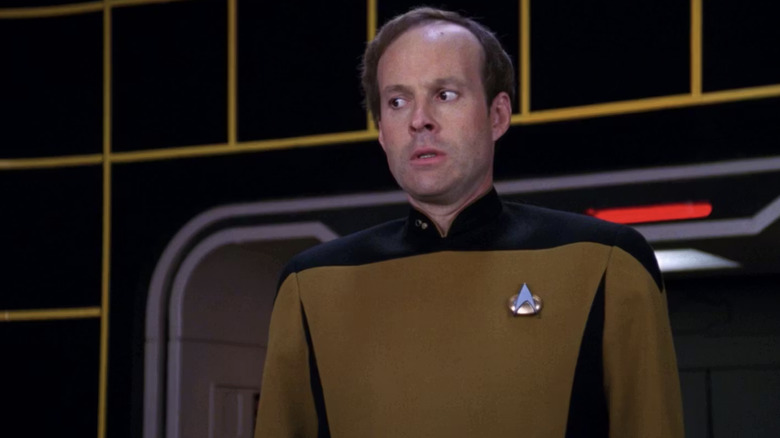
One of the biggest strengths of "Star Trek: The Next Generation" was its ensemble cast, and that includes highlighting its secondary supporting players like Lt. Reginald Barclay (Dwight Schultz). He's introduced in the Season 3 episode "Hollow Pursuits," which focuses on Barclay's addiction to the holodeck. One could consider this aspect itself ahead of its time, as it's become relevant to today's internet, and touches on the AI addictions that have become a real and sometimes deadly problem. But where the episode was truly ahead of its time was its frank discussion of social anxiety and depression.
Lt. Barclay is a newly assigned officer to the Enterprise in "Hollow Pursuits," but struggles to get along with the rest of the crew. While many initially view him as lazy, uncommitted, and disrespectful, the ship's resident bartender, Guinan (Whoopi Goldberg), gets to know him and discovers he's suffering from acute social anxiety. As a result, he's begun using the holodeck to recreate an ideal life on the ship. It allows him an outlet for his feelings to cope with the stress.
In one key scene, Barclay talks with Chief Engineer La Forge (LeVar Burton) and describes the difficulty he feels when socializing, and his challenges when trying to get along with the rest of the crew. It's a moment that has long resonated with fans who suffer similarly, and at a time when such maladies weren't openly discussed, let alone understood.