
5 Best Animated Movies That Weren't Nominated For Oscars
In its near century-long history, the Academy Awards have displayed a proclivity towards certain movies and performances above others. For instance, the Oscars have an obsession with biopics and their performances, and mediocre dramas tend to win over genre fare or light-hearted comedies. Then there's the grave erasure of animation from the biggest categories. As of this writing, only three animated features have procured best picture nominations, and even these were largely ignored in other major categories simply because of the medium in which they were realized. Animation geeks know all too well the annual pain of seeing this high-profile award show ignore some of the best animated movies of all time.
Encapsulating this infuriating phenomenon are five specific animated movies that received zero Oscar nominations. A majority of these titles even released after the creation of the best animated feature category, making their complete absence extra inexplicable. But just because they couldn't shatter the cold shoulder the Oscars gives animation doesn't mean they should be ignored. If anything, looking back on their inability to garner Academy Award recognition only further illustrates these films' mastery of animated storytelling.
A Town Called Panic
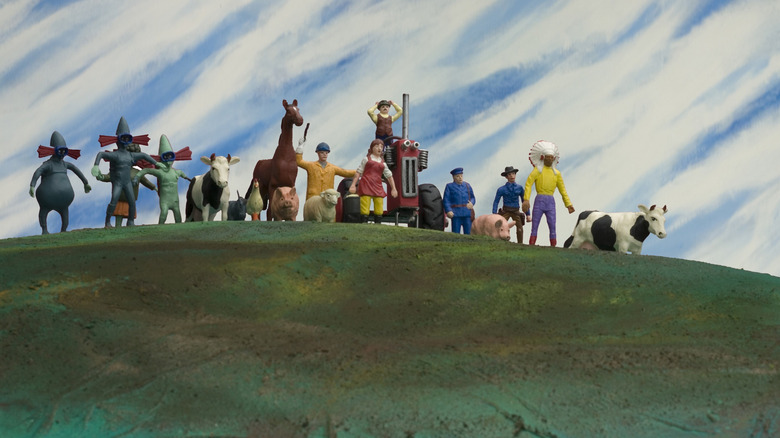
The most beautiful stop-motion films ever reveal the glorious joys this painstakingly meticulous art form can produce. The time-consuming nature of stop-motion artistry typically results in films emphasizing grand beauty or quiet contemplations on existence. For 2009's "A Town Called Panic," though, this medium realizes relentless and hysterical silliness. Directors Stéphane Aubier and Vincent Patar adapted their French TV show of the same name for an odyssey of madness revolving around Cowboy (Aubier) and Indian (Bruce Ellison) trying to build a barbecue pit for their pal Horse (Patar). A faulty online order for bricks sends the trio on a madcap race across the planet.
"A Town Called Panic's" world intentionally looks like a bunch of children's toys hobbling around. That makes the film's "anything goes" storyline fittingly appropriate, as it feels like what a youngster would come up with on the fly. That unpredictability informs much of the side-splitting hilarity, since it's truly impossible to predict what gags will fill up the screen next. Aubier and Patar's goofball tendencies demonstrate real skill in precise timing, as seen in unforgettable jokes like Horse "playing" a piano. And thats only one of "A Town Called Panic's" many grin-inducing joys and punchlines, all packed into just 76 minutes of stop motion wonder.
Chicken Run
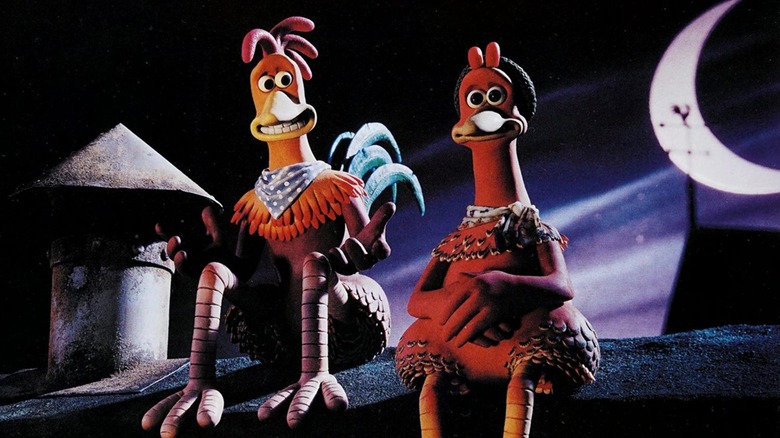
When ranking every DreamWorks Animation movie from worst to best, the titles made in partnership with British animation outfit Aardman typically top the list. While the collaboration didn't last long, the trio of Aardman/DreamWorks features saw the former studio bring its trademark wit and visual creativity to exciting new heights. That feat was apparent from the beginning with 2000's "Chicken Run." The tale of a bunch of chickens trying to escape from their cruel farm, "Run" was a thrilling pastiche of prisoner-of-war movies that didn't sacrifice striking or ominous imagery to appease the feature's target demographic.
On the contrary, directors Nick Park and Peter Lord got a lot of comedic mileage out of juxtaposing humorous images and chunky chicken protagonists with beautifully composed nighttime tableaus. Meanwhile, the commitment to making adversarial characters like Mrs. Tweedy (Miranda Richardson) genuinely imposing lent real, compelling stakes to this saga. Better yet, Aardman's scrappy stop-motion animation is a delight to behold in "Chicken Run." Tactility is one of the great benefits of telling stories with clay, amplifying how emotionally involving this world is.
Alas, "Chicken Run" didn't score any Oscar nominations. Ironically, its inability to get nominated for best picture is alleged to have inspired the creation of the best animated feature category. However, its sublime artistry has endured nonetheless, especially compared to many lesser DreamWorks titles.
Paprika
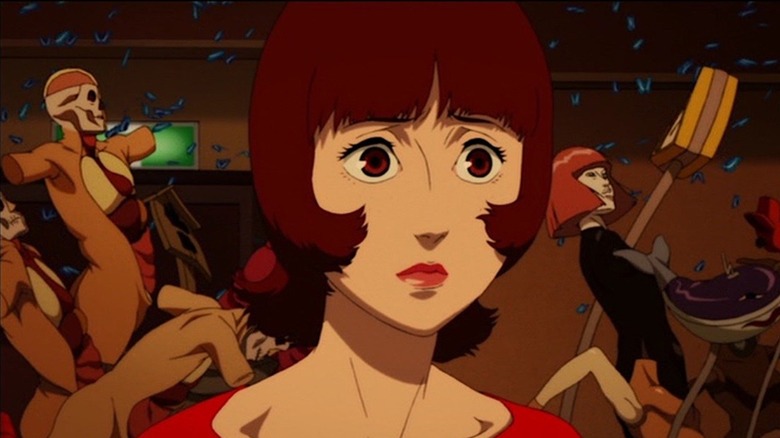
The hand-drawn masterworks of director Satoshi Kon, beloved for helming films like "Tokyo Godfathers" and "Perfect Blue," are incredible achievements. They're especially astonishing as displays of heightened and surrealistic visuals. Kon used the limitless opportunities of hand-drawn animation to reproduce trippy illustrations ripped straight from a psychedelic dream. The grandiose tendencies of Kon's works were vibrantly displayed in 2006's "Paprika," which saw reality and dreams colliding, a situation that only researcher/psychiatrist Dr. Atsuko Chiba (Megumi Hayashibara) can solve.
The ensuing experience is like walking through a chaotic dream, with distinctive visual aesthetics and color schemes for various backdrops. Chiba, and "Paprika" viewers, never know what's coming next, making for a captivating cinematic experience. Its striking use of vivid red and green hues alone are enough to keep your eyes glued to the screen. Even with Kon's past projects that blurred the lines between reality and artificial realms, "Paprika's" especially bold commitment to the inexplicable makes it stand on its own two feet.
Infuriatingly, none of Satoshi Kon's works, including "Paprika," were ever nominated at the Academy Awards. However, no award nomination or win is near as impressive a feat as helming a movie as bursting with the inventiveness of "Paprika."
Mary and Max
2009 was a phenomenal year for global animation. Whether it was "Ponyo," "Up," "Fantastic Mr. Fox," "A Town Called Panic," or "The Secret of Kells," you didn't have to look far to uncover incredible treasures. Among the quieter but no less impactful releases that year was "Mary and Max," the stop-motion animated feature debut from acclaimed director Adam Elliot. It chronicles the long-term exploits of Mary (Toni Collette) and her pen-pal Max (Philip Seymour Hoffman), two people who couldn't possibly be more different. Separated by continents and distinctively varying circumstances, the pair bond over time and find comfort in their friendship.
Elliot's never been one to shy away from grim, even brutal elements in his work. His films such as "Harvie Krumpet" and "Memoir of a Snail" feature stylized characters, but tap into very real and harrowing aspects of everyday life that even many live-action dramas refuse to acknowledge. That narrative and thematic audacity inform an aching tale whose powerful nature is only amplified by outstanding voice work from Philip Seymour Hoffman, who lends potent layers and lived-in wisdom to Max's worldview.
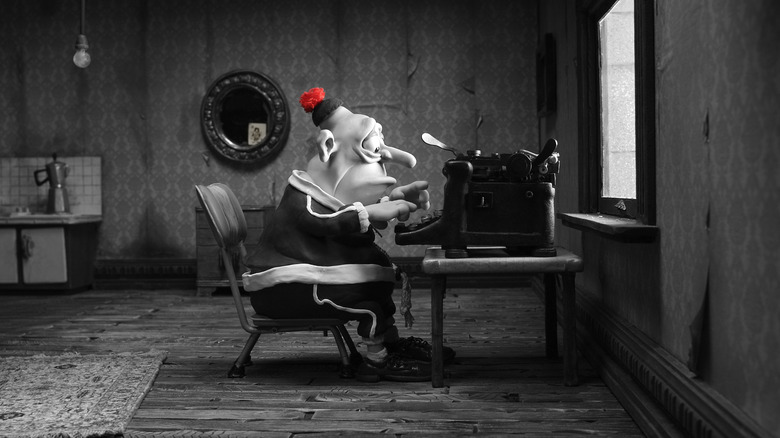
Meanwhile, the animation realizing Mary and Max's worlds is tremendously impressive. Jagged yet tactile, the diverse monochromatic environments radiate a compelling sense of wear and tear. "Mary and Max" is a heart-shattering exercise that also reassures viewers that comfort and solidarity can be found anywhere and in anyone.
It's Such a Beautiful Day
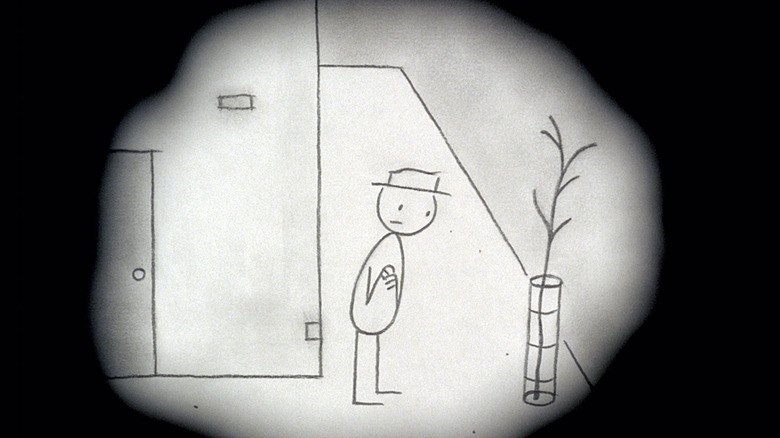
Filmmaker Don Hertzfeldt's trademark scribbly animation style often conceals profound truths. Ever since his career-launching short film "Rejected," the minimalist, imperfect visuals in Hertzfeldt's works have housed searing commentary on both contemporary society and existence itself. In 2012, Herzfeldt crafted his magnum opus with "It's Such a Beautiful Day," an odyssey following seemingly ordinary man Bill, who struggles with remembering things. The feature's surrealist animation and editing style perfectly and ominously reflect Bill's tormented psyche, making it a perfect animated movie for horror fans. There is no sense of stable reality for our protagonist. Thus, the audience doesn't receive any consistency either.
Among the many impressive qualities of "It's Such a Beautiful Day" is how it smuggles devastating emotional wallops alongside ludicrously humorous moments perfectly befitting a filmmaker who gave the world the line "my spoon is too big!" However, "Beautiful Day" really sings in its depiction of existential despair. Time's ceaseless march informs a pervasive bleakness that will leave any viewer shaken. The increasingly unhinged imagery and the mournful psychological impetus behind that visual spiraling are similarly impactful.
Metacritic says there are only 24 near-perfect animated movies. It's no surprise "It's Such a Beautiful Day" is one of them.