

The Copenhagen Test Review: Simu Liu Stars In Mediocre Espionage Fare
- Decent but underused cast
- Unnecessarily complicated and derivative plot
- Underwhelmingly standard spy tropes
- Lacklustre suspense and action scenes
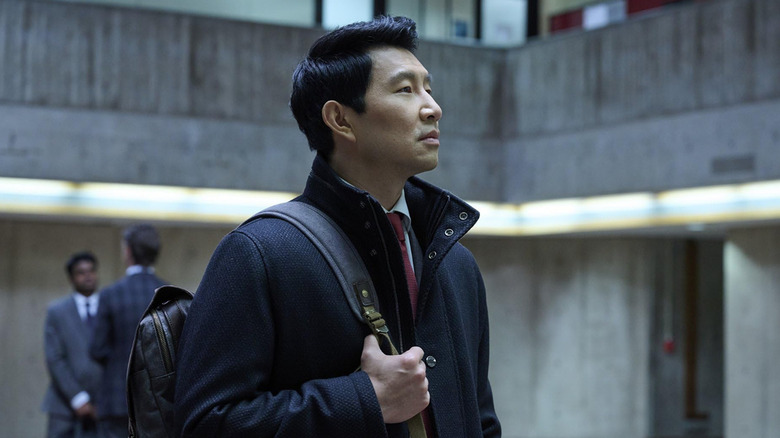
"What kind of actor does Simu Liu want to be?" is the question I found myself asking while watching Peacock's new, run-of-the-mill espionage series, "The Copenhagen Test." While "Shang-Chi and The Legend of The Ten Rings" made him a globally-known star in 2021, he's hardly done anything worth mentioning in the films and TV shows that followed. It's even difficult to remember him in Greta Gerwig's existential dream house of a movie, "Barbie," even though I really enjoyed that film. Liu is an adequate enough actor, but doesn't necessarily aim for prestige over a paycheck. That's perfectly fine, but then nobody should be surprised when he gets to headline a barely promoted, forgettable, and excruciatingly vapid TV show such as creator Thomas Brandon's latest.
The eight-episode series follows Liu's Chinese-American analyst Alexander Hale, who's been trying to get back on the field where the action is, instead of watching it on the screen at the headquarters of The Orphanage, a secret intelligence service he works for. The trouble is, when he was a special forces soldier, he made a mistake by saving a Belarusian child over an American citizen, and he didn't just lose his position but developed severe PTSD too. Ever since, he's been having irregular panic attacks and popping pills (which he gets from his ex-fiancée) to mask the clearly serious issue. But we learn early on, that mission was actually a test to prove his loyalty and skill set to The Orphanage, and everyone was in on it except for him.
In fact, Alexander has microscopic nannites in his bloodstream that make it possible for the intelligence service to see and hear everything he does and says. This also means the enemy can "hack his brain," and when Alexander and The Orphanage discover that's happened, his life itself turns into a mission that he no longer has control over. They want him to keep acting and living like he has no idea that some real bad people are watching his every step to gather potential intel about The Orphanage, so he has to pretend to fall in love with a bartender and follow the instructions given by his bosses to bait whoever hacked his brain.
This all sounds overly (and unnecessarily) complicated, even though it's meant to be a high-concept variation on the classic genre trope of a "watcher being watched by other secret watchers." You get the idea instantly, but Brandon and his writers spend a lot of precious screen time overexplaining it from multiple perspectives, in order to create suspense and intrigue, while introducing an ensemble of cliched characters. The result is a slow-moving, tedious, and derivative story that never really provides anything original or engaging for the viewer.
Standard but shallow spy tropes are rolled out with no flair
"The Copenhagen Test" is never truly terrible or painful to watch, but it also fails to offer anything outstanding to write home about. Both its story and characters are surface-deep, pulling exactly the kind of twists and moves that surprise no one who has at least some familiarity with how spy narratives usually unfold. You know from the get-go that nobody can be trusted in this world, and that there's always some powerful, tyrannical figures behind the scenes, manipulating everything and everyone from dark mansions and VIP sections of elite restaurants. None of these characters has distinct or layered personalities beyond being villainous or predictably righteous, which makes it nigh impossible to root for or against them.
The only character I found slightly intriguing is Alexander's watcher, Parker (Sinclair Daniel), who constantly battles with the morality of her choices (those that The Orphanage forces her to make, whether they're ethical or not), and has a growing compassion for Simu Liu's protagonist. But even she's too stereotypical and one-note in the story rather than a key or particularly likable ally.
That dull and unexciting quality seeps into the action sequences, too. Every brawl and gunfight rolls out with no flair or inspired choreography, keeping our attention meter just above "dangerously low." And even though Liu moves comfortably and confidently in these scenes as a trained martial artist, he just can't elevate them to a more-than-standard level. As with every other component in the series, these bits aren't horrendous, just disappointingly ordinary for the emotions they're meant to elicit from the viewer.
Even a capable ensemble cast can't save The Copenhagen Test from mediocrity

Despite his lead status, Simu Liu might be the least impressive member of the carefully assembled cast here. As his dangerous and secretive love interest, Michelle, Melissa Barrera easily dominates every moment the two share, capturing the duality of her character with deceptive charm and merciless matter-of-fact efficiency. Simply put, she often feels too good to be here, wasting her talent on a series that's doomed to sink into mundanity.
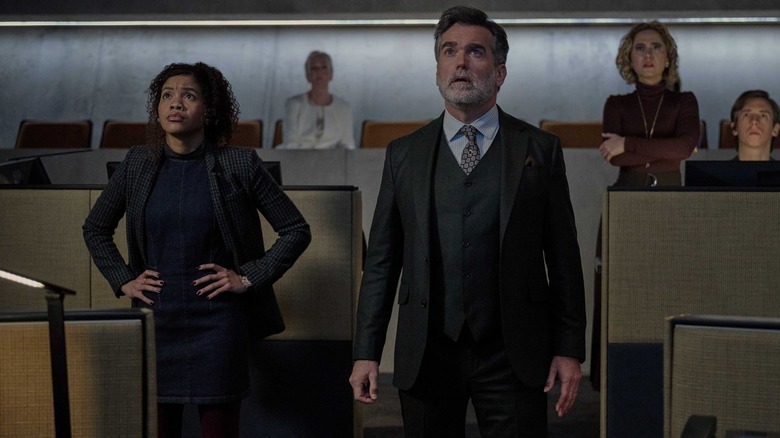
In the other roles, Brian d'Arcy James plays Alexander's strict, sharp boss in workmanlike fashion, since he's not given much to play beyond a stereotype. That also could be said about Sinclair Daniel, Mark O'Brien, or Adina Porter: They're all faces you know, but this isn't the type of series where you can see them shine. And last but not least, Kathleen Chalfant fittingly inhabits the role of The Orphanage's secret ruler, firm and mysterious, and has as much fun with it as she possibly can.
Overall, "The Copenhagen Test" will likely serve as nothing more than a pit stop in all of these actors' careers, utterly forgettable and hardly worth mentioning. Casual espionage fans might get more out of it as brainless popcorn TV, but I can't really recommend the series for anyone else as much more than background noise.
"The Copenhagen Test" begins streaming on December 27 on Peacock.