

6 Movie Scenes That Took Weeks To Shoot (And It Shows)
It's impossible to say how long it takes to make a movie. Some films are shot in a matter of days, while others have their production stretched out for months and even years depending on the circumstances. Occasionally all that effort goes to nothing, but there are plenty where that extended shoot pays off in a big way.
The most iconic movie scenes that were near impossible to capture, saw filmmakers stretch their imaginations and use every tool at their disposal to create miracles. Others were simply too challenging to get right. For every difficult movie scene actors nailed on the first try, there are countless more that took dozens of takes to land. Whatever the case, the best of these laborious movie moments exemplify a unique pairing of extensive preparation and lightning-in-a-bottle energy, cementing their place in cinema history. We've gathered a handful of scenes that several weeks to film, but were worth every second of that effort.
The Battle of Helm's Deep was a real undertaking
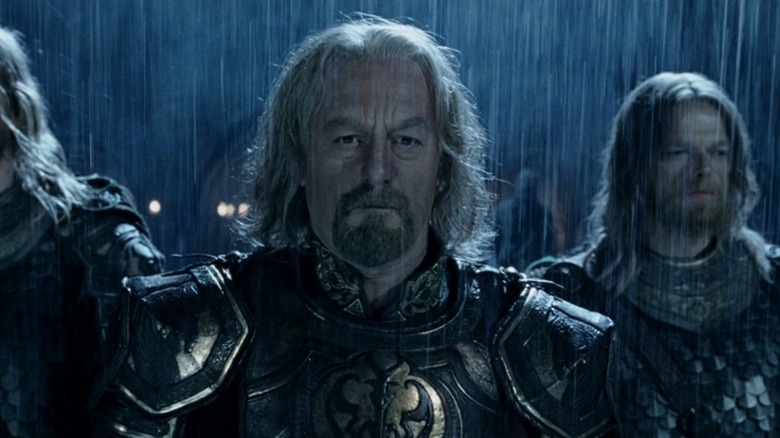
The Battle of Helm's Deep is the climax of "The Lord of the Rings: The Two Towers," and Peter Jackson's ambitious cinematic take is without a doubt one of the greatest battles ever seen on screen. The filming of Helm's Deep is an epic story that began well before cameras rolled. The crew spent months building the Helm's Deep set inside a real-life quarry in New Zealand, and a huge amount of costumed extras and stunt performers were brought in to give the scene its scale.
That initial work took months, but so did filming the battle. All the fighting at Helm's Deep takes place at night in the story, and the crew spent 120 days — that's over 17 weeks — shooting the battle in the quarry. Performers were organized into elf and orc armies that charged into battle night after night to get those perfect wide shots, and individual actors had to perform intense choreography to capture the unique styles of each group. The scale of the Helm's Deep shoot is hard to wrap your head around, but the final product more than speaks for itself.
The Wind Rises has some gorgeous details
Studio Ghibli is one of the most celebrated animation houses of all time. The company is responsible for unforgettable films like "Howl's Moving Castle," "Spirited Away," and countless others. In the best Studio Ghibli movies, you feel the painstaking effort that went into every frame. Even if you're tuned into the work it takes to create such beautiful animation, you'll probably still be surprised by one of the company's most involved scenes.
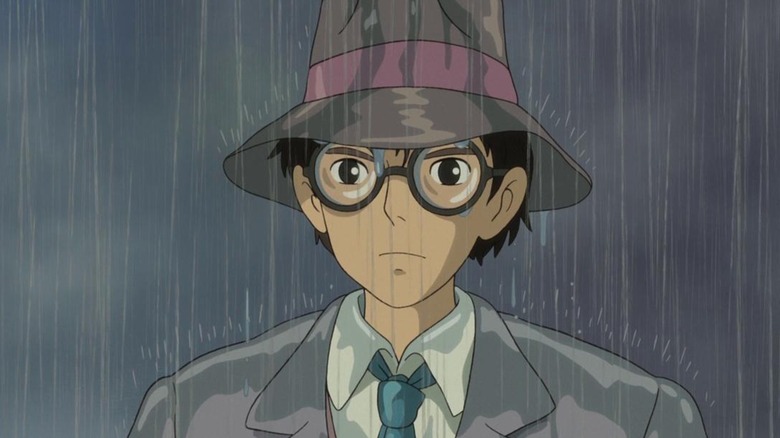
2013's "The Wind Rises" follows aeronautical engineer Jiro Horikoshi (Hideaki Anno), who works on the A6M plane during the second World War. The semi-biographical tale is a touching and personal story, with one brief scene near the beginning exemplifying just how much care went into the production. Supervised by animator Eiji Yamamori, the sequence sees Jiro move through an active crowd shortly after a devastating earthquake. The shot lasts just around four seconds, but is so layered with intricate detail and complicated motion that it took 15 months to layout and animate. While "The Wind Rises" lost the 2013 best animated feature Oscar to "Frozen," the movie's brief crowd shot is a testament to how much love and care director Hayao Miyazaki and company put into even the smallest details.
Dragon Lord pushed Jackie Chan to the extreme
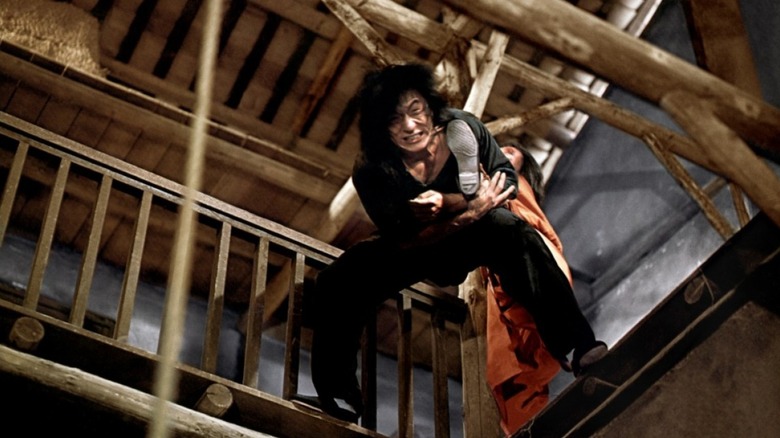
Some scenes take weeks to film because of their immense detail or scale. Others just require a lot of redos. Take the lunch tray scene, one of the most paused moments in Tobey Maguire's "Spider-Man," that took over 100 takes for Maguire to actually catch all the falling food. In a similar vein, Jackie Chan once spent more than a month filming a single, practical stunt.
The stunt in question from 1982's "Dragon Lord" is, oddly enough, pretty inconsequential. The film follows martial arts student Dragon (Chan) who runs afoul of a local group of thieves. In one scene, Dragon plays a shuttlecock match entirely with his feet, and Chan reportedly insisted on actually performing the nearly impossible feat himself. Chan shot dozens of takes every day for over four weeks — 40 days in total — to perfect the stunt. It's hard to pin down exactly how many takes Chan filmed, but estimates put it at well over 1,000 and possibly even close to 3,000. Regardless, the effort shows, as everything you see is — unbelievably — 100% real and practically achieved.
Quicksilver's slowed time took forever in X-Men: Apocalypse
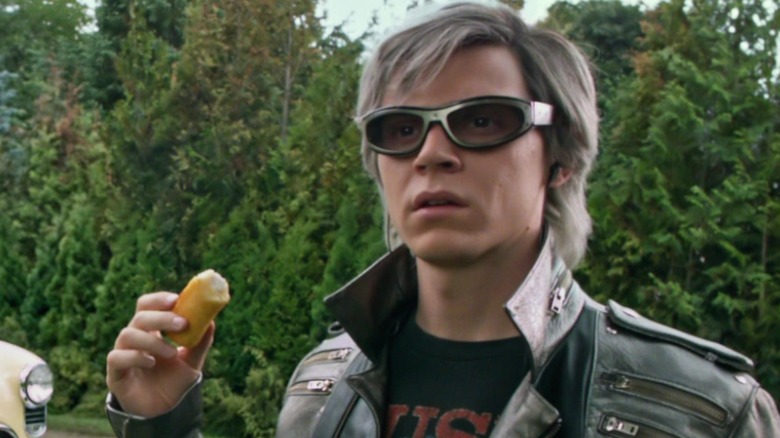
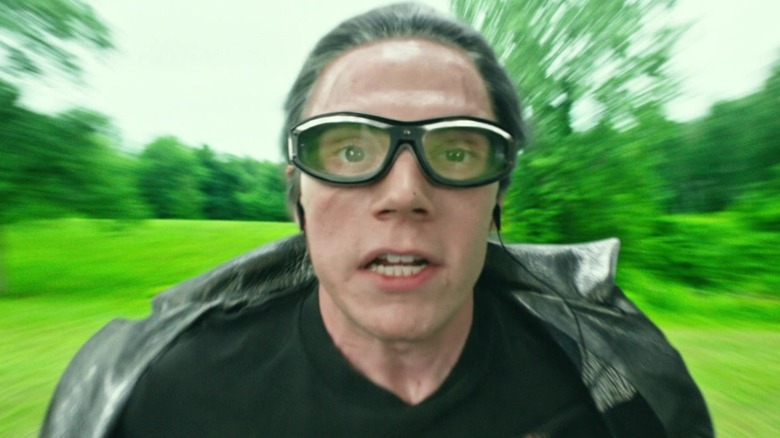
"X-Men: Days of Future Past" introduced superhero fans to its version of Quicksilver (Evan Peters), the speedster whose been running through the comics since his first appearance in "X-Men" issue #4 all the way back in 1964. In one of the most iconic superhero moments ever put to screen, time slowed around Quicksilver as he ran around a kitchen knocking out a team of guards in under a second. Its follow-up, "X-Men: Apocalypse" upped the ante by spending over a month filming a scene where Quicksilver saves his classmates from Xavier's Home for Gifted Youngsters as the entire building explodes.
"It's quite elaborate, it took one and a half months to shoot," said director Bryan Singer in a behind-the-scenes featurette for the movie. He added that Peters spent 17 days just filming that one sequence which only takes up a little over two minutes in the movie and one second of real time in the story. But that wasn't the end nor even the beginning of the work. The entire scene had to be pre-visualized digitally to map out things out before shooting, and afterwards the sequence required a ton of visual effects work in post-production. The whole process took weeks, but the result is one of the coolest scenes in any "X-Men" film.
A Good Day to Die Hard filmed a car chase for the ages
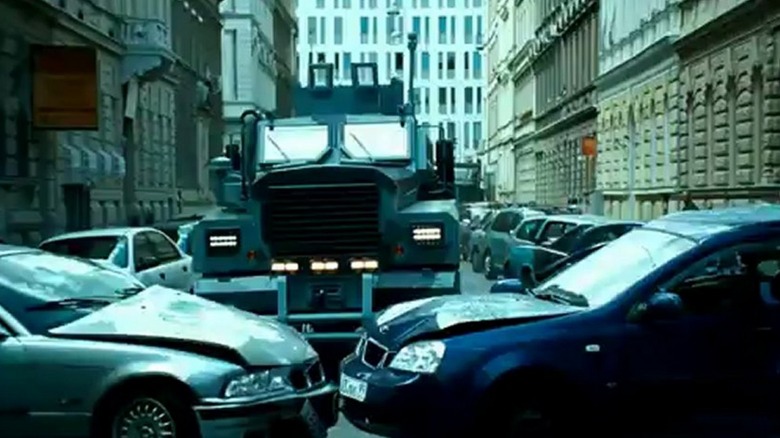
Most movie fans can agree that "Die Hard" is one of the greatest action films ever created. The classic Christmas action romp also inspired quite a few sequels exploring the life and misadventures of hero John McClane (Bruce Willis). By the time that director John Moore stepped up to direct the fifth "Die Hard" installment, he was well aware that audiences needed something fresh to stay invested. "People are well savvy to the cynical reheating of any product, any franchise," Moore said in an interview (via Haute Living).
Moore's strategy for raising the bar in "A Good Day to Die Hard" involved a monstrously complicated car chase to start the movie out with a bang. With a 15% approval rating on Rotten Tomatoes, "A Good Day to Die Hard" is a certified flop, but its epic car chase scene is worth watching entirely on its own. Moore and his team spent a little over 11 weeks shooting the sequence, on top of countless hours perfecting the edit in post-production. It stands as a great reminder that even lackluster movies can be arduous to make and still deliver truly memorable moments.
Creating Hoth in The Empire Strikes back wasn't easy
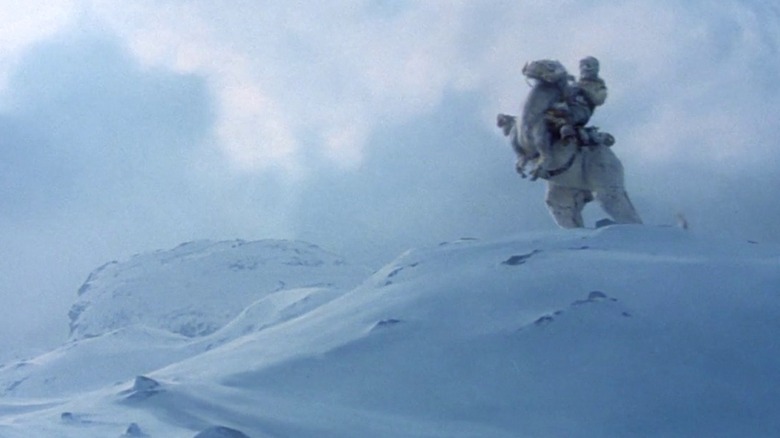
Without their dazzling special effects, the "Avatar" movies would be nothing more than people wearing face dots and funny spandex suits acting in a monochromatic room. Decades before digital technology, film crews went to extreme lengths to create fantastical worlds. Such was the case for Hoth, the ice and snow planet introduced in "The Empire Strikes Back," which sounded like a genuine nightmare to bring to life.
Principal photography took place in Norway starting in March, but the team were unprepared for just how hostile the country's weather was going to be. The crew was told that conditions would be mild at that time of year. "It's true of every location I've ever been in," director Irvin Kershner said at a Hollywood's Master Storytellers panel. "They say, 'It never rains on the second week of September in this town.' Well, you go the second week of September, and there's a hurricane. Always."
What should have been a simple shoot turned into weeks of fighting the weather. Along with enduring freezing temperatures, the crew also found themselves trapped in their hotel from time to time by the immense snowfall. The on-location shoot lasted from March 5 to April 3, just over 4 weeks long, with additional filming and effects work being done on studio sets.