

5 Star Wars Villains Who Were Way More Dangerous Than The Movies Admit
One thing the "Star Wars" movies excel at is making their villains imposing. Though the franchise's big screen iterations have occasionally experimented with comparatively grounded bad guys like the bureaucratic Orson Krennic (Ben Mendelsohn), the "Star Wars" knee-jerk reaction generally veers toward the bombastic whenever it's time to introduce a new villain. From the cackling, robed Emperor Palpatine (Ian McDiarmid) to the fearsome, towering Darth Vader (David Prowse and James Earl Jones, with Hayden Christensen taking over as the main actor in the prequel trilogy and beyond), this approach has given the galaxy far, far away many of the most iconic science fiction villains ever created.
Unfortunately, not every "Star Wars" villain is treated the same. Since there's only so much time any given "Star Wars" movie can devote to the antagonists that exist outside the absolute spear tip of "Star Wars" villainy, the movies don't always manage to convey the true threat its various villains pose. The following five antagonists are all awesome in their own ways, but their "Star Wars" movie appearances completely fail to depict how threatening they really are.
General Grievous
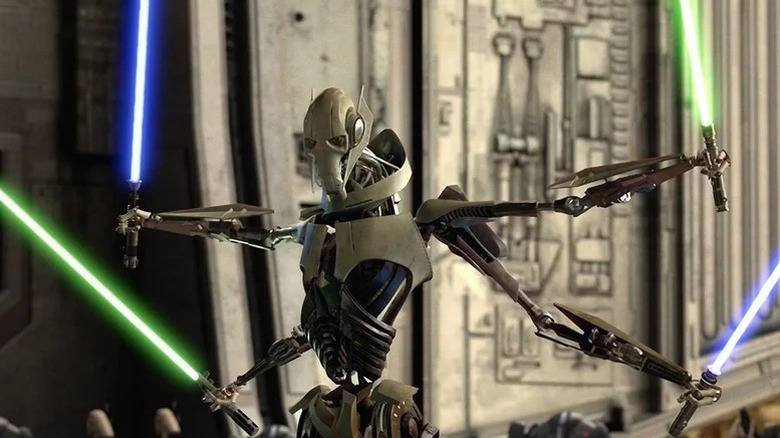
General Grievous (Matthew Wood) is a perfectly serviceable supporting antagonist in "Star Wars: Episode III — Revenge of the Sith." As a fearsome cyborg who commands a droid army and wields multiple lightsabers, he's a physical and martial force to be reckoned with, and he certainly gives Obi-Wan Kenobi (Ewan McGregor) a decent run for his money. On the other hand, Grievous is also very much the movie equivalent of the villain of the week. He's ultimately dispatched with blaster fire of all things, and his best-known contribution to the live-action leg of the franchise is arguably that famously meme-able "Hello there" line that Obi-Wan uses to initiate their final conflict.
Fans who were already familiar with the character before "Revenge of the Sith" knew that there was more to Grievous than big words and a fun boss fight. The character's animated appearances and supplementary "Star Wars" material really drive home what an absolute power player he is. Even before he became a cyborg, he was a powerful warlord, and by the time Obi-Wan gets to Grievous, the villain has been the scourge of the Jedi Order and the Galaxy in general for a long time. Some of this comes across in the movie, but Grievous' cartoony fighting style and the lighthearted nature of his final combat sequence with Obi-Wan severely undermine his threat level. If you want to see what this villain is really about, the animated series "Star Wars: The Clone Wars" has your back.
Jabba the Hutt
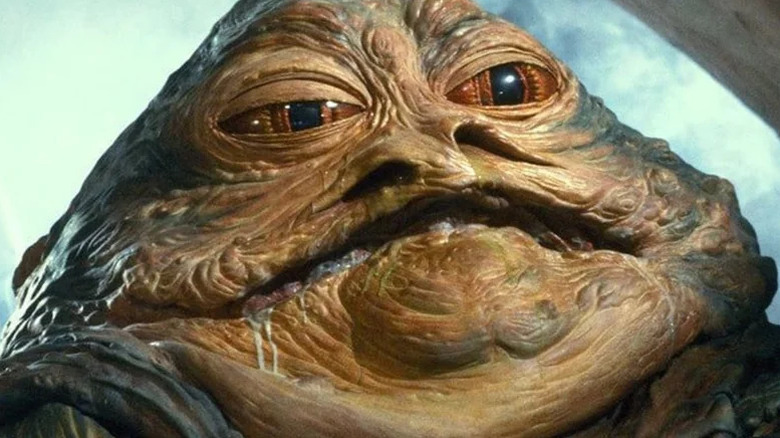
An outlier among the original trilogy's villains, Jabba the Hutt has no particular love for the Empire and cares not of the Force. While his circles serve as the setting for some of the greatest scenes in "Star Wars: Episode VI — Return of the Jedi," at the end of the day, he's still just a grotesque crime lord who lounges in his opulent Tatooine palace with his faithful and fearful entourage, reaping the rewards of his criminal enterprises and tormenting his assorted enemies. Venture outside the movies, though, and you'll soon notice that Jabba Desilijic Tiure is more than your average backwater space mafioso.
For one, he's not the only Hutt out there. There's an entire criminal organization called the Hutt Clan, made up of Jabba's kind and spanning the vastness of the galaxy's Outer Rim and beyond. They're historically powerful enough to actively oppose major players and can serve as strong allies, should it fit their interests. Oh, and Jabba (or His Excellency Jabba Desilijic Tiure of Nal Hutta, Eminence of Tatooine, to give him his full title) just so happens to be one of their highest leaders, so he's definitely not to be messed with, no matter who you are. It really drives home why Han Solo (Harrison Ford) is so terrified of the guy, doesn't it?
Darth Maul
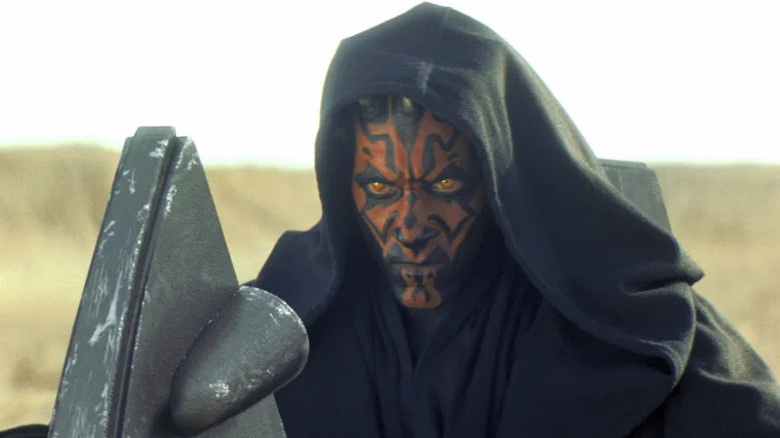
Don't get us wrong, Darth Maul (Ray Park) is awesome in "Star Wars: Episode I — The Phantom Menace." As the key hands-on threat in the film, he's a formidable force whose acrobatic moves, amazing character design, and double-bladed lightsaber make an immediate impact that even the worst critics of the movie should find hard to scoff at. There's just one problem: While Maul is certainly mighty, he comes across as a silent, Bond villain henchman type, which is the opposite of what his grander role in the franchise is.
In the prequel trilogy, Count Dooku (Christopher Lee) gets to be the smart, cunning Sith while Maul is more of a muscle and an errand boy. However, in other "Star Wars" material, we see a very different Maul. He proves himself as a highly intelligent and articulate person who survives his bisection/downfall at the hands of Obi-Wan Kenobi and reinvents himself as one of the most powerful crime lords the galaxy has ever known — while still being able to rock that double-edged lightsaber, of course. An argument could be made that Maul is one of the deepest and most interesting characters in the entire franchise. However, you'll need to dig into the animated shows "Star Wars: The Clone Wars" and "Star Wars Rebels" to truly see what he can do.
Phasma
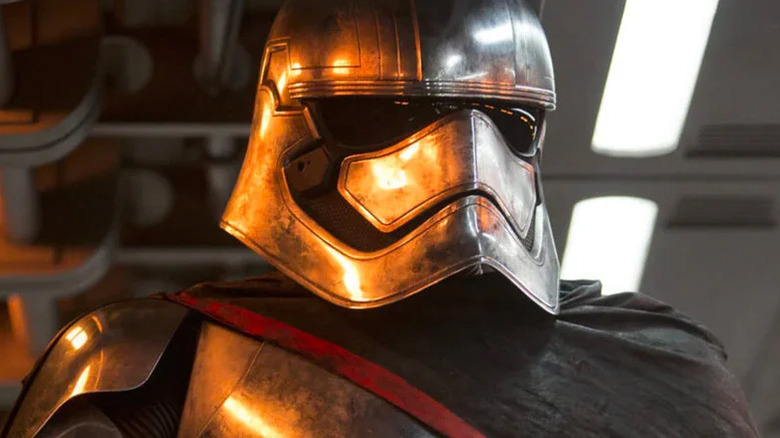
Captain Phasma (Gwendoline Christie) looked so cool in her shining Stormtrooper captain armor, didn't she? And then, well before "Star Wars: Episode VII — The Force Awakens" ended, she was reduced to an easily-defeated joke and never really recovered despite a (slightly) better showing during her final battle with Finn (John Boyega) in "Episode VIII — The Last Jedi." It's a massive shame, really, because outside those embarrassing on-screen moments, Phasma is basically an amoral version of Furiosa from the "Mad Max" franchise.
Phasma's "Mad Max"-type origin story unfolds in the "Star Wars" novel "Phasma," written by Delilah S. Dawson. The book depicts the character's rise from the primitive planet Parnassos after a chance encounter with Armitage Hux's father, Brendol. From this chance meeting begins a lifelong journey of climbing the ranks, regardless of who she has to defeat — or stab in the back. Phasma's rise into the upper echelons of First Order power is pure "Game of Thrones" stuff.
The way she makes everything (and everyone) around her benefit her own survival and success does go a long way toward explaining why she's so quick to comply when she's captured by the heroes in "The Force Awakens." Unfortunately, the nuance is lost in what little screen time she gets, and one of the more compelling and dangerous survivalists in the "Star Wars" franchise ultimately fails to make an impact on the big screen.
Boba Fett
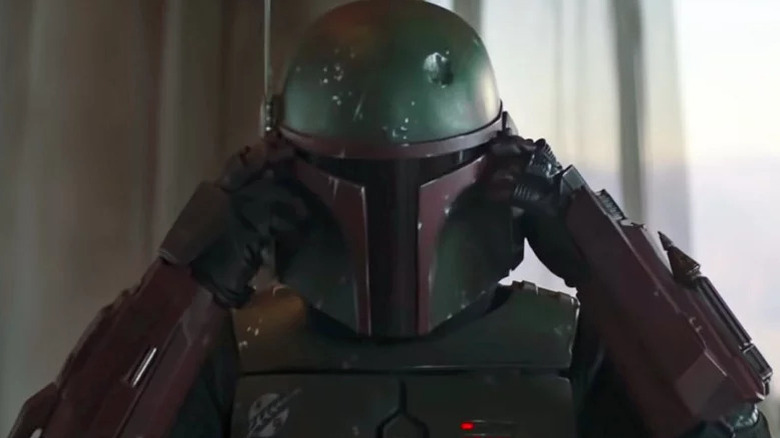
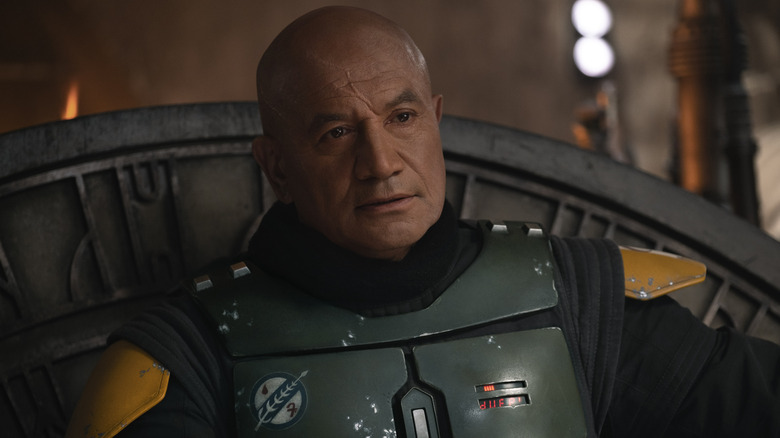
Boba Fett (primarily portrayed by Temuera Morrison) is the semi-official poster boy of "Star Wars" villains whose big screen escapades pale in comparison to their overall franchise footprint. The movies depict him either as a child or as a borderline joke character with barely any impactful screen time, forever associated with the slapstick jetpack/Sarlacc combo that marked his apparent demise. And yet, if you knew the entire Boba Fett story, you certainly wouldn't be laughing.
It turns out you can't keep a space bounty hunter with a cool design down. Fett has famously received a huge upgrade since his "Return of the Jedi" days, and outside his movie appearances he's known as one of the dangerous men in the franchise — a truly legendary bounty hunter whose services are sought after by some of the most powerful figures in the galaxy. On the Disney+ shows "The Mandalorian" and "The Book of Boba Fett," the character's overall awesomeness has finally translated to live action, and the latter even sees Fett take control of what was once Jabba the Hutt's operation on Tatooine.