

Sam Rockwell's Sci-Fi Masterpiece Moon Got A Bizarre 'Sequel' Streaming On Netflix
We may receive a commission on purchases made from links.
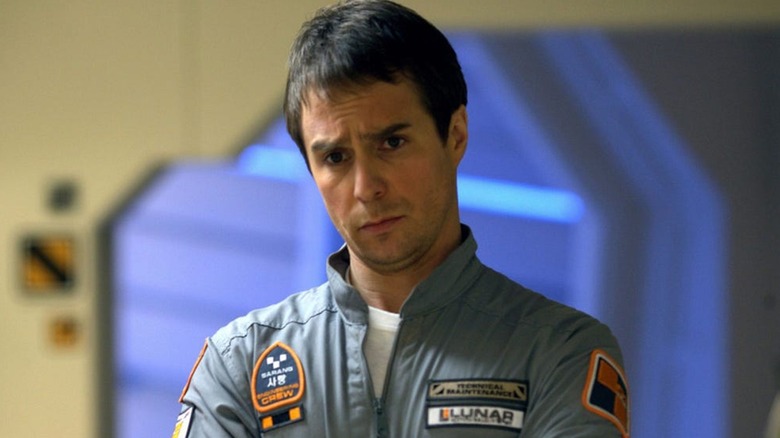
In 2009, Sam Rockwell starred in a haunting sci-fi movie that never stopped lingering in the minds of viewers. Directed by Duncan Jones, "Moon" follows Sam Bell (Rockwell) as he wraps up the end of a three-year shift at a lunar mining facility. Sam is looking forward to going home to his family, but then he crashes his rover on the job and wakes up in the moon base's infirmary. He's told to remain inside, but Sam decides to go outside to the crashed rover — and discovers his own doppelganger laying in the wreckage. Sam brings his double back to the base and the two of them begin to discover that much of what they believe about their life and job is a lie.
"Moon" is full of details you only notice after a second viewing. The movie left Sam's fate as an open question, but, nearly a decade later, fans got to find out what happened to him thanks to a secret sequel released by Netflix. Jones directed and helped write 2018's "Mute," a movie about a silent bartender named Leo (Alexander Skarsgård) searching for his missing girlfriend Naadirah (Seyneb Saleh) in the criminal underworld of a futuristic Berlin. In one scene in "Mute," a TV at a bar displays some footage from a court trial involving Sam Bell and Lunar, the company that cloned him and trapped him on the moon. The moment is a great nod to "Moon" fans, but it's also the midpoint of a sci-fi trilogy that Jones spent decades developing.
Mute doesn't have the same following as Moon
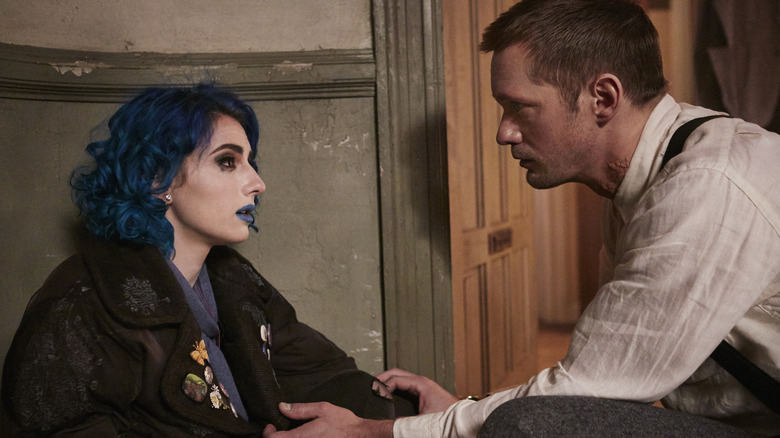
From its thrilling story and its stripped down visuals to Sam Rockwell's incredible performance(s), there's a lot to love about "Moon." The majority of critics agree: The film boasts an impressive 90% approval rating on Rotten Tomatoes. It's pretty easy to argue that "Moon" is one of the best sci-fi movies of all time, but the sleeper sequel "Mute," on the other hand, isn't so well-regarded.
Working with Netflix, writer-director Duncan Jones was able to make a larger, more ambitious sci-fi flick, but the pieces didn't come together nearly as cleanly as they did in his lunar-based mystery, and that was reflected in the response to the film. "Mute" has a rather damning 20% critical approval rating on Rotten Tomatoes, and the audience score isn't anything to shout about either at just 47%.
As interesting as the nods to "Moon" may be for fans of that film, "Mute" sadly doesn't live up to its predecessor on any level. As the Critics Consensus on Rotten Tomatoes reads, this is "a would-be sci-fi epic whose title serves as an unfortunate guide to how it might be best enjoyed." Thankfully, the ending of "Mute" is really just the end of the second act in Duncan's sci-fi yarn.
A graphic novel completed the trilogy
What's interesting is that Duncan Jones actually wrote the screenplay for "Mute" before he penned "Moon," but it just so happened that the latter required less of a budget to get off the ground. However, he never really imagined them as part of a series of films in the traditional sense. Over time, he realized that the themes were similar and that it made sense to set them in the same world, even if they're only loosely connected. When he spoke to Polygon in 2019, Jones revealed that he had an idea for a third film that would cap this loose trilogy.
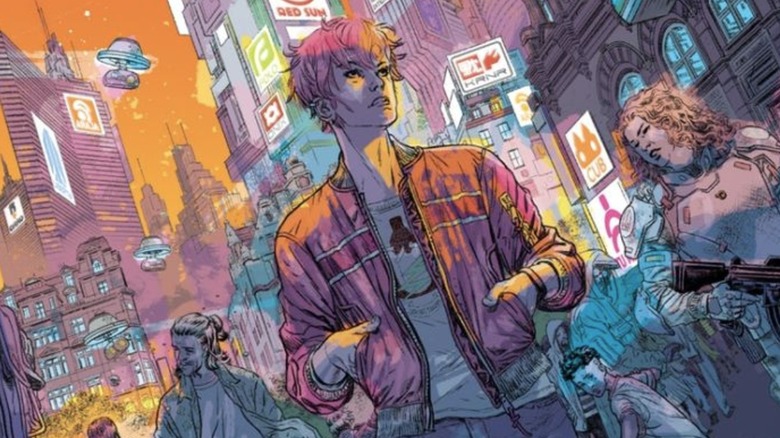
"The broader universe was really just a fun element to add to what was really three films that were more of an anthology than any kind of sequel," he said. "They cover similar subject matter — autonomy, parenting, the kinds of things that interest me — and it made sense that they would all take place within the same future, which I really enjoyed writing about." That film has yet to see the light of day, though the story is now out there in graphic novel form. With the help of a Kickstarter campaign that brought in over $366,000, Jones created "Madi: Once Upon a Time in the Future."
Published in November 2020, "Madi" follows Madi Preston, a deeply-in-debt mercenary who takes on one last job only to discover she's been hired to kidnap a child who's anything but ordinary. Thanks to the medium, it has a visual flare that's even more impressive than anything Jones managed to capture on camera. Jones was able to bring in Eisner-nominated writer Alex de Campi and renowned artists such as Glenn Fabry, Simon Bisley, Duncan Fegredo and Pia Guerra, whose combined work made for a stunning read.