

5 Ways Star Trek: The Next Generation Changed TV Forever
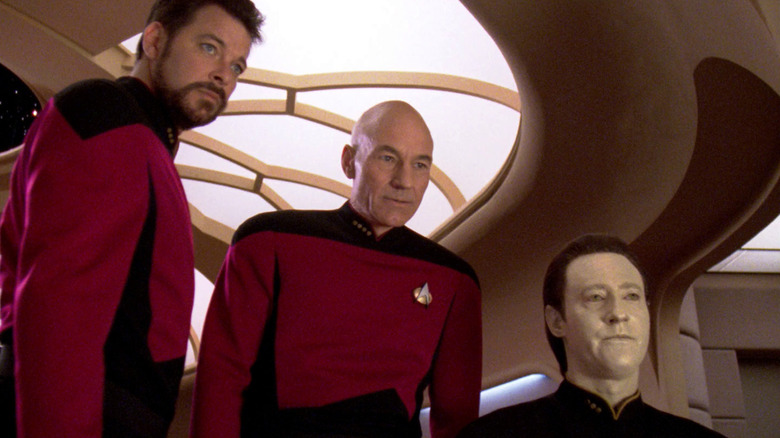
When "Star Trek: The Next Generation" debuted in the fall of 1987, longtime Trekkies were understandably skeptical: For more than 20 years, the franchise had been led by William Shatner and Leonard Nimoy as Captain Kirk and Mr. Spock, two of the most beloved and recognizable characters ever on television. They'd led an intrepid crew aboard the iconic starship Enterprise, and had, within the previous decade, launched a popular movie series.
"Star Trek: The Next Generation," of course, turned the franchise on its head: Gone were Shatner, Nimoy, and the rest of the original cast, and in their place was a crew of mostly unknown actors, on an all-new, all-different USS Enterprise. Its captain, meanwhile, was Jean-Luc Picard (Patrick Stewart) — a stern, bald Frenchman — a far cry from the full-haired, swaggering Captain Kirk. But before long, fans were singing the praises of "The Next Generation," and the series quickly became a big hit with fans all around the world. It was such a success, in fact, that it received numerous spin-offs and remains arguably the most popular series in the franchise.
More than just changing the minds of skeptical Trekkies, though, "Star Trek: The Next Generation" was a watershed moment in TV history. It changed the medium in ways viewers didn't realize at the time. So, charge your phaser banks and prepare your calculations for a slingshot into the past, because we're here to explore five ways that "Star Trek: The Next Generation" changed TV forever.
It went where no TV drama had gone before
Back in 1986, when "Star Trek: The Next Generation" was just getting up and running, Paramount was finding it difficult to get the series sold to one of the national networks, ABC, CBS, NBC, and the then-planned Fox Network. The only taker was CBS, which had offered to air a miniseries, but according to former Paramount studio executive John Pike, that wasn't good enough.
"[A miniseries] clearly doesn't work," Pike explained in the 2014 documentary, "Chaos on the Bridge." But the President of Paramount's TV distribution division, Lucy Silany, had an innovative idea that would change TV for decades, suggesting that they distribute the new "Star Trek" series via first-run syndication. "Nobody had ever done a program like that in first-run syndication." The process of first-run syndication eschewed national distribution, with the production studio selling the series region-by-region, to local affiliate stations, to air outside of the standard prime-time window hours. And that approach freed them to produce a full 26-episode first season.
Once "Star Trek: The Next Generation" proved to be a big hit, of course, it wasn't long before Paramount and other studios saw the potential of this approach. Before long, first-run syndication — which had normally been the domain of daytime talk shows, game shows, and other non-scripted series — gained popularity, particularly among genre shows and other franchises. Everything from "Hercules" and "Xena" to "Baywatch" and even the 1988 "Superboy" series was all distributed via first-run syndication.
Star Trek: The Next Generation made sci-fi en vogue
It might seem odd to imagine today, but there was a time when science fiction was not a genre you'd find much of on television, at least not when it came to adult dramas like "Star Trek: The Next Generation." The original "Star Trek" series in 1966 changed TV itself by taking science fiction seriously, something no franchise had ever dared to that point; Sci-fi at that point was largely aimed at kids. By the 1980s, sci-fi was the domain of the movies, where the likes of "Close Encounters of the Third Kind," "Star Wars," and even "Star Trek" were drawing crowds with cutting-edge VFX. On TV, sci-fi struggled.
In 1987, of course, "Star Trek: The Next Generation" changed the TV landscape forever, making science fiction popular on the small screen for the first time in decades. Though the first season or two struggled with its visual effects at times, it eventually grew to become a slick-looking sci-fi TV series that audiences were flocking to.
As happens in television, one success begets another, and another. With the success of "The Next Generation," sci-fi shows began springing up left and right, from 1988's "War of the Worlds," to '90s classics like "Sliders" and "Stargate SG-1." Sci-fi's sudden success even led to a revival of "The Outer Limits." One can also argue that without "The Next Generation" bringing sci-fi back to the mainstream on TV, there's a very real chance that massive hits like "The X-Files" might never have existed.
The Enterprise helped popularize serialization
It's easy to forget, particularly for younger audiences, but before the 1990s, serialized stories on TV weren't that common, at least for evening dramas. Most shows back then, in fact, lived and died by the notion that viewers should be able to watch any episode of a series in any order, which usually led to shows that began and ended with the same status quo each week. After all, not all audiences could watch every episode every week, and networks didn't want to confuse viewers if they missed one here or there. In the third season of "Star Trek: The Next Generation," though, the series began exploring elements of serialization, with story arcs that spanned not just multiple episodes, but seasons as well.
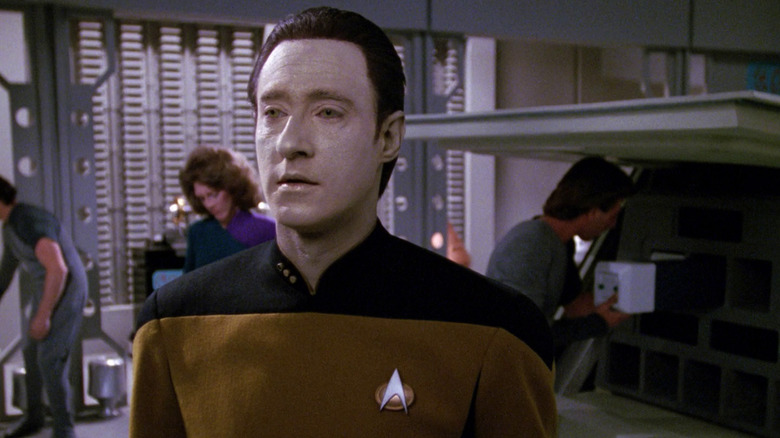
Most notably, the story of Lt. Worf's excommunication from Klingon society in the episode "Sins of the Father" became an ongoing plotline, while the android Data's fight for equal rights became a thread that ran through the rest of the series. Though not nearly as serialized as today's TV shows, or even the "TNG" spin-off "Star Trek: Deep Space Nine," these ongoing stories, which changed the characters and evolved their stories in new and different ways, paved the way for prime-time dramas to begin telling longer, serialized stories that are now the norm. Of course, it's much easier for audiences to handle serialization today, where most shows are available to stream, allowing viewers to never miss an episode, and making binge-watching that much more common.
The Best of Both Worlds ushered in the rise of season-ending cliffhangers
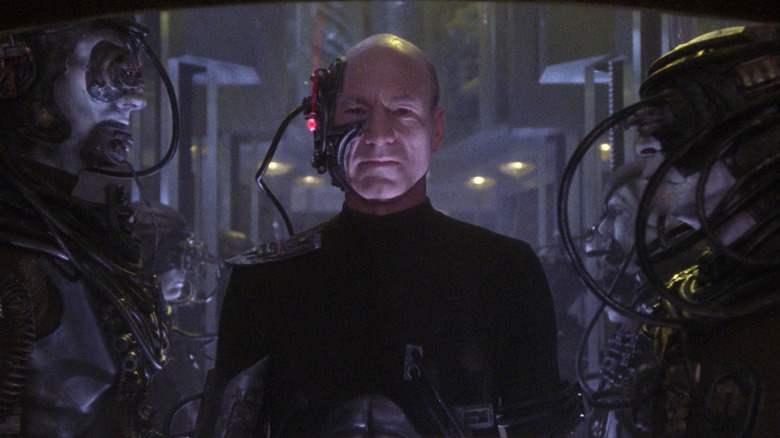
These days, it's fairly routine for a series to end a season with a dramatic moment that leaves the story dangling. It's an easy hook to keep audiences clamoring for more and ensures they'll tune in for the next season. But believe it or not, that was not the norm at all back in the '80s, when most shows were strictly episodic. Season-ending cliffhangers had been done before, but they were almost exclusively used in the world of soap operas, where serialized stories were the order of the day.
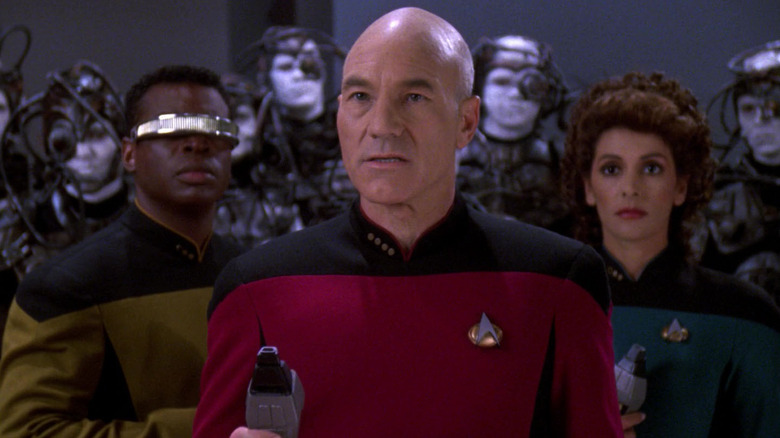
Though certainly not the first series to do it, "Star Trek: The Next Generation" made cliffhangers popular, particularly with sci-fi, action, and fantasy shows, owing almost exclusively to the Season 3 season finale "The Best of Both Worlds," one of the best episodes of the series. That episode ended with a jaw-dropping plot twist that saw Captain Jean-Luc Picard turned into a Borg villain called Locutus, and Commander Riker aboard the Enterprise, ready to blow him out of the stars to prevent the Borg from destroying Earth.
"The Best of Both Worlds" remains one of the best season-ending cliffhangers in TV history, and it left fans on the edge of their seats all summer long. "Trek" would continue with season-ending cliffhangers for the rest of its run, and in its wake, nearly every other sci-fi or fantasy series did similarly, with "The X-Files" and "Twin Peaks" aping the formula. Before long, even sitcoms like "Friends" were getting in on the action, and now, it's almost expected that a hit TV series will end its seasons with a cliffhanger.
The Next Generation proved legacy revivals were big business
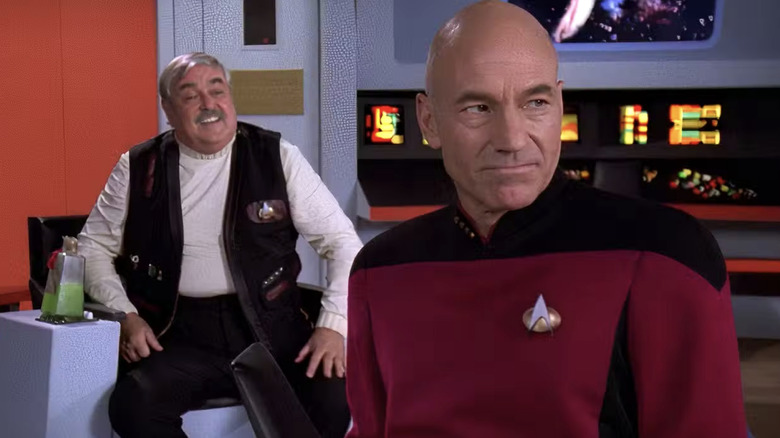
Reboots and remakes have been around long before "Star Trek" existed. However, TV revivals were uncommon, even rare, before the debut of "Star Trek: The Next Generation" in 1987. Often, they were major failures, with the 1960s series "Get Smart" receiving a movie in 1980 that bombed hard. It's no wonder that no major TV network was willing to invest in a reboot of the final frontier: Sci-fi was a dead-end genre on television, and the idea of rebooting such an iconic and beloved series was risky, at best — particularly as it was planned to replace the entire original cast.
The success of "The Next Generation," however, proved that it could be done and be a big hit. In the aftermath of its debut, several new reboots emerged that followed the same formula. The 1960s spy series "Mission: Impossible" returned to the screen in 1988 with a mix of old and new cast, years before the Tom Cruise films. Even "Get Smart" returned, too (wisely ignoring the events of the film). The late '90s and 2000s saw even more, with classic shows like "Battlestar Galactica," "Doctor Who," and the aforementioned "Outer Limits" all receiving updates.
In the years since, of course, reboots and revivals have become big business; Just about every popular TV series you can imagine has either received a legacy sequel, remake, or revival, or had one in development at some point. But if "Star Trek: The Next Generation" had failed, TV reboots might have gone the way of the dodo.