

Stephen King Stories That Should Never Be Adapted
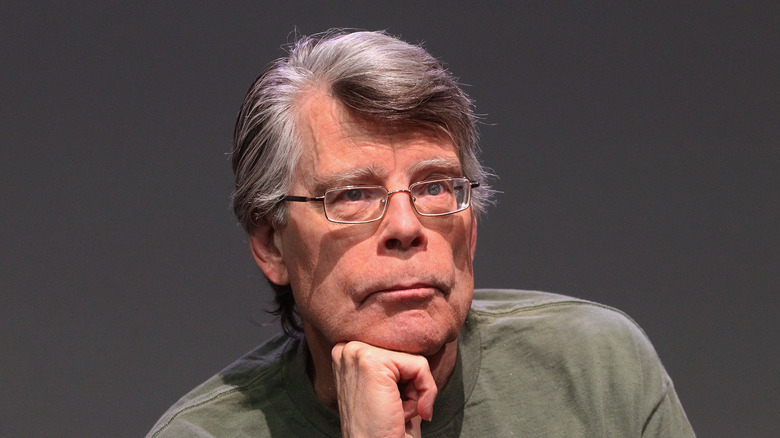
It's almost easier to list the Stephen King books and stories that haven't been adapted than it is to make a list of those that have. As stacked as the horror master's bibliography is, he has been such a go-to target for films and TV shows of all sorts that even his numerous short stories aren't exempt from adaptations of varying quality. Among the best Stephen King movies are classics like "Carrie," "The Shining," and of course "It," while less popular adaptations include flops like "Cell" and "Graveyard Shift."
The author himself is largely graceful about his awful movie adaptations, but then again, he hasn't had to witness someone tackle his absolute most unadaptable tales... at least, not yet. As it happens, there's a handful of King stories that have eluded movie and TV so far, and for various reasons, should continue to do so. Here's a closer look at five such stories.
The Library Policeman

"The Library Policeman" from Stephen King's 1990 novella collection "Four Past Midnight" is a story that has plenty of reasons to remain on the page instead of making the jump to live action. One key reason is that the author's considerably more famous 1986 novel "It" tells effectively the same story in a more interesting way, with well-rounded characters and far more lore.
In "The Library Policeman," a man called Sam Peebles becomes haunted by a frail-looking but hostile librarian, who turns out to be an It-style shapechanger entity that feeds on children's fear. Unfortunately, "The Library Policeman" has far less space and inclination to explore its narrative than the hefty doorstopper "It." What's more, the monster villain's two main methods of manifestation — librarian Ardelia Lortz and the titular Library Policeman — can't hold a torch to Pennywise the Dancing Clown and his cavalcade of other fear-inducing forms. Combine this with the novella's persistent red licorice motif and a key twist that involves sexual assault of a minor, and the entertainment industry will likely be happy to keep re-adapting "It" for quite a long time before glancing at "The Library Policeman."
The Regulators
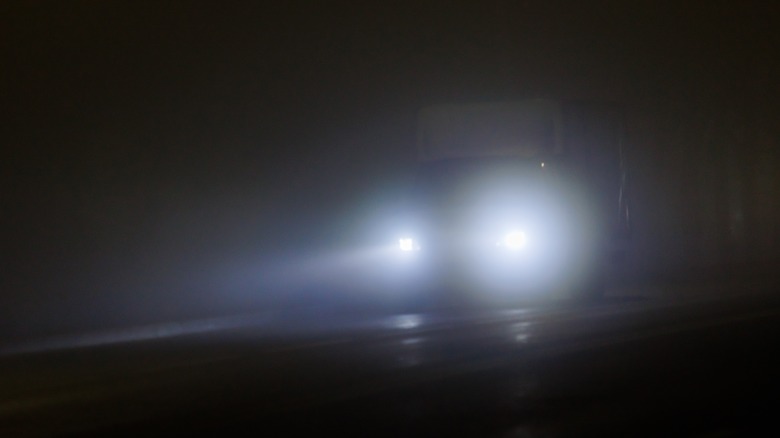
Out there even by Stephen King standards, "The Regulators" is a story about mysterious black vans that attack a specific residential area. It's also a story about a powerful telepathic child who's on the autism spectrum, and a story about TV show characters come to life, and a story about an evil spirit that keeps possessing said child and others, and a story about a good 25-plus characters who experience this cocktail of supernatural curiosities first-hand. In other words, it's a lot.
Arguably both too high-concept and too silly at the same time, "The Regulators" was published in 1996 under the Richard Bachman pseudonym as a sister story to "Desperation," a novel published at the same time under King's real name. Both stories use the same cast of characters, albeit in considerably different roles and situations. Of the pair, "Desperation" — which focuses on a divine mission to defeat a malignant possession entity called Tak — is the more coherent story. The fact that this novel also remains unadapted speaks volumes about how far down the list of readily adaptable King works "The Regulators" is.
Insomnia

Stephen King's 1994 novel "Insomnia" juggles an ambitious number of concepts. Here, a retired man with insomnia learns of his neighbor's plans to bomb a pro-choice event, which leads to a convoluted story about beings from other dimensions prematurely killing people to serve order and chaos. The story ultimately pits our elderly insomniac, Ralph Roberts, against forces that are far above his metaphysical pay grade, and even features an appearance by the overarching King antagonist known as the Crimson King.
This doesn't make for a bad story, per se, or even necessarily an unadaptable one. Still, there's one major problem. More than most King novels, "Insomnia" is inherently tied to the grander mythology that the author weaves across his works. Discounting "The Dark Tower" series, "Insomnia" is easily among the most lore-heavy books in King's bibliography, and some of its characters (including Ralph, who also turns up in the 1998 novel "Bag of Bones") have a weighty presence across the author's works.
To date, the idea of an interconnected Stephen King universe has largely rested on the shoulders of TV projects like "It: Welcome to Derry" and "Castle Rock." This is a problem for a potential "Insomnia" adaptation because the bulk of its mythology is tied to "The Dark Tower" series and remains largely unexplored by existing adaptations. As such, any live-action adaptation of "Insomnia" would either have to contain multiple loose-end references to an unseen grander mythology, or the story would have to be altered too much for comfort.
Stationary Bike

"Stationary Bike" isn't really bad; it's just a touch too weird to film. Stephen King has his share of gleefully ridiculous premises, but this particular 2003 short story (which was also published in King's 2008 story collection "Just After Sunset") might well take the cake. Here, an out-of-shape artist starts to lose weight by pedaling on a stationary bike. However, during a visual exercise he's using to "travel" on his bike, he starts hallucinating manual laborers who are tasked with metabolizing his food and keeping his body functional, and who are becoming increasingly destitute and desperate as he gets fitter and they run out of work. Eventually, the men confront him. If that wasn't ridiculous enough, the story even ends with a clichéd "It wasn't real ... or was it?" twist.
Granted, there are some directors who could probably take this weird premise and embrace its surreal aspects to hit a home run. Folks like Yorgos Lanthimos ("Bugonia") and Kleber Mendonça Filho ("The Secret Agent") spring to mind. Still, the result would probably be too arthouse to promote with King's name, which might very well make for a confusing experience for everyone involved.
Rage

If there's one Stephen King story that should never be adapted, it's "Rage." The very first book King wrote using his Richard Bachman pseudonym, this 1977 novel is known for featuring a school shooter... as the protagonist. Violent and troubled high schooler Charlie Decker performs various misdeeds at his school that lead to a shooting incident and him taking his entire class hostage. The high-stakes situation eventually starts revealing more and more of Charlie's backstory and the power dynamics of the class, which turns the story into a therapeutic tale of trauma and empowerment while SWAT teams and reporters buzz around the building.
The chapter in the untold story of Stephen King in which he wrote "Rage" happened when he was only 18 years old, and the author is well aware of the unfortunate implications of a school shooter protagonist in a world that is tragically rife with such incidents. After learning that no less than four real-life school shooters have quoted "Rage" as an inspiration, King promptly had the story removed from the shelves and from his "The Bachman Books" collection. As such, it's incredibly unlikely that he'd greenlight a TV or movie adaptation, either.
If you or someone you know may be the victim of child abuse, please contact the Childhelp National Child Abuse Hotline at 1-800-4-A-Child (1-800-422-4453) or contact their live chat services.
If you have been impacted by incidents of mass violence, or are experiencing emotional distress related to incidents of mass violence, you can call or text Disaster Distress Helpline at 1-800-985-5990 for support.