

What Beloved Sci-Fi Writer Arthur C. Clarke Thought About Star Trek
Arthur C. Clarke is the famous author behind Stanley Kubrick's "2001: A Space Odyssey" and many other sci-fi classics like "Rendezvous with Rama". Clarke's stories often focus on the excitement and horror of deep space exploration, and he has always been a massive influence on the sci-fi genre.
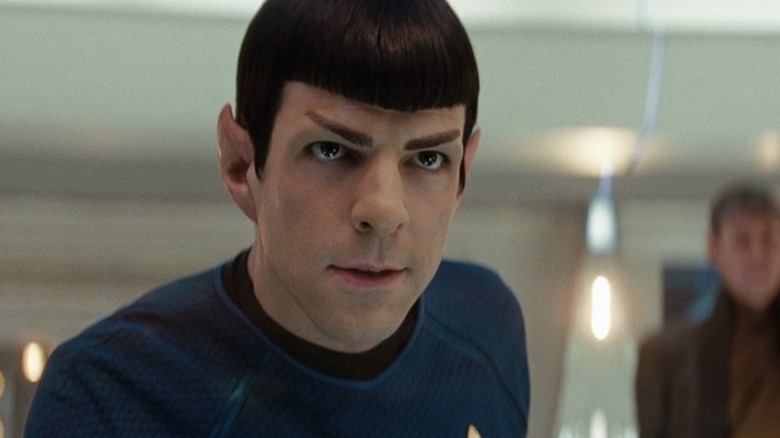
In a 1997 interview for Salon, Clarke fielded some questions about "Star Trek," the iconic sci-fi franchise that has just as much love for space age exploration as Clarke himself. Surprisingly, the author didn't express all that much enthusiasm for the series. He said it might be a good thing that "Star Trek" gets its fans excited about space, though he also said, "But in a way, I'm afraid that it may be counter-productive." According to Clarke, "Star Trek" fans who transitioned from watching the show to watching the real stars might find themselves disappointed. "Because we're not going to find new civilizations every week in prime time when we do start the exploration of space!"
"Star Trek" leaned a little too much into fantasy adventure territory and not nearly enough into hard science for Clarke. Despite his obvious love for the genre, Clarke expressed that sci-fi might not be ideal for live action TV shows and movies because they'd always face limitations thanks to being filmed in the real world. In short, Clarke wasn't a Trekkie, even though he may have been indirectly responsible for "Star Trek" existing in the first place.
Arthur C. Clarke denies his influence on Star Trek
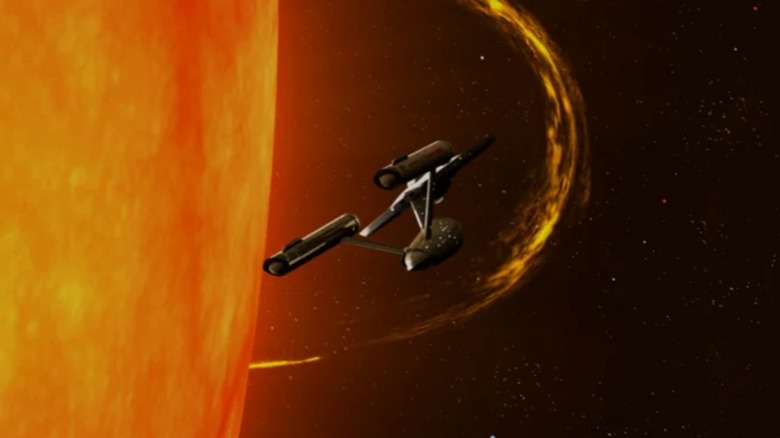
Arthur C. Clarke might not be the most enthusiastic "Star Trek" viewer, but he is an important figure for the series itself. Gene Roddenberry, the man who created the original "Star Trek" series, has said that Clarke's writing, and particularly his book "Profiles of the Future," helped inspire the show. Without Clarke, there might not be a "Star Trek" franchise today.
Despite Roddenberry's claims, Clarke doesn't take any credit for his influence on "Star Trek." Speaking with Salon, Clarke said he didn't see any particular signs of his own work in "Star Trek," but he admitted, "There are of course common elements in almost any science fiction." Sadly for Clarke, those common sci-fi elements started to wear his patience thin. In the Salon interview, he continued, "I've seen it all, really, in science-fiction movies and videos. And I'm a little bit tired of it."
Clarke's exhaustion with sci-fi had everything to do with his interest in real science. There are questionable things in "Star Trek" we all ignore, but Clarke couldn't look past the show's complete lack of scientific realism. In fact, Clarke said that he thought there was one major problem that no sci-fi show or movie would ever be able to overcome: all of the humans.
Can sci-fi escape Clarke's imagined limitations?
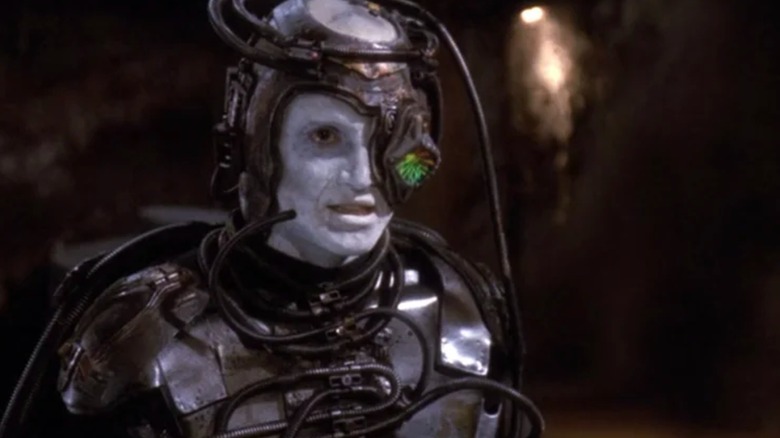
Anyone who's read or seen "2001: A Space Odyssey" knows that Clarke envisioned space as a much stranger and more incomprehensible place than we see in most other sci-fi properties — even if he got some of the science wrong in "2001" (it's not like he could predict every scientific advance, to be fair). Most sci-fi shows didn't interest Clarke because they were just too focused on human beings. Clarke told Salon, "We know that central casting can't come up with an intelligent blob of something or other; it wouldn't be very exciting. So that's a limitation of any science fiction on movie or TV." Clarke said that he imagines real alien life is as far from humanoid as possible, and that he theorizes, as several biochemical scientists do, that some forms of life might even be made out of silicon — not carbon, like everything we know. Including our own bodies.
Clarke made that statement in 1997, but today he might be a little less harsh on the limitations of film. Motion capture technology has given filmmakers the ability to create almost any kind of alien creature they can imagine. The "Avatar" movies feature too many humanoid aliens for Clarke's vision of extraterrestrial life, but the world of Pandora is a great example of how modern technology might get sci-fi movies past the problem of casting humans.
An adaptation of another famous Clarke novel might be the real test of whether or not sci-fi movies can capture the author's version of alien life and technology. Denis Villeneuve will reportedly adapt Clarke's "Rendezvous with Rama," which follows astronauts exploring a massive and genuinely alien vessel.