

Movies Where You Rooted Against The Hero
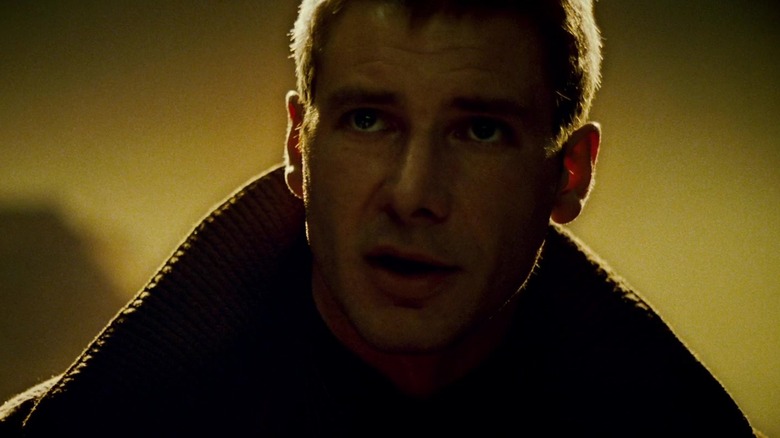
Storytelling is usually pretty simple: There's a hero, there's a villain, and you want the hero to beat the bad guy. It's a tried and true formula you see acted out in almost every movie ever made. We cheer for Captain America to defeat the Red Skull, we want Katniss to overthrow President Snow, and we can't wait to see Blade kill as many vampires as possible. However, every so often, a movie comes along that tosses conventional storytelling wisdom out the window and gives us a hero that we actually want to lose. Maybe he's a jerk, perhaps she's misguided, or maybe he loses his soul over the course of the film. Granted, all that doesn't necessarily mean that we're going for the antagonist — it's just that we can't be pro-protagonist. Whether we're talking about racist cowboys or unscrupulous salesmen, these are the movie heroes that we have no choice but to root against. (And be warned, we've got some spoilers ahead.)
Michael Corleone is the original Walter White
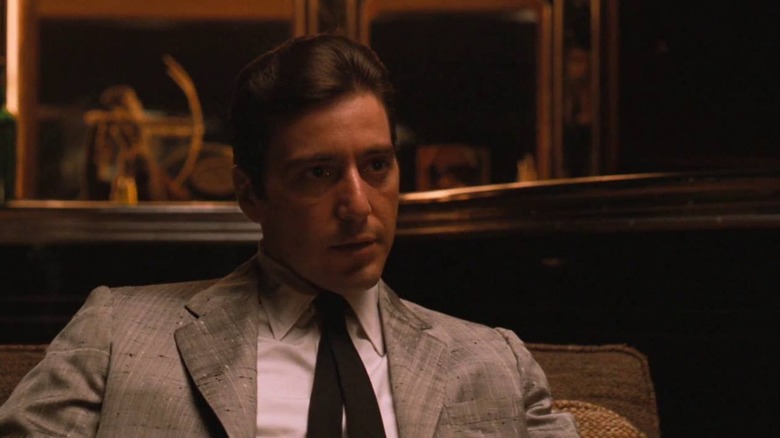
Breaking Bad is the story of a high school chemistry teacher thrust into a life of crime by situations beyond his control. Of course, once he starts making that cash and feeling that power, he finds that he kind of likes being a crook. But long before Walter White lost his soul and became a killer kingpin, there was Michael Corleone, the OG when it comes to being an OG. Just like Walter, Michael didn't set out to become a mafioso, but as he fell deeper into darkness over the course of The Godfather, Michael discovered that, yes, it does feel good to be a gangster.
Still, even though he goes from war hero to wiseguy, we couldn't help but root for Michael in the first film. After all, the rival gangs shot his dad, blew up his wife, and blasted his brother to smithereens. We really wanted Michael to get his revenge — and boy, did he ever — but just like Walter White in the final moments of "Face Off," Michael loses all the good will he's garnered when The Godfather Part II rolls around. He physically assaults his wife (Diane Keaton), takes her kids away, and cuts her out of their lives. Topping it all off, he sends his brother off on the world's worst fishing trip. Any humanity this guy had left is gone, and all that remains is left sitting alone on a park bench, a godfather without a family.
Rick Deckard is murdering monster
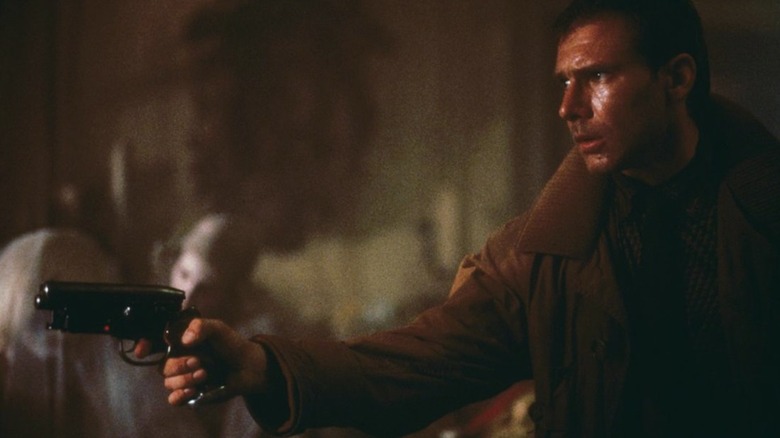
In any other movie besides Blade Runner, Roy Batty would be the hero. Played by Rutger Hauer, Batty is a Nexus-6 replicant, a slave android forced to fight wars in off-world colonies. He also has a short lease on life, as replicants can only live for four years. The deck is stacked against Batty from the day he's created, and it's not like he's some sort of mindless machine — in addition to his super strength and mental abilities, he has genuine human emotions. With his death day coming up, Roy stages a mutiny, escapes slavery, and goes to Earth, searching for the sadistic inventor who created him, hoping to gain just a few more years of existence.
Again, in another movie, Roy would be the perfect hero. But in Blade Runner, the protagonist duties fall to Rick Deckard, who's basically a gun-toting goon. Played by Harrison Ford, Deckard is a blade runner, a guy whose sole purpose is to hunt down replicants and murder them, all to keep the status quo in check. (Can't have those robots running around and demanding equal rights, can we?) And unfortunately for Batty and his replicant crew, Deckard is incredibly good at his job, retiring three of Batty's buddies over the course of the film. While the humans might view Deckard as a necessary evil, keeping Earth "safe" from rebellious bots, the replicants see him as a slave catcher or a Gestapo agent. And sure, Deckard eventually has a change of heart, but that doesn't really do Zhora any good, does it?
Saliere is the patron saint of mediocrity
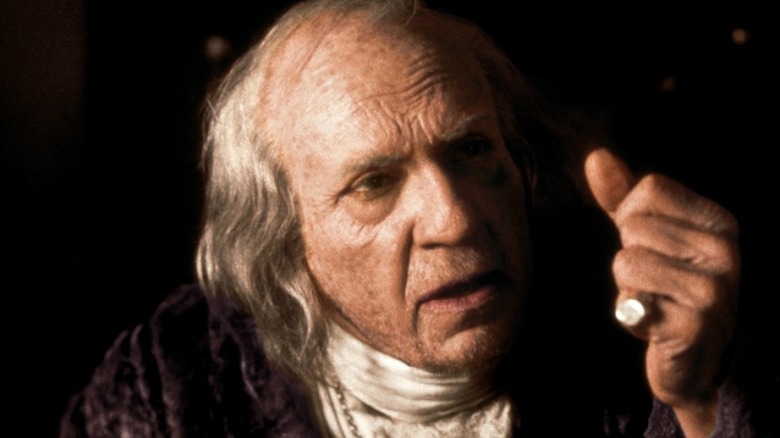
Antonio Salieri might be the most relatable character in any movie ever. Sure, he's an 18th-century composer employed by an emperor, but everybody knows what it feels like to try your best only to have someone more talented show up and make you look like a fool. And that's exactly what happens to Saliere (played by F. Murray Abraham) in Amadeus, when Wolfgang Amadeus Mozart (Tom Hulce) arrives on the Holy Roman scene.
Salieri loves music, and he desperately wishes to become a great composer. He's got connections to royalty, and he's famous for his time, but Salieri knows Mozart is far superior — his music is transcendent, so beautiful that Salieri believes the young composer to be the voice of God. But Mozart doesn't live up to Salieri's standards as far as behavior goes. He wears flamboyant clothing, eccentric wigs, and laughs like a madman. He's immature, an alcoholic, a man who'll chase shrieking women through a palace, so Salieri is baffled that God would give this guy so much musical talent.
We get that Salieri is disappointed that he can't match Mozart. But instead of dealing with it like an adult, he grows bitter. He plots to destroy Mozart in every way possible, using his power to prevent Mozart's rise. Salieri grows so spiteful that he eventually plans to kill Mozart and steal his music. But God ain't having none of that, and Salieri never gets to taste any of that incredible Amadeus glory. Instead, he's just an above-average composer, forgotten by time.
Craig Schwartz is a sleazy puppet master
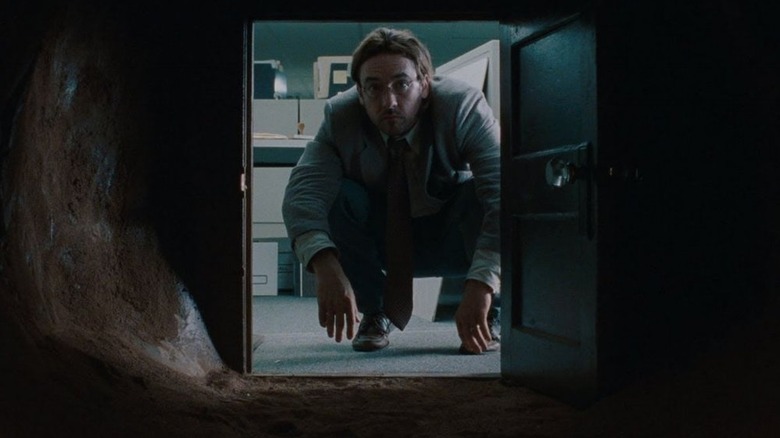
In the opening scenes of Being John Malkovich, Craig Schwartz (John Cusack) is a down-on-his-luck marionettist, putting on questionable puppet shows on New York City street corners. But when he finds a portal that leads directly into the head of actor John Malkovich, Schwartz morphs from an unemployed artist into a demonic Svengali, quite literally controlling Malkovich's life.
It all starts off innocently enough, with Schwartz taking a trip or two down the portal. That initial curiosity is totally understandable, but when Schwartz tries impressing his attractive coworker Maxine (Catherine Keener), he opens the portal up to the public, charging a hefty fee for strangers to travel into Malkovich's mind. Soon enough, Schwartz realizes there's a whole world of possibility here for a puppeteer, and like an evil spirit, he sets up shop inside Malkovich's head...permanently.
After locking his wife (Cameron Diaz) inside an animal cage, Schwartz uses Malkovich's influence to launch his own internationally renowned puppet show. He also uses Malkovich's body to seduce Maxine (and takes sadistic pleasure in making the horrified Malkovich, um, do things). Schwartz is at his most insidious when he performs his "dance of despair and disillusionment," forcing Malkovich to jump and roll around the room like a life-sized marionette. As a man used to pulling strings, Schwartz absolutely loves "playing with people," so when finally gets his just desserts, it's a fate he subconsciously puppeteered all by himself.
Jimmy Markum is a gangster blinded by rage
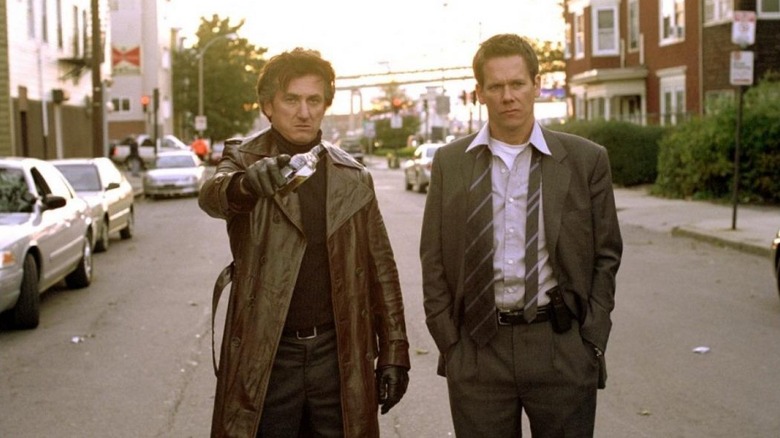
Losing a child is the worst thing that can happen to a parent, so when Jimmy Markum's (Sean Penn) daughter winds up dead, his grief is 100 percent understandable. Jimmy is absolutely devastated when he learns his kid has been killed. In fact, he's filled with so much anger and agony that a legion of cops has to hold him back from running onto the crime scene. But as we discover over the course of Mystic River, Jimmy Markum isn't your typical family man — long before he started running that little convenience store, he was a dude with a reputation for making people disappear forever.
So after his daughter's death, Jimmy decides to take the law into his own hands. We can all get behind a character seeking some revenge — see Kill Bill or John Wick for proof — but Jimmy's rage is sadly misdirected. Through a series of very unfortunate events, Jimmy comes to suspect his childhood friend Dave Boyle (Tim Robbins) of the murder. But Jimmy isn't the kind of guy to call the cops, especially since he doesn't have any solid evidence...or any evidence at all, really.
So instead, as we're screaming for him to chill out and put that knife away, Jimmy forces a confession out of Dave and then sends his buddy down to the murky depths of the Mystic River. Of course, Dave had nothing to do with the death of Jimmy's daughter, leaving us with a feeling of absolute despair as the credits roll — both for the guy who got stabbed and the father who will never find peace.
Patrick Kenzie is too good for his own good
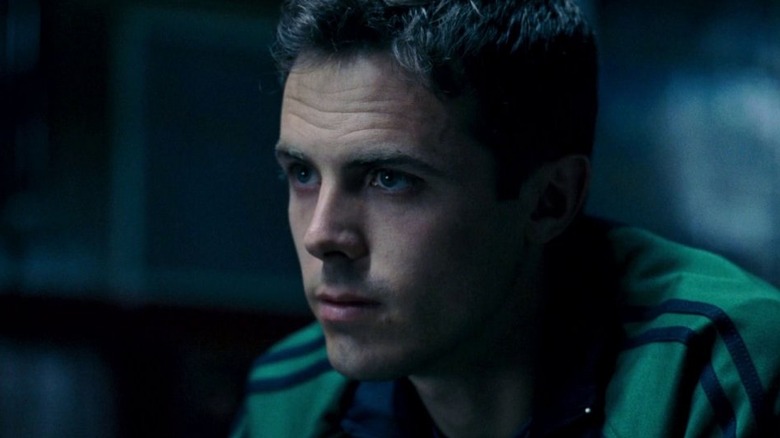
Gone Baby Gone stars Casey Affleck as Patrick Kenzie, a private detective who — along with his girlfriend Angie Gennaro (Michelle Monaghan) — looks for missing people. He genuinely cares about his neighbors, legitimately wants to help others, and has a moral code to help him navigate a world full of drug dealers and corrupt cops. So when he's hired to find a missing girl, Patrick seems like the perfect guy for the job, and for the most of the movie, we're totally on his side, cheering him on as he works his way through Boston's underbelly.
However, things start getting tricky in the last 30 minutes. After finding his way through a labyrinth of lies, Patrick discovers this little girl — who he thought was dead — has been abducted by a highly respected police captain (Morgan Freeman) with the help of two detectives and the girl's own uncle. But there's nothing nefarious going on. See, the little girl's mother (an Oscar-nominated Amy Ryan) is a neglectful, abusive junkie, and there's a good chance the kid will wind up dead or just like her drug-addicted mom. The cops faked the kidnapping so the girl can live with the kindly captain and grow up in a world of love, peace, and security.
Unfortunately, Patrick sees the world in black and white. In his mind, you just can't take a kid from her mom, even if you mean well. You can't break the law. Family is too important. The captain pleads with Patrick to consider the girl's future, and Angie begs him too. Moviegoers are crossing their fingers, hoping Patrick will make the best decision, but in the end, he picks up a phone and calls the state police, a decision that gives us one of the most heartbreaking final scenes in cinematic history.
Robert Ford is that dirty little coward who shot Jesse James
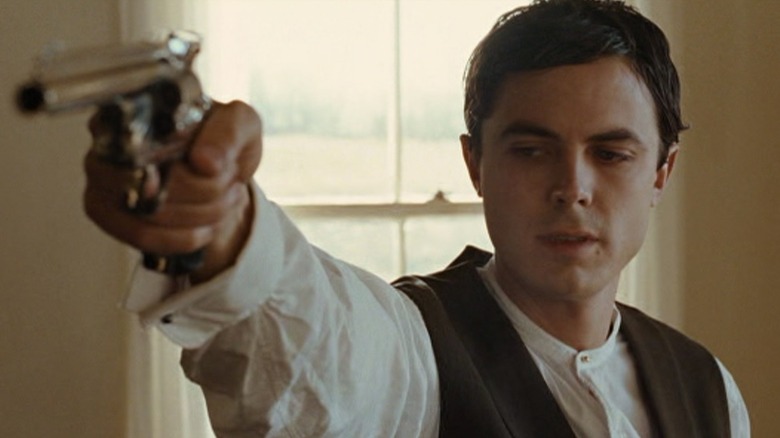
It should come as no surprise that Jesse James (Brad Pitt) is shot to death in The Assassination of Jesse James by the Coward Robert Ford. It also won't come as a shock that the man who pulls the trigger is Bob Ford (Casey Affleck), an outlaw wannabe who idolizes James...until he finally meets his hero, anyway.
Affleck plays Ford as the world's most toxic fanboy, an obsessive sycophant who dreams of one day taking James' place. But when the notorious train robber mocks Bob and crushes his dreams, the mancrush gives way to murder. If his hero is going to make fun, then Ford is going to put his hero in the dirt. And once he does away with his old idol, Ford hopes to become a legend, a man who's loved and applauded as much as James himself.
Now, granted, Jesse James doesn't deserve to live a long and happy life. He's a violent man who's battling some truly disturbing urges. At the same time, Ford is a sleazy backstabber who doesn't care about justice. He isn't trying to rid the world of a murderer or stand up for civilized folks — he's basically a disturbed fan who wants to shoot a celebrity, and it's hard to cheer for this self-serving weasel as he lays out a legend.
Ethan Edwards is a genocidal gunslinger
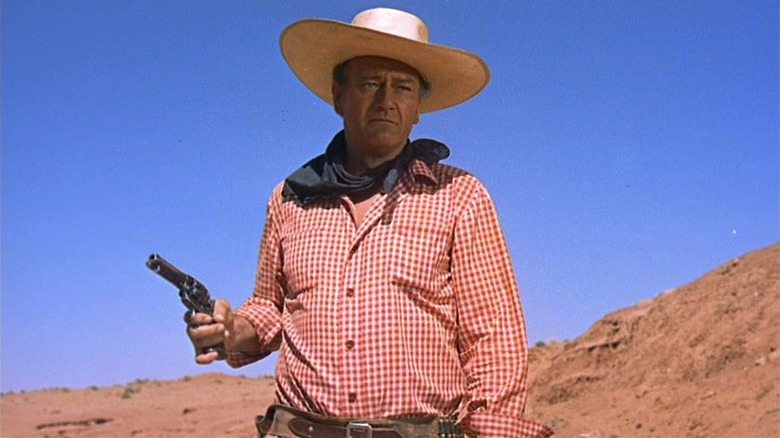
Old-timey Westerns are pretty problematic when it comes to their depictions of Native Americans and Manifest Destiny. However, director John Ford turned that uber-American ideal on its head in The Searchers. This 1956 Western finds John Wayne playing Ethan Edwards, a Confederate soldier whose nieces are kidnapped by Comanche warriors. Naturally, this doesn't sit well with Ethan, so he sets off, rifle in hand, to rescue his relatives. And hey, we can all root for that, right? It's like Liam Neeson in Taken or Denzel Washington in Man on Fire...only Ethan is a genocidal gunslinger.
See, Ethan doesn't just hate the Native Americans who captured his nieces. He hates all Native Americans. He scalps an Indian chief and desecrates a Comanche corpse out of spite. He tries to wipe out an entire herd of buffalo so the Native tribes won't have anything to eat. He's so racist that he eventually decides to murder his youngest niece (who's been missing for years at this point) because, in his eyes, she "ain't white, not anymore."
Of course, the movie knows Ethan is a horrible racist, and it doesn't support his desire to murder everybody he meets. (He actually inspired the creation of another pistol-packing racist: Travis Bickle.) Having the typically heroic cowboy turn out to be such an awful guy is what makes The Searchers so awesome. And when Ethan is finally left to wander forever between the winds, he definitely deserves his lonely fate.