

VisionQuest's Finale Ends The WandaVision Trilogy With A Perfect Throwback
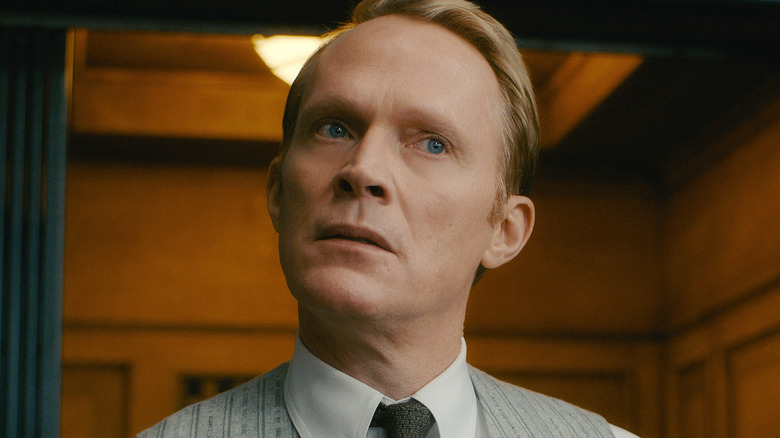
Contains spoilers for "VisionQuest" Season 1, Episode 8 — "Forever"
The Disney+ corner of the Marvel Cinematic Universe started in 2021 with "WandaVision," and the show's two spin-offs have kept the unique show's vibe going in their own ways. The central premise of "WandaVision" finds Wanda Maximoff (Elizabeth Olsen) and Vision (Paul Bettany) living in sitcom realities from various decades, due to tragic reasons that unfold over the course of the show. "Agatha All Along" largely does its own thing with the Witches' Road, yet pays respect to the parent show with the TV genre play in its series premiere, as well as the ever-changing themes of the tasks that the Road creates for Agatha Harkness (Kathryn Hahn) and her makeshift coven.
Meanwhile, "VisionQuest" recycles the scariest "WandaVision" plot point by introducing the Mindspace as a Hex-like prison for artificial intelligences that Vision can manipulate as needed. The show also uses copious "WandaVision" flashbacks that are explained in Episode 7, "Immolation," and in the finale, "Forever," brings the trilogy to its sitcom-riffing roots.
After Ultron (James Spader) sets out to destroy humanity with his newly-acquired nanobots, Vision traps him in a brand new sitcom called "UltraVision," which is intended to help Ultron see the error of his ways. It's an incredibly appropriate callback, and a perfect way to provide closure to a show that couldn't possibly exist without "WandaVision" and its trailblazing approach.
UltraVision revisits the sitcom themes of WandaVision
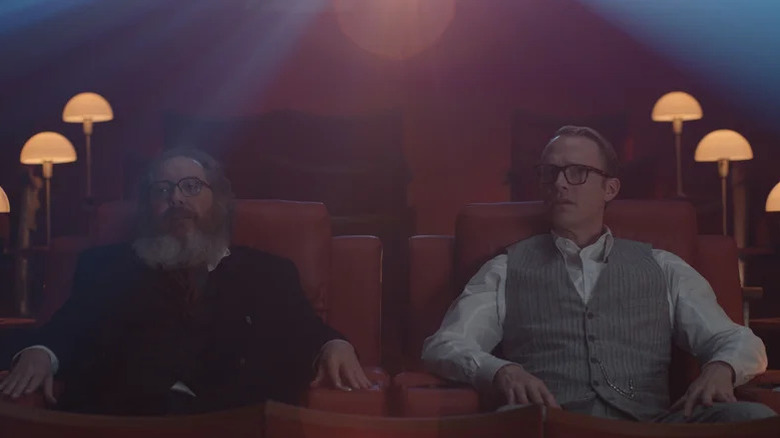
For the final showdown with the nanobot-controlling Ultron, Vision and E.D.I.T.H. (Emily Hampshire) trap him in a "WandaVision"-esque sitcom called "UltraVision." As a bonus, this show exists in quantum time, so they can spend an incredibly long time there while Ultron's nanobots advance toward their first targets.
Unfortunately, the plan isn't quite foolproof. Like Agatha Harkness on "WandaVision," Ultron finds ways to disrupt the sitcom. Over hundreds of episodes of "UltraVision," the antagonist becomes so adept at manipulating the events that he brings multiple nanobot-infected main characters into the mix as gross caricatures of themselves. He indulges in profanity and meta antics, expresses considerable genre savviness, and even kills the studio audience offscreen — complete with appropriately horrifying sound effects.
While Vision's plan is ultimately successful, "UltraVision" is as harrowing an experience as any installment of "WandaVision" sitcoms ever was. It serves as a dark reprisal of the parent show's themes — which is saying something, considering that "WandaVision" is creepier than anything else in the MCU. As such, the return to the sitcom approach is a perfect way to end the "WandaVision" trilogy.