

5 Sci-Fi Movies That Tried To Launch Franchises But Failed Spectacularly
Launching a franchise isn't an easy task. For every "The Lord of the Rings: The Fellowship of the Ring" that immediately takes off financially and artistically and spawns decades of follow-ups, there's an "Eragon" or a "The Last Airbender." These tremendous flops never spawned the major franchises their creative teams wanted, even if they had endings or credits scenes ham-fistedly teeing up potential sequels. Cinema history is littered with projects like "Super Mario Bros." or "Artemis Fowl" that end with sequel hints that will never get realized. The territory of sci-fi movies is no exception to this embarrassing phenomenon.
Throughout the years, the siren song of launching long-lasting sagas like "Star Wars" or "Avatar" has inspired studios to greenlight launchpads for sci-fi movie franchises that proved utterly disastrous. The five most memorable (for all the wrong reasons) examples of sci-fi movies that tried starting franchises but failed spectacularly are undeniably compelling boondoggles. Many of them reflect the folly of getting too obsessed with setting up larger franchises rather than just focusing on the standalone movie standing in front of you. Other abandoned sci-fi sequels crystallize frustrating creative instincts, signaling troublesome artistic descents for certain filmmakers.
Even though these sequels never materialized, what does live on are the legacies connected to the finished movies they were supposed to succeed. Considering how enduring these artistic misfires were, let's all hope that future filmmakers will heed their shortcomings when getting too proactive in setting up franchises before the first movie debuts.
Black Adam
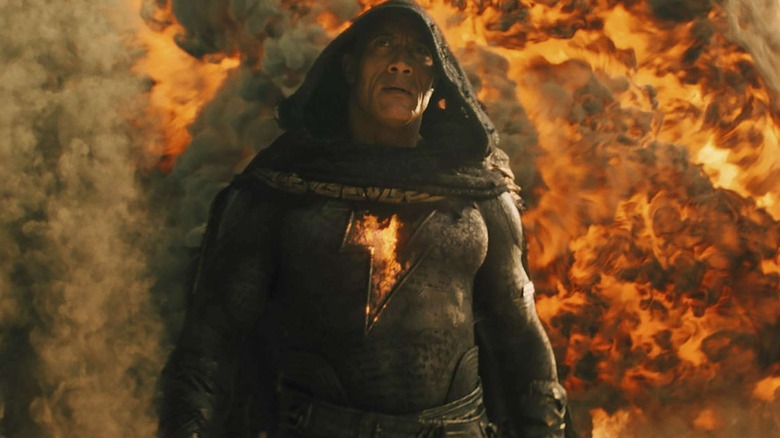
Before 2022's "Black Adam" opened, its star, Dwayne Johnson, couldn't stop talking about how it was going to shake up the DC Extended Universe. "Black Adam," it turned out, did prove mighty impactful, but not remotely like Johnson expected. Johnson explained in promotional interviews for "Black Adam" that this feature was supposed to be the linchpin for a new age in the DCEU. Johnson eagerly anticipated not only that "Black Adam 2" was inevitable, but also that his DC character would rub shoulders with other famous heroes and villains from across the DC movie multiverse. That was before, of course, "Black Adam" was projected to lose tens of millions of dollars for Warner Bros.
Further obstacles quickly appeared, though, beyond "Black Adam" not coming close to breaking even. Not long after "Black Adam" debuted, James Gunn and Peter Safran were hired to run DC Studios, where they would launch a new multimedia DC saga (the DC Universe) that had no room for Black Adam and his "hierarchy of power." While the underwhelming box office performance may have already been enough to shelve "Black Adam 2," Gunn and company wanting to focus on other DC characters solidified that all these grandiose plans were going nowhere. "Black Adam" is now a cautionary tale of what happens when artists get too focused on sequels and universe planning above making solid standalone motion pictures.
Chappie
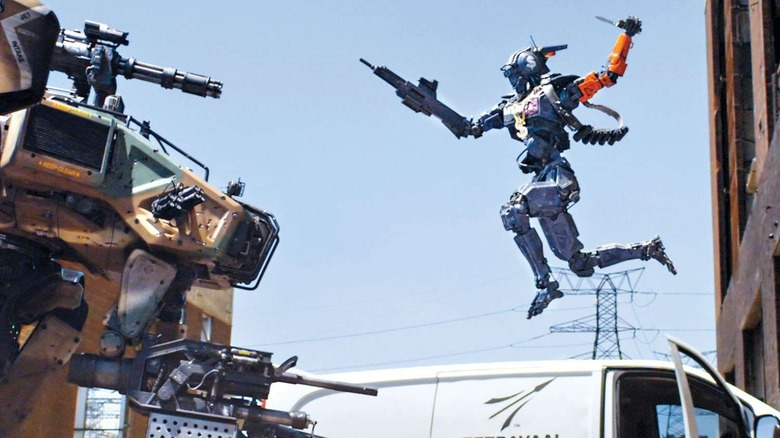
When the "Halo" movie collapsed in the 2000s, it led to Neill Blomkamp making "District 9," his breakout movie. That film becoming a box office success and award season darling heralded the arrival of a new filmmaking titan. Nearly two decades later, Blomkamp has directed a string of critically derided disasters and embraced AI slop. It's a tragic and cautionary tale career trajectory, though not a surprising outcome given the kind of movies Blomkamp was helming circa 2015. That was the year "Chappie" hit theaters and saw the director providing his own take on the well-worn storytelling template of a cutesy childlike robot discovering the nasty human world.
Despite the cast of "Chappie" featuring major names like Sigourney Weaver and Hugh Jackman, the movie went nowhere at the box office. This scuttled expansive plans Blomkamp had for expanding on the world of "Chappie" in a pair of sequels that would round out a trilogy of "Chappie" adventures. No concrete details were ever offered for what these follow-ups would've entailed, but the ending of "Chappie" suggests these sequels would've focused on humans having their consciousnesses uploaded into robots. Once audiences clearly rejected "Chappie," though, Blomkamp abandoned all plans for turning this sci-fi film into a franchise starter and instead focused on projects like "Demonic."
While the titular robot of "Chappie" memorably hollers "no more violence!" while beating the tar out of Hugh Jackman, he might as well have shouted "no more sequels!" given how the "Chappie" franchise fizzled out.
The Tomorrow War
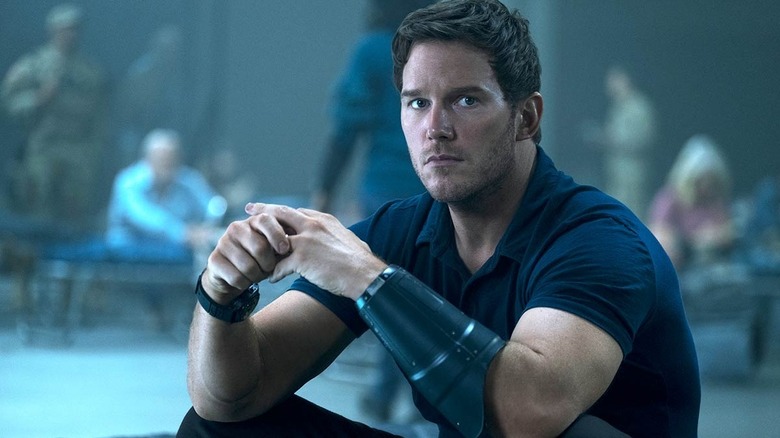
When the COVID-19 pandemic shut down movie theaters, Paramount and Skydance sold "The Tomorrow War" for a massive $200 million to Amazon, which was in the process of drastically reorienting its original movie exploits. Amazon's initial ambitions to focus on prestige movies (like "Manchester by the Sea" or "Cold War") were getting sidelined by 2020 in favor of the streamer acquiring super mainstream titles like "Borat Subsequent Moviefilm," "Coming 2 America," or a big blockbuster like "The Tomorrow War," where Chris Pratt travels across time to fight aliens.
Dropping on Prime Video over the 2021 Fourth of July weekend, "The Tomorrow War" reportedly drew strong initial viewership figures. It was quickly reported that another "Tomorrow War" movie starring Chris Pratt was in talks. While there was an update early in 2025 that the script was complete and that plans were still in the works, nothing has yet come to fruition.
After Earth
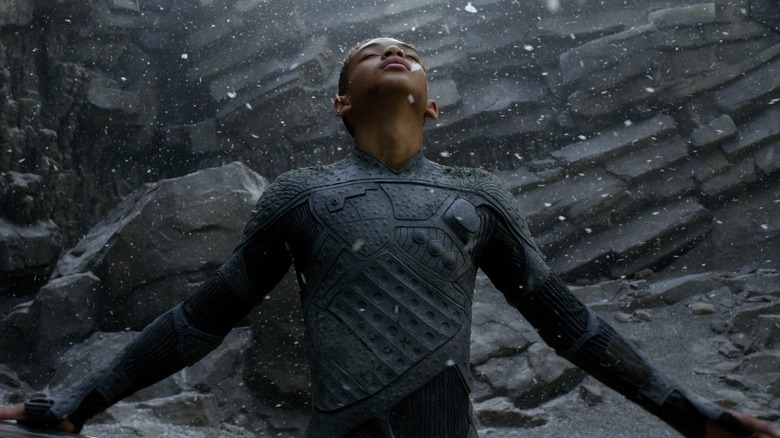
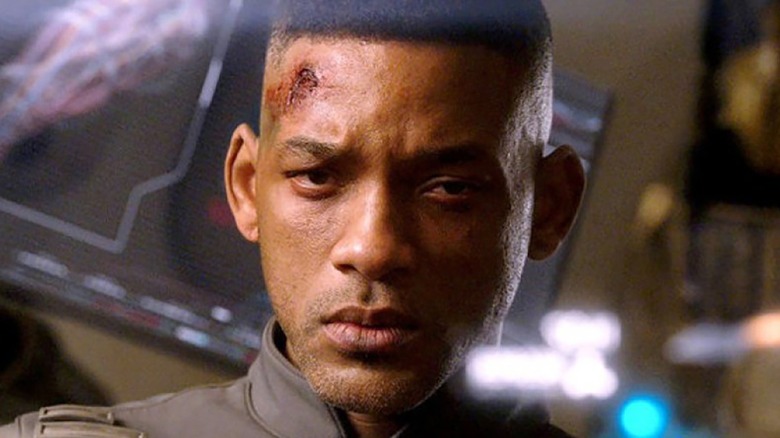
After delivering mighty box office hauls with his 16 best movies, Will Smith, circa the early 2010s, was understandably confident about his ability to make any motion picture a moneymaker. Thus, when Smith first pitched Sony Pictures about a project that would eventually become 2013's "After Earth," he reportedly didn't just outline a single movie but a sprawling franchise. As outlined in Ben Fritz's book "The Big Picture: The Fight for the Future of Movies," Will Smith had huge plans for an "After Earth" franchise. He reportedly showed up to the pitch meeting with hundreds of pages of "After Earth" lore while comparing the proposed endeavor to the likes of "Star Wars" and "The Lord of the Rings."
To boot, Smith envisioned multiple TV shows, video games, theme park rides, and larger merchandising tie-ins emerging from "After Earth." This passion project that would star his son, Jaden Smith, was going to spawn so much money, at least in Smith's eyes. Of course, "After Earth" didn't make nearly enough to inspire a sequel, let alone the deluge of multimedia projects Smith envisioned all those years ago. "After Earth" became the big sci-fi movie Will Smith regrets making, with its abysmal box office haul ensuring that Jaden Smith's silver screen career was on ice for the foreseeable future. Of all the times for Will Smith's box office clout to run out, it was for the project he planned as a massive cinematic universe.
Dune (1984)
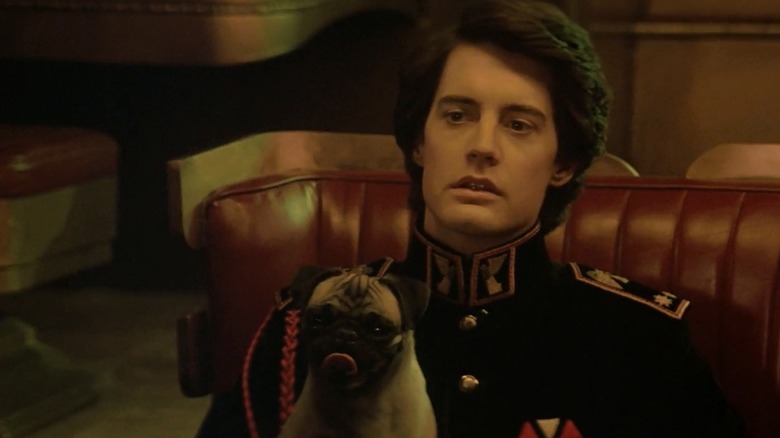
Long before Austin Butler put on the Harkonnen makeup, Hans Zimmer came up with his iconic compositions, or Jason Momoa was cast as Duncan Idaho in the three Denis Villeneuve "Dune" movies, cinema legend David Lynch tried his hand at adapting Frank Herbert's "Dune" for the big screen. The result was the 1984 movie "Dune," which compressed the original "Dune" novel into a single motion picture. However, given how popular "Dune" was, the producers and Lynch had ambitions of ensuring this "Dune" was no one-off. Instead, plans were gestating for a sequel that would've drawn heavily from Herbert's "Dune Messiah."
Lynch began penning the script for this ambitious project, while "Dune" cast member Virginia Madsen has openly noted that she was secured to appear in three "Dune" movies. Grand hopes for Lynch's "Dune" inspiring further trips to Arrakis, though, went up in smoke once the box office numbers came in. Costing a mighty $45 million to make, "Dune" made just $28.4 million worldwide, a dismal haul that immediately shelved any further film adaptations of this material from this creative team. With that, "Dune" wouldn't receive another theatrical movie adaptation until 2021's "Dune: Part One."
Though these sequels fizzling out may have been frustrating in the moment, not being preoccupied with multiple "Dune" sequels eventually ensured Lynch had the time to pursue masterpieces like "Blue Velvet," "Twin Peaks," and "Wild at Heart." Plus, it made the existence of the modern "Dune" trilogy possible.