

5 Most Historically Accurate Action TV Shows, Ranked
It's one thing to watch a sweeping historical drama, whether we're talking on the big screen or in a binge-able format on TV. But is it historically accurate? That's the eternal question.
For some viewers, let's be honest — they're not going to be sticklers for historical accuracy, and that's fine. Sometimes, you just want to lose yourself in a series; perhaps that's why historical drama adjacent epics like "Game of Thrones" and its spin-off and prequel "House of the Dragon" draw so many viewers, because it features all of the intrigue you'd hope for in a massive medieval drama but also features fire-breathing dragons. So which historical dramas should you add to your watchlist if you've read a ton of non-fiction and want to see the past depicted as accurately as possible?
A note here. Whenever anything is called "historically accurate," someone will show up to quibble with that assessment, and that's to be expected. Still, we worked, while researching this list, to find the shows most committed to some form of historical accuracy, whether that's through multiple language translations, painstaking research, period-accurate costumes, or, in the cast of our number one show, all that and more. From an HBO series that was canceled too soon to one of Hulu's biggest hits of all time, here are the five most historically accurate action TV shows, ranked.
5. Rome
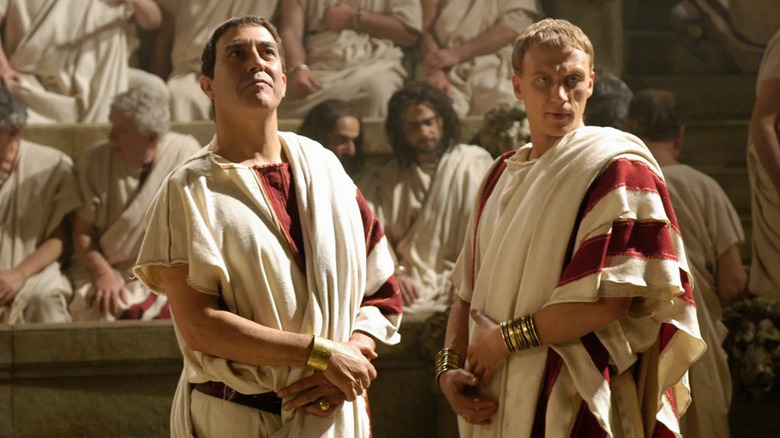
"Rome," the sweeping historical HBO drama that honestly paved the way for fantasy hits like "Game of Thrones" with its sheer scope and scale, never really got a fair shot to thrive. After two seasons, the series created by John Milius, William J. MacDonald, and Bruno Heller proved, apparently, too expensive for even a powerhouse premium network like HBO to fund, and it was canceled after its second season.
Part of the reason that "Rome," a series focused on two characters — Kevin McKidd's by-the-book Roman officer Lucius Vorenus and Ray Stevenson's intense but flip soldier Titus Pullo and how their stories intertwine as Rome makes the move from a "republic" to a massive empire — is so devoted to historical accuracy is that it hired historical consultant Jonathan Stamp, who worked particularly hard to make sure the show integrated real details relating to Romans and Egyptians alike. As Stamp told the BBC:
"We did everything we could to make these episodes historically authentic, which meant researching and incorporating every kind of detail we could about the way our characters behaved, the way they interacted, how they dressed and gestured, the kind of streets they walked down, the way they conducted their private and public lives. We were not, however, making a documentary. We were striving for authenticity because it enriches the experience of the drama for the viewer."
This paid off, cancellation notwithstanding — and "Rome" is regarded as a particularly accurate series. With a supporting cast that also includes Ciáran Hinds, Tobias Menzies, Kerry Condon, Indira Varma, and Polly Walker, just to name a few, "Rome" is a marvel, and it's one of the most historically accurate action TV shows ever made.
4. The Last Kingdom
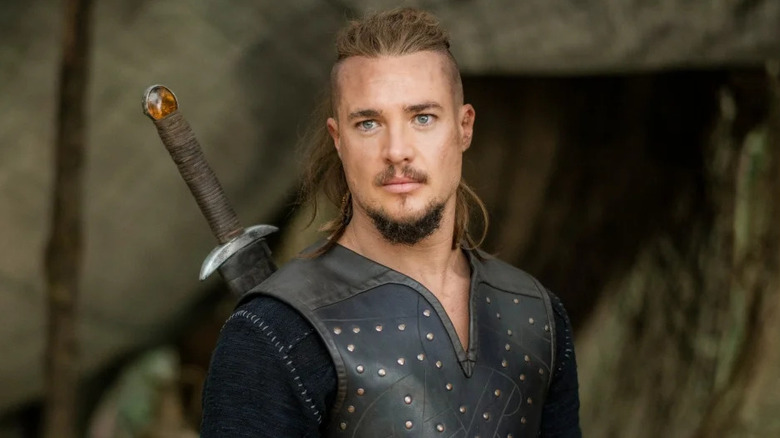
Adapted for the small screen by Stephen Butchard from Bernard Cornwell's series "The Saxon Stories," the Netflix original series "The Last Kingdom," which tries to accurately depict the years between 866 and 878 in what's now modern-day England, which saw an invasion by a group called the Great Heathen Army led by Guthrum and Ubba Ragnarsson and changed forever. On the series, Alexander Dreymon plays Uhtred of Bebbanburg, a warrior who fights for the Saxons but was raised by the Danes; Thomas W. Gabrielsson plays the aforementioned army leader Guthrum, while Rune Temte plays Guthrum's partner in crime Ubba Ragnarsson.
As with the other shows on this list, there's certainly an element of fiction involved with "The Last Kingdom," much of which was explained by the show's historical consultant Ryan Lavelle in an interview with Den of Geek. "I still have an element of that initial excitement of thinking that this is a world that I've tried to inhabit in my mind, and it's being paid enough attention to be able to put flesh on the bones of characters who've been dead for 1000 years," Lavelle said of the initial ask to get involved with "The Last Kingdom." He continued, "I have to be pedantic. I have to let them know when things aren't right, but they have to make the decision, and they make those decisions from a perspective of being informed of the actual history."
Ultimately, as Lavelle pointed out, "The evidence for our period is limited so we always have to play with history to some extent." While there might be some inaccuracies in "The Last Kingdom," it's still a pretty good look at a largely unknown time period, and it strived for accuracy at all times.
3. Chernobyl
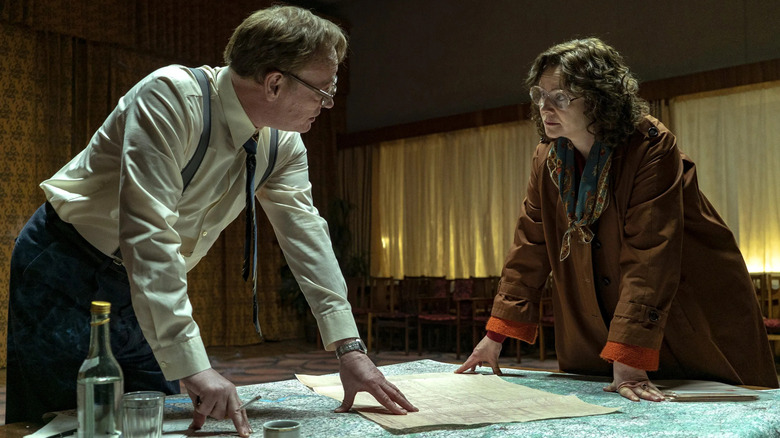
Created by Craig Mazin, the HBO miniseries "Chernobyl" is one of the most gut-wrenching miniseries you'll ever watch thanks to its stark, bleak, and largely realistic portrayal of the nuclear catastrophe that left the area near Pripyat, Ukraine destroyed and desolated after a nuclear reactor unexpectedly exploded. With Jared Harris as nuclear institute director Valery Legasov, Stellan Skarsgård as high-ranking USSR official Boris Shcherbina, future Oscar winner Jessie Buckley as the wife of a first responder (and Adam Nagaitis as her husband), and Ralph Ineson as Nikolai Tarakanov — the leader of the cleanup efforts — "Chernobyl" is one of the darkest and most striking series in recent TV memory. So is it accurate?
Yes and no, according to someone who was there. "The Chernobyl catastrophe is depicted in a very powerful way, as a global catastrophe that absorbed huge numbers of people. Also, emotions and mood at that time are shown quite precisely, both among the personnel and the authorities," real Chernobyl survivor and former engineer Oleksiy Breus told the BBC of the series. Though he said some liberties were taken, they were likely just played up for the fictionalized version of the story, and isn't that really all we can ask for?
2. Band of Brothers
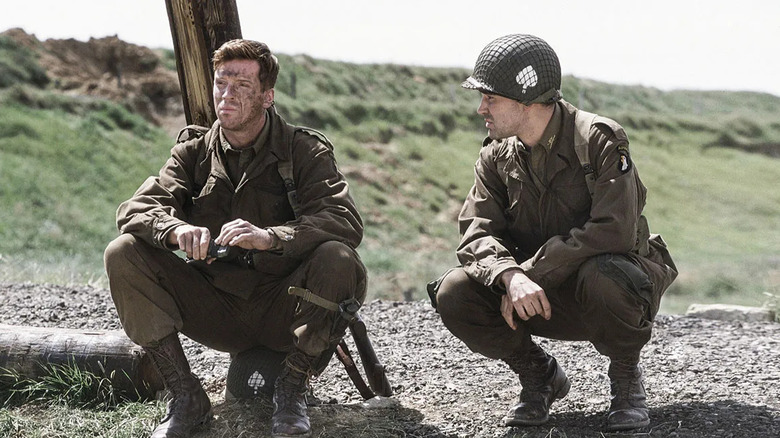
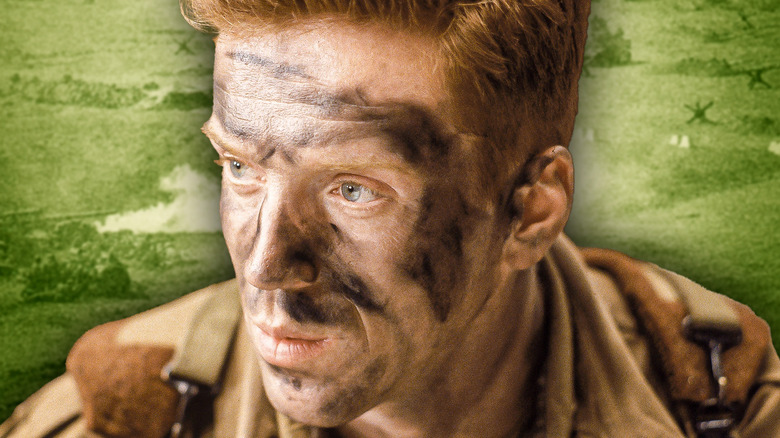
The full timeline of the HBO miniseries "Band of Brothers" is long and complex, but once you sit down and fully immerse yourself in this World War II epic helmed by Stephen Spielberg and Tom Hanks, you'll be glad that you did. The true story of the so-called "Easy" Company in the Second World War that helped accomplish the heroic efforts of D-Day, "Band of Brothers" is regarded as one of the most faithfully accurate historical action shows ever made. Back when it released in 2001, some veterans were actually able to speak to outlets about that point ... and they had pretty good things to say.
William Guarnere, who lost a leg during the conflict, told The New York Times it was a mostly accurate depiction. Pretty good,” he noted. ”You've got 45 guys here, and everyone will have seen the war from a different point of view. You can't be perfect. But I'd say it is as accurate as possible.”
As for Hanks, he had his own take on the situation — and he's right. As he put it:
"We've made history fit onto our screens. We had to condense down a vast number of characters, fold other people's experiences into 10 or 15 people, have people saying and doing things others said or did. We had people take off their helmets to identify them, when they would never have done so in combat. But I still think it is three or four times more accurate than most films like this.”
Beyond anything else, "Band of Brothers" captures the horrors of war, which makes it a tough watch ... but it's worth it. So what beat this modern classic out for the number one spot?
1. Shogun
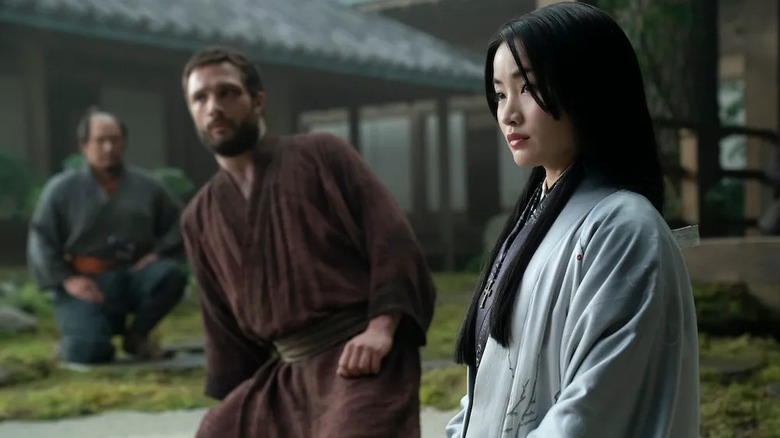
The only correct answer for the number one spot on this list is "Shōgun," adapted from James Clavell's original novels by Rachel Kondo and Justin Marks for FX and Hulu in 2024. This Emmy-winning series stars Cosmo Jarvis as newcomer John Blackthorne, an English maritime pilot whose vessel shipwrecks on Japanese shores, where he gets involved in massive political intrigue alongside surprising new allies Lady Toda Mariko (Anna Sawai), an interpreter with a dark past, and Lord Yoshii Toranaga (Hiroyuki Sanada), fighting battles alongside them as Toranaga's control of the region is threatened.
"Shōgun" is painstakingly accurate, down to its costumes and sets and the fact that the spoken Japanese isn't modern Japanese, but appropriate to the Edo period. So how did they do that?! According to producer and translator Eriko Miyagawa in an interview with Vulture, the process involved looking at Clavell's novel and then working through several different translations:
Then the American writers, they write the script. Then it goes to a team of Japanese translators in Tokyo. Hiro and I are checking in at different stages. Then it goes to Japanese dialogue polishers, who are experienced with Japanese period shows, to make sure it's period-appropriate and feels natural for a human being to be speaking. Because you know, it happens a lot in dubbing, when dialogue is pretty much directly translated from another language and it just sounds like something that's been translated. So we wanted to make sure it felt natural.
If you've seen "Shogun," you know that this was very much worth the effort. Thanks to game-changing performances and a commitment to accuracy, "Shōgun" is the most accurate historical series around, and it's not close.