

5 Best War Movies That Define The Genre
There's no shortage of excellent war movies over the years. Sadly, as long as the world remains in a state of conflict, these films will always carry resonance. They'll be there to remind us that the human toll of war extends far beyond soldiers on the battlefield. Their loved ones and innocent bystanders caught up in political tensions pay the price, too.
But it's one thing to simply have a great war movie. It's another thing for a specific film to be remembered and passed down from one generation to the next. The best war movies avoid succumbing to Hollywood cliches about heroism and don't shy away from depicting the true cost of combat.
Through innovative filmmaking techniques or showing a different side of war from what we usually get in mainstream cinema, these are the war movies that helped define the genre. You can see the DNA from these films in many that followed, so even if you only watch a few war movies in your lifetime, make sure these are on the list.
Saving Private Ryan
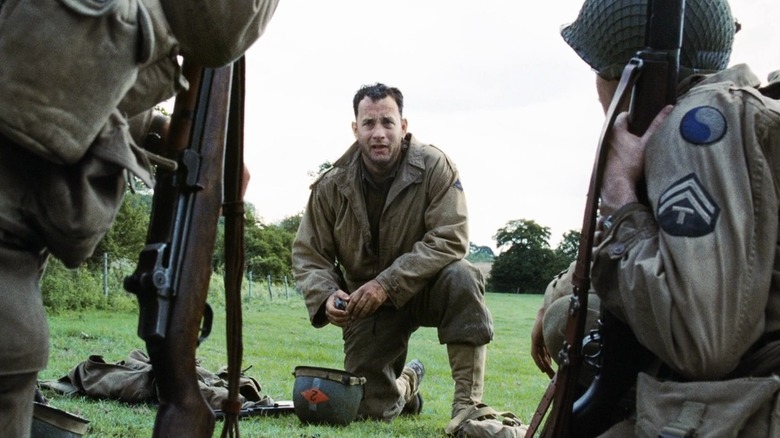
Steven Spielberg concluded the 20th century with what is, hands down, one of the most harrowing war films ever made. "Saving Private Ryan" pioneered many techniques that would go on to be utilized in future war films, most notably with the opening Omaha Beach sequence. For roughly 24 minutes, the audience is pitched head-first into battle, alongside the numerous soldiers who meet their demise in the sand.
Spielberg utilizes shaky hand-held footage to make you feel like you're right there in the heat of battle. It also highlights the confusion the soldiers felt when shot at by enemies far off in the distance, and they could do nothing but take cover when possible and march on. Some might say the "Saving Private Ryan" scene went too far, but few films have managed to capture the chaos of landing in a battlefield quite as well. There's also the now-iconic sound design where John H. Miller (Tom Hanks) can only hear ringing after an explosion goes off near him.
The soldiers are depicted as ordinary people, not super-humans. They suffer physically and psychologically all for the sake of rescuing one man — the eponymous Private Ryan (Matt Damon). The movie's core asks whether sacrificing multiple lives justifies saving one, culminating in Miller's final words to Ryan: "Earn this." Is one life ever truly worth multiple? Was Ryan deserving of the gift he received? There are, indeed, heroes presented in "Saving Private Ryan," but the film asks why we put them in these impossible situations to begin with.
Apocalypse Now
World War II movies have an easier time creating a line between good and evil. Nazi Germany was unequivocally horrifying, so the United States going in is seen as a good thing. But there's a greater sense of moral ambiguity with the Vietnam War, where the general sentiment was "Why is the U.S. going to Vietnam?" It lends itself to depictions of moral ambiguity and questioning the concept of war itself. Thus, Francis Ford Coppola's "Apocalypse Now" laid the blueprint for countless Vietnam War films to follow.
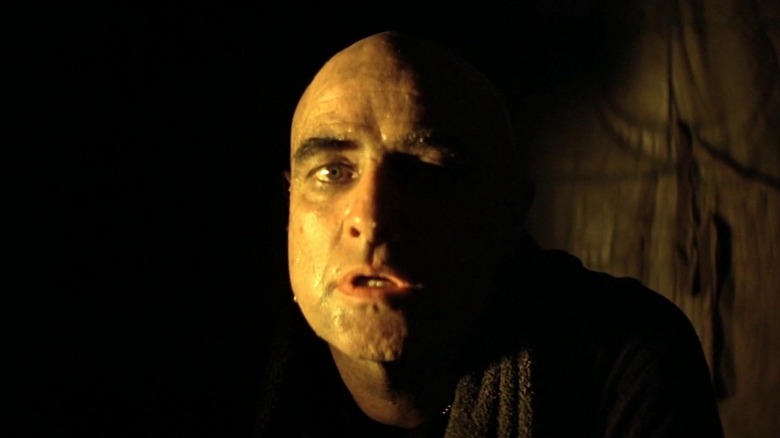
"Apocalypse Now" doesn't focus on epic battles. Instead, the film follows an officer named Willard (Martin Sheen) on his secret mission through the Vietnam jungle to assassinate Colonel Kurtz (Marlon Brando), who's gone rogue. Even as he's being told about Kurtz's erratic condition via his dossier, Willard witnesses all sorts of human depravity on his journey. One of the most memorable scenes involves Lieutenant Colonel Bill Kilgore (Robert Duvall) bombing villages set to classical music (partially in search of a good surfing spot), exemplifying how detached people can become to the idea of war — and yet addicted to it.
Through it all, Willard realizes Kurtz's madness isn't the exception; it's the rule. All humans give up a part of their soul when engaging in warfare, forced to see their fellow man as nothing more than a faceless enemy. "Apocalypse Now" sometimes opts for surrealism over straightforward reality, and often more interested in examining how war exacts its toll on the human soul as much or more as the physical body, with the ending of "Apocalypse Now" being one of the bleakest in the genre.
All Quiet on the Western Front (1930)
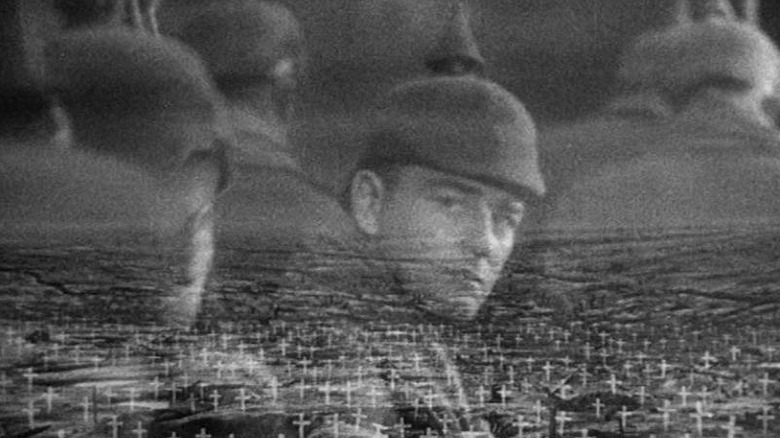
It was no surprise that many World War I films came out in the 1920s. The world was still reeling from the conflict and, in Hollywood specifically, an emphasis was placed on the heroism of our soldiers. There were certainly landmark films of the era, including "The Big Parade" and "Four Sons," but none have had quite the enduring legacy as 1930's "All Quiet on the Western Front."
The film outright rejects any notion of heroism, nor does it propagandize the war. Instead, we see the human cost as young men, with Paul Bäumer (Lew Ayres) at the center, are sent off to die. The film maintained a heavy emphasis on realism, blowing up large chunks of land in California to create the trench sequences. And the tracking shots remain nothing short of astounding today, as the camera leads viewers through continuous views of the battlefield, showcasing the chaotic nature of war.
The film received a remake in 2022 that made some notable changes to the original film, including a stronger emphasis on the political machinations in Germany at the time. That's a great film, too, as evidenced by earning a nomination for best picture the same year. But the original version changed the way Hollywood could offer a war movie — by making one that felt like it was truly honoring soldiers rather than needlessly glorifying their deaths.
The Longest Day
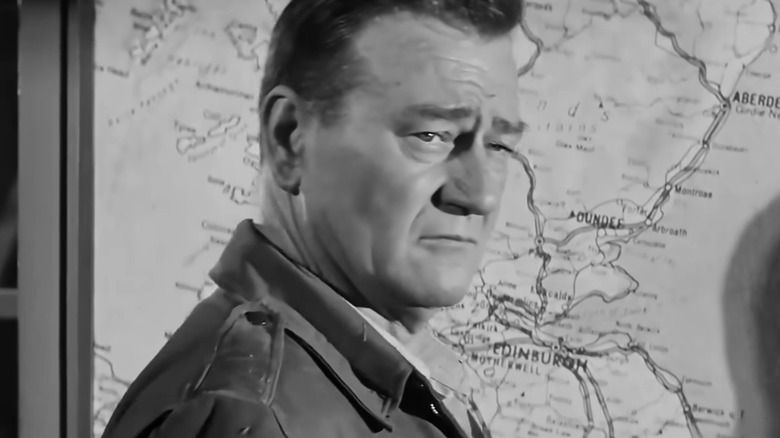
Most Hollywood films have a single protagonist we follow throughout their journey. It works for most stories, but when it comes to war, there's rarely a lone hero. Thousands of people sacrifice their lives in battle, and although society tends to enjoy singling out champions, there's little of that in global conflicts. That's what turns "The Longest Day" into a riveting story. The film's time is divided amongst soldiers at different ranks in different areas, all to showcase how many people are actually involved in a single, heroic effort.
The film doesn't stay with one country, either, as we follow squads and soldiers from the United States, Britain, France, and Germany. Soldiers even speak in their native languages. That commitment to realism can also be found in the use of making the movie in black-and-white, despite films in color becoming standard by the 1960s. It gives the film the feel of a World War II-contemporary newsreel, which is appropriate, considering the film chronicles the lead-up to D-Day.
"The Longest Day" set the standard when it comes to war films expanding their horizons beyond a single hero, or even single nation. You can see its influence in films like 1977's "A Bridge Too Far" or both "Flags of Our Fathers" and "Letters from Iwo Jima" from director Clint Eastwood." "Flags" is about the Americans making the iconic photograph at Mount Suribachi while "Letters" humanizes the Japanese soldiers during that conflict. It all goes back to "The Longest Day" emphasizing the need to show numerous perspectives when telling war stories.
Full Metal Jacket
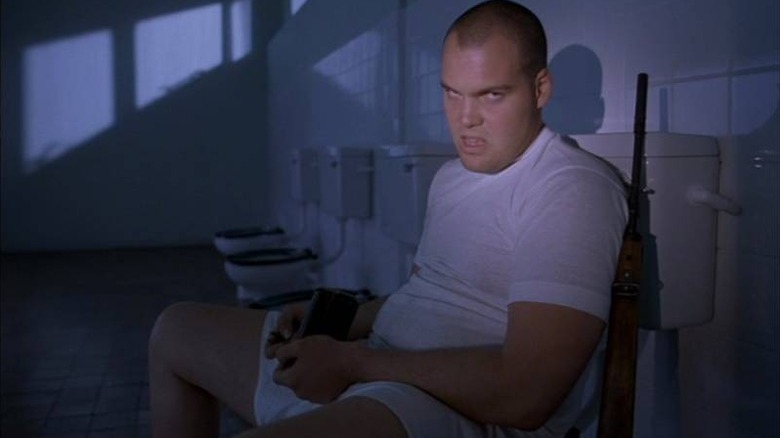
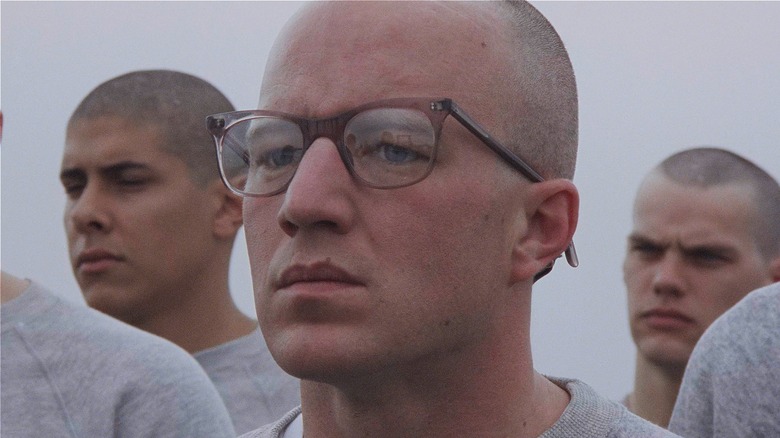
"War is hell." It's impossible for a modern war movie to get made without that becoming the central ethos, and that's the way it should be. It's not something to be glorified, but few films have ever pushed that limit as hard as much as "Full Metal Jacket." It exists among movies that change completely halfway through because the first half shows how the dehumanization of soldiers occurs early on. R. Lee Ermey gives an iconic performance as Gunnery Sergeant L. Hartman, a foul-mouthed drill instructor who eventually sets his cadets against Private Leonard Lawrence (Vincent D'Onofrio), layering them in callous armor before they set out to battle. It's no surprise that Lawrence cracks in the climax of the first half, but it is a horror to watch.
The second half follows up on some of those cadets via their fellow, the journalistic Joker (Matthew Modine) during the war itself. But as tends to be the case with this era, there is no glory here. There are no heroes. It's like a fragmentary series of vignettes as soldiers lose their lives for a fight no one really understands.
Many films will have the message that war is evil but our military and soldiers are great. But "Full Metal Jacket" shows how harmful the military can be to soldiers before they're in the field. The military strips cadets of their identities so that they can be turned into killing machines. There's not just a physical war overseas, but a psychological war waged against those who joined our military. It's arguably done with the best of intentions, but those intentions are eventually stripped away with the rest of their humanity.