

10 Best Movies Of The 2010s, According To Letterboxd
The 2010s were a weird era for American cinema. The decline of the mid-budget movie in this decade alone totally overhauled what kind of American features got made or artistic voices were heard in movie theaters. Meanwhile, the avalanche of cinematic universes and big franchises tilted the cinematic landscape towards 24/7/365 escapism. Major filmmakers shifting over to television during the Peak TV era also hurt the motion picture medium. Movies have always experienced problems and external turmoil, but the 2010s threw an especially overwhelming deluge of issues at this storytelling medium.
Still, even with all of these woes, the 2010s still delivered tons of outstanding movies, especially when one expands their scope to the global cinema scene. To gain a better sense of what films resonated with worldwide audiences during all this upheaval, one need only look at the 10 highest-rated 2010s features from Letterboxd users. These films (ranked below from "lowest" to highest in user ratings) exhibited impressive creativity and artistry despite the endless obstacles standing in the face of cinema's very existence in this decade.
It's reassuring to look back on all these movies and savor not only their accomplishments but their existence in a time of strife for this medium. One note before going forward: This list doesn't include standard recordings of concerts, short films, or feature-length episodes of TV shows like "Sherlock."
Spider-Man: Into the Spider-Verse
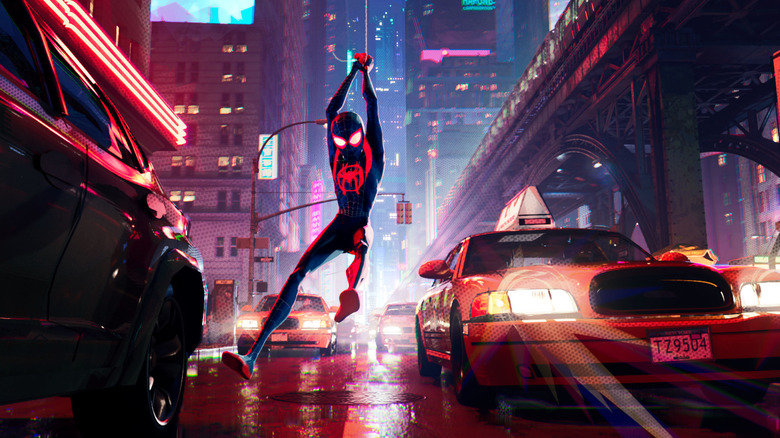
How do you stand out in an incredibly crowded field? That was the challenge facing "Spider-Man: Into the Spider-Verse," which didn't just contend with being the seventh theatrical feature to have the "Spider-Man" name in its title. It also opened in a year that was swarming with superhero movies. A trio of Marvel Cinematic Universe titles had hit theaters throughout 2018, while "Deadpool 2," "Venom," and "Aquaman" (the latter of which opened just a week after "Spider-Verse") were also clogging up multiplexes. With so many costumed crime-fighters in the cinematic landscape, how on Earth could the umpteenth "Spider-Man" installment stand out?
It turns out, quite easily. Rather than dredging up memories of the year's cavalcade of competing superhero titles, "Into the Spider-Verse" stood on its own two (webbed) feet. This fully animated exercise was bursting with visual creativity, inspired gags, and deeply affecting pathos. Everything from Daniel Pemberton's endlessly imaginative score to the rollicking pacing was just firing on all cylinders on this project. Plus, "Spider-Verse" dared to look different than any other American computer-animated movie. While other 2018 superhero titles like "Venom" and "Deadpool 2" mimicked what audiences had already seen, "Into the Spider-Verse" had a relentless conviction to deliver the unexpected.
That commitment ensured this movie became something unbelievably special. The only animated movie (and sole superhero feature) on this list, "Spider-Man: Into the Spider-Verse," effortlessly stood out even in one of the most jam-packed years ever for superhero cinema.
Homecoming: A Film by Beyoncé
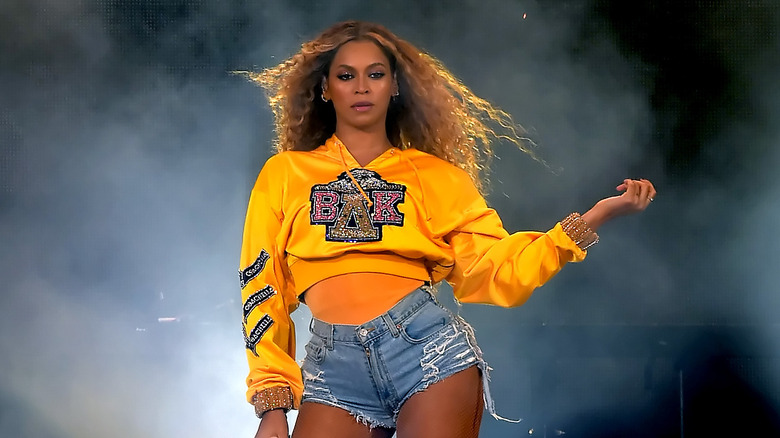
The traditional concert movie often follows a rigid structure and visual formula. That makes it vital to appreciate the entries in this field that offer something more idiosyncratic, like "Stop Making Sense." In April 2019, Netflix delivered one of the most distinctive concert films ever produced: "Homecoming: A Film by Beyoncé." Ostensibly, this production offered viewers a filmed version of Beyoncé's 2018 Coachella performance. However, Beyoncé's vision as a director goes far beyond just making viewers feel like they're right there at Coachella. This movie also cuts away from the stage to offer glimpses into the blood, sweat, and tears that went into making this lavish production possible.
Beyoncé often provides dreamlike, quasi-Terrence Malick-esque narration for these sequences. There's a fascinating blend of intimacy and grandeur in her vocals. As she carries viewers through her thought process, one can simultaneously grasp the emotional weight of this historic performance (she's the first Black woman to headline Coachella) but also the magnitude of the spectacle Beyoncé is preparing to deliver. "Homecoming" offers glorious craftsmanship in both its cutaway segments and concert footage. The latter material certainly stuns as Beyoncé reaffirms her gift for putting on an unforgettable show.
All the deeply specific flourishes Beyoncé incorporates into her Coachella performance and those digressions into her personal psyche ensure "Homecoming: A Film by Beyoncé" isn't just a standard translation of a concert into a motion picture. It's an exercise that inspires as much toe tapping as it does tears.
For Sama

It's extraordinary that "For Sama" exists. Journalist Waad Al-Kateab directs this project (Edward Watts also directs) that follows the existence of her and other Aleppo, Syria residents during the battle of Aleppo. Throughout the runtime, the rumbling of bombs, the collapse of buildings, and the screams of innocent lives suffering fill the soundtrack. Unthinkable scenarios are commonplace for these human beings. As extreme military efforts are being deployed to wipe out their very existence, Waad Al-Kateab keeps filming. She uses the medium of cinema to capture the human lives both lost and enduring. Among those lives is her daughter, born during unspeakable historical struggles.
"For Sama" is a grueling but essential watch that places viewers right on the frontlines of this Syrian conflict. The camera captures harrowing material like doctors scrambling to resuscitate a newborn baby in an unflinching fashion that propels your heart into your throat. All the while, Waad Al-Kateab lends vulnerable and profound insight into what it's like to grow up against the backdrop of war. How do her dreams and personality evolve in these circumstances? "For Sama" provides a captivating chronicling of that evolution.
One of the best documentaries of all time, "For Sama" is a masterful example of the tools of cinema being used to reaffirm rather than rob the humanity of the vulnerable. The very existence of figures like Waad Al-Kateab and her daughter in the frame is a rebuke to systemic erasure. These lofty goals powerfully inform this must-see documentary.
Portrait of a Lady on Fire
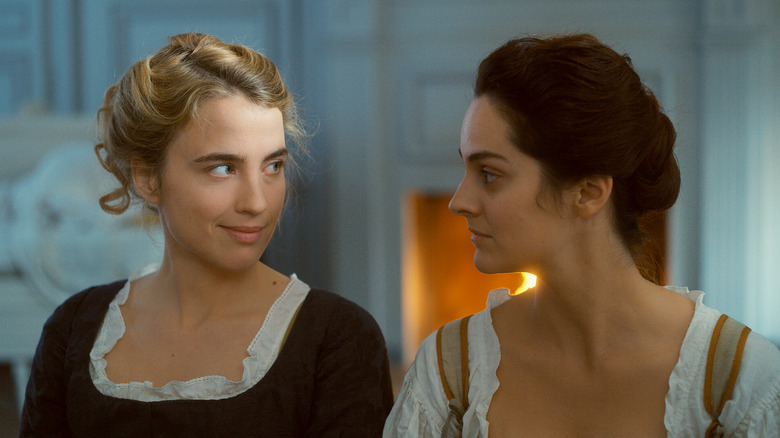
Few movies, or even pieces of art, are as sumptuous to look at as Celine Sciamma's "Portrait of a Lady on Fire." After excelling with down-to-earth, naturalistic features like "Girlhood" and "Tomboy," Sciamma and cinematographer Claire Mathon infuse every "Lady on Fire" scene with majestic colors, awe-inspiring lighting, and even an appearance from a stunningly costumed "ghost." Grab any frame from "Portrait of a Lady on Fire," and you'll have an image that could hang in the Louvre. As a visual treat alone, this Sciamma directorial effort is a crown jewel. However, this project offers up so many other feats in addition to its iconic imagery.
For one thing, Sciamma's infusing of tear-inducing poignancy into subdued displays of yearning is miraculous. "Portrait of a Lady on Fire's" ending is legendary for a reason, and much of that reputation comes from how it makes a close-up of a woman's face so devastating. Meanwhile, Noémie Merlant and Adèle Haenel are also extraordinary in the lead roles. They're compelling performers, whether they're alone on the screen or sensually bouncing off each other. Even the finer details, like the clap-heavy tune "La Jeune Fille en Feu," are immensely memorable.
You could spend all day rambling about what "Portrait of a Lady on Fire" excels at, and you'd still come up short at exploring everything great about this production. Celine Sciamma has one of the most impressive filmographies around, yet "Portrait of a Lady on Fire" is her radiant crown jewel.
The Act of Killing
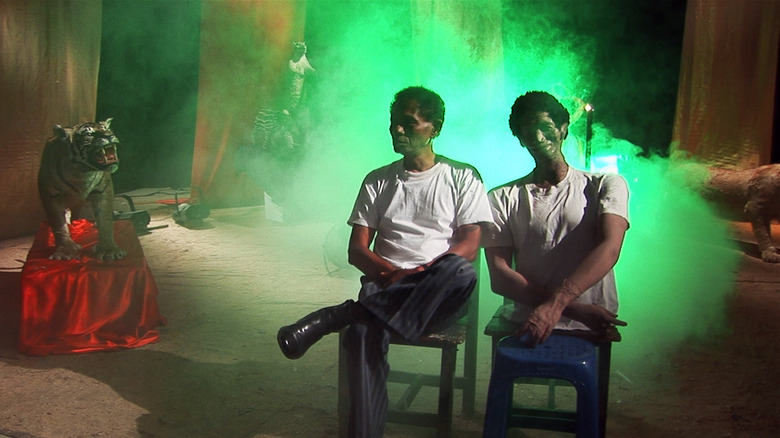
It's amazing what people will say on camera. This often haunting reality is potentially reinforced with director Joshua Oppenheimer's 2012 feature "The Act of Killing." Decades after the 1965-66 Indonesian genocide of alleged communists, Oppenheimer travels to Indonesia to chronicle Anwar Congo. This man claims he slaughtered hundreds of people during this historical atrocity, a feat that's garnered him and other murderers in this genocide enduring respect and power in Indonesian society. Congo and his allies don't just talk to Oppenheimer during this film. They also engage in filmed re-enactments of their various slayings.
It's unspeakably unsettling to watch "The Act of Killing's" footage and see figures like Anwar Congo so nonchalantly describe the demise of other human beings. Joshua Oppenheimer's documentary is a bold creation, forcing audiences to gaze upon the normalization of violence and historical atrocities. These murderers feel so little remorse about their behavior that they don't even blink at the prospect of recreating their actions for the camera. "The Act of Killing" is downright upsetting, a fitting feat for a feature handling such weighty and bleak material.
Such gruesomeness, though, serves extremely vital footage. Not only does "Act of Killing" bear witness to how normalizing a genocide adversely affects a society, but it also demonstrates (through Anwar Congo's relaxed behavior and how he's nonchalantly filmed) that evil can emerge from anywhere. Like Oppenheimer's other Indonesian genocide documentary, "The Look of Silence," "The Act of Killing" witnesses past and present horrors intertwining.
Whiplash
It's fascinating to compare the original top 10 movies of 2014 from Letterboxd users versus the current top 10 of that year. The platform's immense expansion in users, not to mention the explosion of certain filmmakers or studios since 2014, has allowed a much more eclectic collection of 2014 movies to emerge. Works once absent from this list, like the Alonso Ruizpalacios-directed effort "Güeros," now dominate what Letterboxd users consider the peak of 2014 cinema. However, some things never change. Certain 2014 movies that were revered upon their initial release remain highly regarded by this site's denizens.
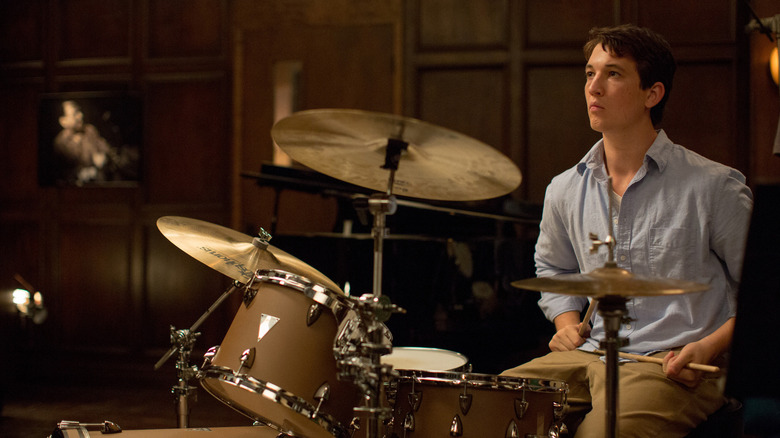
"Whiplash" is one such film. Director Damien Chazelle's big breakthrough movie has endured as lastingly impactful on several fronts, including its filmmaker only growing in notoriety thanks to subsequent hits like "La La Land." Then there are its central performances, which are deeply dedicated and palpably forceful accomplishments. All the intense training Miles Teller underwent for "Whiplash" paid off, given how his lead turn here is one of his best performances. Meanwhile, J.K. Simmons owns the screen as an abusive and terrifying instructor who changed the phrase "not my tempo" forever.
Then there's the tremendous craftsmanship informing the precise editing and incredible sound design of "Whiplash." These qualities make this universe of sweat, abuse, and torment so extra and masterfully suffocating. One of those movies that are practically flawless, it's no surprise "Whiplash" has endured as a standout 2014 film for different eras of Letterboxd users.
Incendies
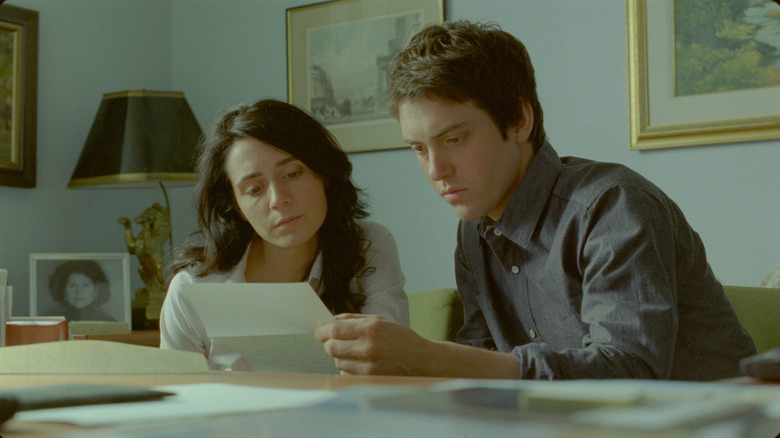
Denis Villeneuve's biggest box office performers to date would give the impression that this guy specializes in grand blockbusters rooted in the sci-fi genre. Before the "Dune" movies and "Blade Runner 2049," though, Villeneuve was doing much smaller-scale works that are dwarfed in scope even by his non-sci-fi English-language works like "Sicario." Among these earliest, more intimate titles was "Incendies." This project (which Villeneuve also wrote alongside screenwriter Valérie Beaugrand-Champagne) took viewers to the filmmaker's home country, Canada. Here, sibling Jeanne (Mélissa Désormeaux-Poulin) and Simon (Maxim Gaudette), after their mother's passing, are implored to travel to their homeland in the Levant.
Here, they're to meet heretofore unknown relatives connected to tragic histories in the family's past. "Incendies" having such a towering rating on Letterboxd can at least be partially attributed to Villeneuve having an enormous fanbase on the site (as of this writing, seven of his directorial efforts have an average user rating of at least 3.9 out of 5). Still, residual "Dune" and "Sicario" love isn't all that's going on with the positive "Incendies" reputation. This is also a deeply gripping drama that's extremely well-crafted and delivers its most devastating moments with impactful levels of power.
The engrossing nature of the most intimate "Incendies" scenes also reflects how Villeneuve doesn't need spaceships or even major American movie stars to keep one's attention. The skills that would make him a blockbuster cinema legend were already hauntingly apparent throughout his 2010 film "Incendies."
Interstellar
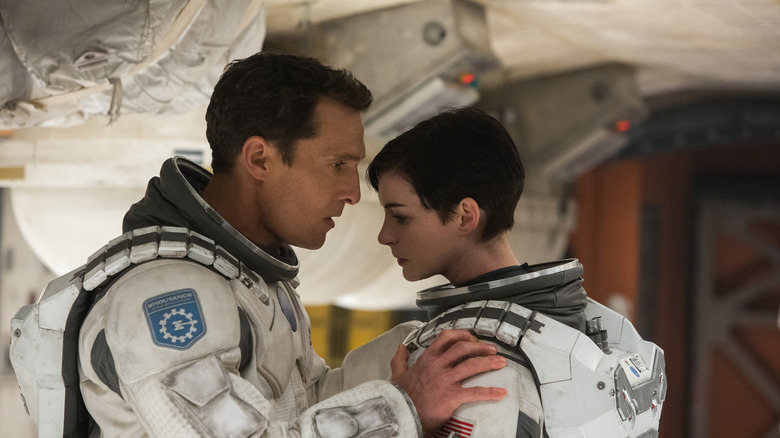
When it first hit theaters in November 2014, "Interstellar" was greeted with many positive reviews, but also a surplus of divisive responses. In the immediate wake of "Interstellar" debuting, most publications focused on perceived "plot holes" in the script or lambasting its sound mix. Some even saw the feature as a sign that writer/director Christopher Nolan's talents had finally crumbled after years of critical adulation. All of these write-ups and laments from late 2014 look as outdated as a "Dewey Defeats Truman" newspaper headline in the modern world. Now, "Interstellar" has become a beloved classic that younger generations have especially embraced as a modern classic.
The revised reputation of "Interstellar" can really be felt when looking at its various Letterboxd achievements. Not only is it the most-watched movie on the platform, but it's also the highest-rated narrative American movie of the 2010s on this site. Much like Denis Villeneuve and "Incendies", the massive presence of Christopher Nolan devotees online can partially explain why "Interstellar" is so beloved on Letterboxd. However, there's certainly something specifically informing why "Interstellar," of all of Nolan's 2010s works, has become so beloved on Letterboxd.
That high stature can be chiefly attributed to this production's sweeping artistry, which includes dazzling alien worlds and Hans Zimmer's transportive score. "Interstellar" also wears its heart on its sleeve when it comes to its most emotionally vulnerable sequences. These and other qualities clearly resonated with Letterboxd users and ensured the rehabilitation of "Interstellar" extended to this website.
O.J.: Made in America
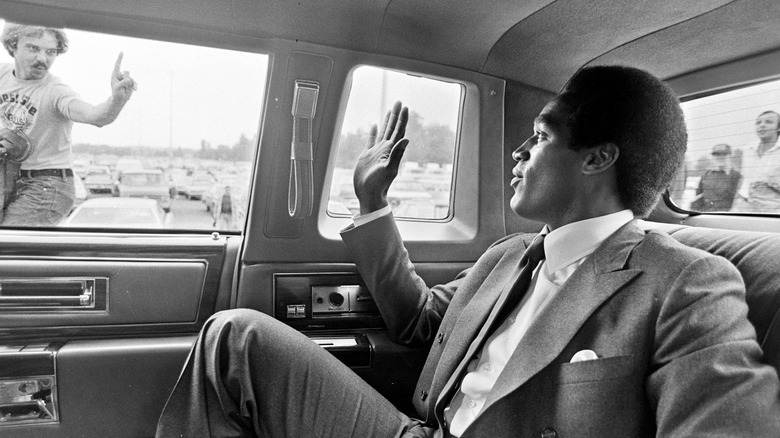
If you're ever searching for a lengthy motion picture whose artistry can immediately disprove folks who innately hate long movies, "O.J.: Made in America" should do the trick. This 467-minute documentary from filmmaker Ezra Edelman is an expansive tome whose scope is vital not just for chronicling O.J. Simpson's career, but for telling the story of the larger culture he inhabited. The intersections between Simpson and America's approach to marginalized lives are so vast and dense that they require ample screentime. Edelman more than earns this runtime through (among other accomplishments) deeply insightful interview segments and fascinating uses of familiar archival footage.
Even the most recognizable elements, like old O.J. Simpson commercials for mainstream products, take on new layers and meaning within Edelman's thoughtful filmmaking. Meanwhile, the expansive form of "Made in America" makes the evolution of some interviewees even more fascinating. Ron Shipp, for instance, recounts his initial dedicated friendship with Simpson, which curdles into toxicity. This deterioration hits viewers like a ton of bricks, given how much time they spend watching Shipp and the evolution of Simpson. Meanwhile, the deeply human handling of weighty material, like racial injustices and police brutality, is incredibly impressive.
Rather than leaving viewers checking their watches, "O.J.: Made in America" is a documentary epic guaranteed to leave any moviegoer haunted and captivated. This isn't just a story of O.J. Simpson. It's about the larger, distinctly American culture he reflects. How could one properly explore such ideas in under 90 minutes?
Parasite
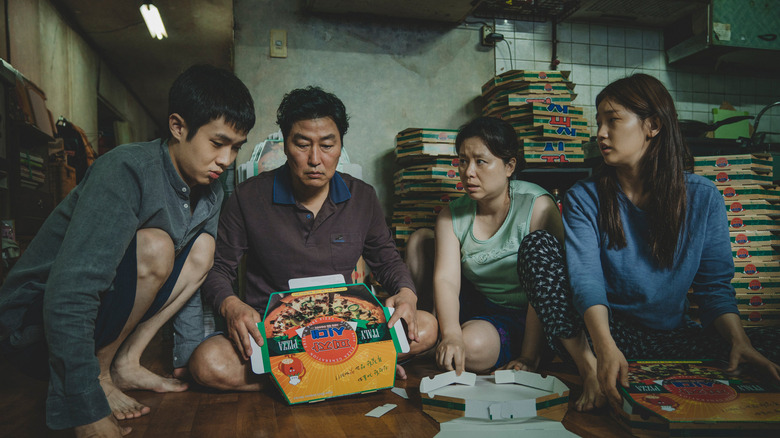
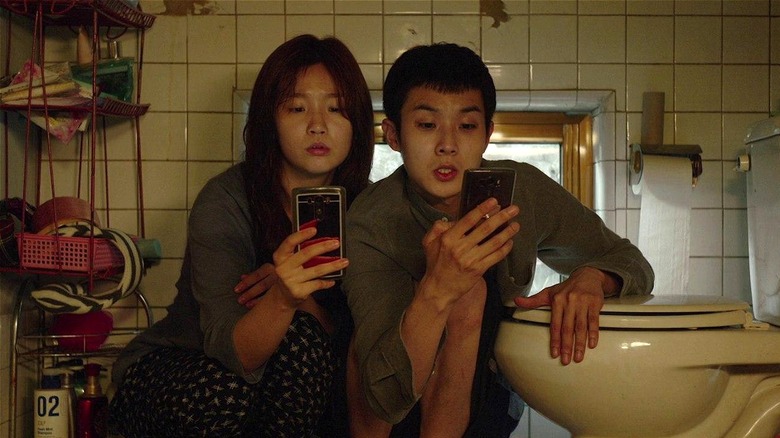
Because of the relatively nascent nature of Letterboxd as a website, not too many films have held onto the title of highest-rated movie ever on this platform. Starting with Letterboxd's creation and for many years afterward, "The Godfather" looked unimpeachable as the highest-rated motion picture from Letterboxd users. However, in late 2019, another title strolled in to take that crown and deliver the first 21st-century champion of all Letterboxd narrative cinema. That motion picture was Bong Joon-ho's cultural phenomenon "Parasite," which also makes it far and away the highest rated 2010s feature in the eyes of Letterboxd denizens.
As of this writing, "Parasite" has only slipped to the 14th spot on Letterboxd's all-time great films list and hasn't relinquished its dominance over all other 2010s cinema. These are just a few of the countless achievements one can lay at the feet of this sublime thriller. "Parasite" is one of our favorite best picture Oscar winners from the 2010s, it's one of the best thriller movies of all time, and it's also Bong Joon-ho's most impressive achievement as a filmmaker. Underneath all those accomplishments, though, is the movie itself. Strip everything away and "Parasite" remains a masterful creation that effectively elicits gasps and thoughtful contemplations on capitalism in equal measures.
This masterpiece effortlessly makes entertainment and rich social commentary live in perfect harmony. No wonder Letterboxd users absolutely adore "Parasite," a movie whose achievements go far beyond its reputation on this site.