

Scott Bakula's Controversial Quantum Leap Finale Works Better With This Dark Twist
Welcome to "Fanon Fixing Canon," a weekly column where we investigate infamous plot holes or terrible storyline decisions. Through a combo of detective work and meticulous fan theorizing, we fix these problems so they no longer exist — and canon is immaculate once again.
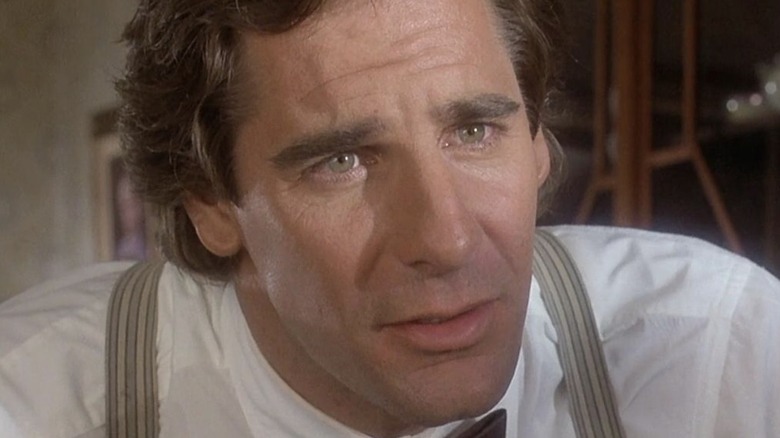
"Dr. Sam Becket [sic] never returned home." That's the final message of "Quantum Leap," the legendary sci-fi show that ran for five seasons between 1989 and 1993. The NBC series was about Scott Bakula's Dr. Sam Beckett, who becomes unstuck in time and "leaps" from one person to another, completing the necessary mission in order to perform his next time jump — and hoping to eventually end up back in his own time and body.
As the frankly hopeless ending of the "Quantum Leap" finale told us, he does end up in his own body for a while, although the rest of his happy ending never happens. But what actually came of Sam after the infamous finale? Was he stuck jumping from body to body forever, solving endless problems while slowly losing his sense of self long after his trusty friend Al (Dean Stockwell) has forgotten — or rather, never known — him? Why didn't he use the newly found knowledge that he could control his jumps to at least visit his home era from time to time?
"Fanon Fixing Canon" suggests that Sam didn't return for a very good reason: because he erased himself from existence. While admittedly dark, this theory explains not only why Sam never made it back, but precisely why he chose the moment that he did to fix Al's life. Let's dive in and see how this would work out!
Fixing Al's life would be the ultimate sacrifice for Sam — and one he'd likely be willing to make
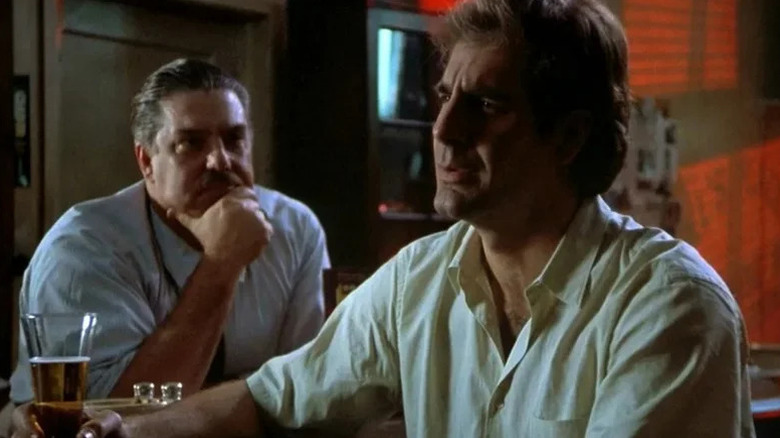
In the "Quantum Leap" Season 5 (and series) finale, "Mirror Image," Sam encounters a bartender who's also called Al (Bruce McGill) — full name Albert Bellisario, after "Quantum Leap" creator Donald P. Bellisario's father. This Al is effectively a stand-in for God, implied to facilitate Sam's leaps as a method for the good doctor to act as a guardian angel for those who need him.
Sam has grown weary of his years of leaping, and the episode makes clear that his only real wish is to go home. Yet, even with the revelation that he can control his leaps, he feels duty-bound to continue his journeys. This is a problem. The only solution Sam can see? Making sure that he doesn't exist anymore, if he ever did. That's the only way to get some rest.
As one last act of kindness, Sam jumps into the year 1969 to meet Al's first wife and one true love, Beth (Susan Diol). The pair separated tragically when Al was captured in Vietnam and Beth remarried, thinking he was dead. By informing Beth that Al's still alive, Sam guarantees a happy ending for his friend. This, in turn, indicates that he's deliberately changing the course of events that led Al to Project Quantum — and therefore losing his only remaining tether to his own time. Since Sam is a) too tired to go on and b) ensuring that Al gets a Sam-free happily ever after, he sure seems to be doing some last-minute bucket list stuff here by making sure that his best friend can live his best life.
How would Sam erase himself from existence without erasing his good deeds?
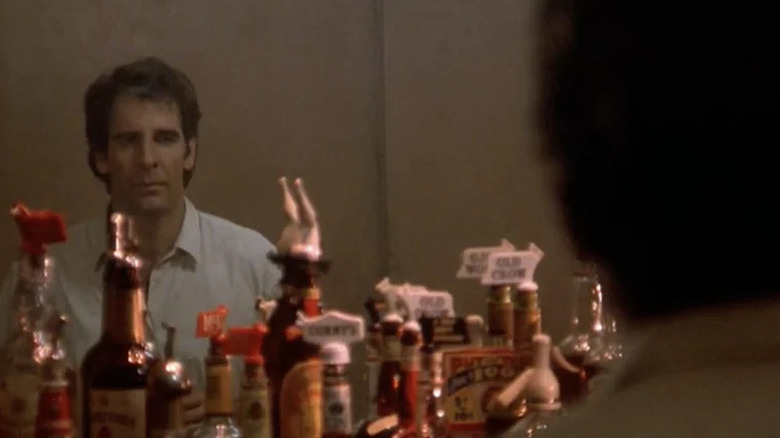
Would Sam really "release" Al — his key connection to his time and a friend who allows him to maintain a semblance of sanity — if he intended to keep going, especially since he already feels like he's at the end of his own tether? Would he really never return home even for, like, a weekend, despite being able to control his time leaps? That seems far-fetched, even for someone as altruistic as he is. So, let's run with the idea that he picks the third option and erases himself from the equation. How would he do it? Surely, Sam wouldn't want to erase his own good deeds as well?
The easy way would be to make sure that his Project Quantum never happens, in a way that would ascertain that the version of him that leaps across time doesn't exist. This wouldn't even be the first time Sam messes with his timeline. He may already have impacted his own marriage with Donna Eleese-Beckett (Mimi Kuzyk and Teri Hatcher) with his leaping, so it'd be child's play to meddle some more to ensure the two get a happy, leap-free life while the time-hopping, disenfranchised version of Sam would be no more.
However, since Sam would likely want to preserve the good that he's done over the course of the show, he might explore the great paradox in his String Theory – his childhood idol Moe "Captain Galaxy" Stein (Richard Herd), the wannabe time traveller from the Season 3 episode "Future Boy." The events of that episode leave Moe familiar with Sam's time travel theories. Moe might very well want to make some time-traveling amends in lieu of Sam, should someone nudge him in the right direction.
But wait, what about the reboot show?
Of course, the thing to remember is that the original "Quantum Leap" isn't alone. The 2022 reboot show with the same name continues the story three decades later with a brand new team — and some of the best moments of the "Quantum Leap" reboot explicitly connect to the original series. For instance, Susan Diol's Beth makes an appearance, and Ernie Hudson's character is actually the older version of Sam's "leapee" person Herbert Williams (Simon Kirby) from the original show's Season 3 episode "The Leap Home, Part II."
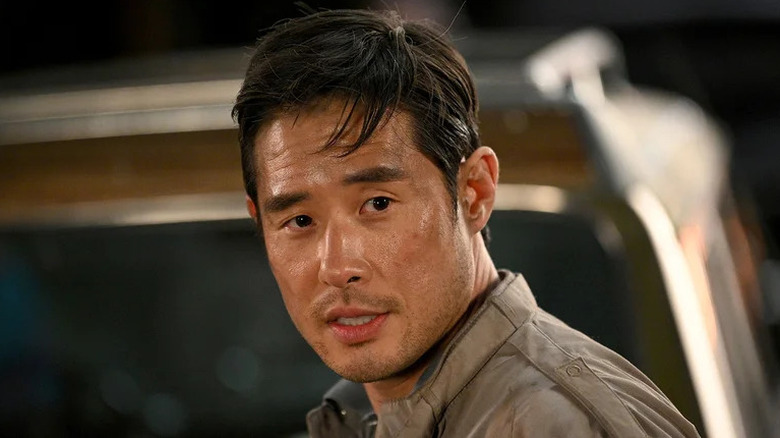
Despite such connections, however, Dr. Ben Song's (Raymond Lee) time-hopping adventures neither confirm nor deny anything truly groundbreaking about Dr. Sam Beckett, beyond the fact that he's still lost in time as far as anyone can tell. This is likely because Scott Bakula decided against appearing on the reboot series. As such, the show's connections to and statements about Sam are far from conclusive, and it's probably reasonable to assume that they bear little standing in the grand scheme of things.
The finale is ambiguous for a reason
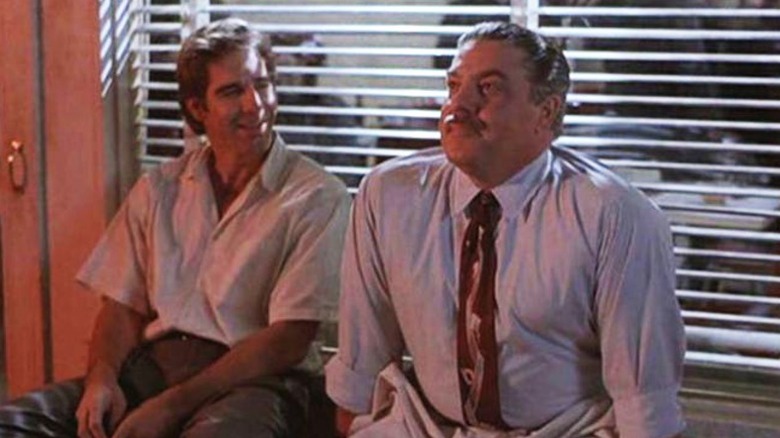
There's a reason why "Mirror Image" is both one of the best "Quantum Leap" stories and a brutal, brutal thing. In an interview with Television Academy, Scott Bakula described the difficult task Donald P. Bellisario faced to make the episode both a viable series finale and a season finale that could later be continued, since the show's fate was up in the air when they made it.
"Don took that task, considering all those aspects, and created the final episode — which had all those potential possibilities [in place] when the episode was over," Bakula said. "That's why it was not satisfying to some [fans] that Sam didn't get to leap home and all that stuff. But [Don] had to leave the door open because we hadn't been canceled yet."
Since Season 6 never happened, the sad episode ended up serving as the series finale with the addition of the two closing title cards — one that said Al and his first wife Beth stayed together and had four daughters, and another that confirmed (or rather deliberately obscured) the tragically misspelled Sam Becket's fate. We'll never know for sure what really happened to Sam ... but since he never even visited his own time, cut Al loose from helping him, doesn't appear in the reboot, and has generally gone AWOL, the only real explanation is that he chose to finally get some rest by erasing himself from existence.