

Every Star Trek Era, Ranked From Worst To Best
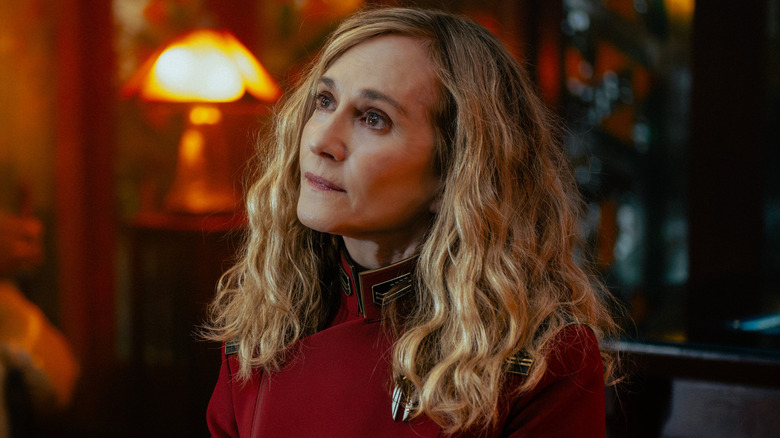
Space may be the final frontier, but "Star Trek" has certainly pushed its boundaries for a long time. The various shows and movies in the franchise have spent hundreds and even thousands of in-universe years exploring the great unknown. There are five distinct eras that the events of the various "Star Trek" shows and movies take place in, each with their own details and world-building elements.
As can easily be the case with long-running franchises that focus on an array of different time periods, some of the eras have been covered in far more detail than others. Frankly, some of them are also better than others, either because the shows and films involved are of superior quality or because they simply do a stronger job at describing the ins and outs of the era in question. Let's dive into the six different eras of the "Star Trek" franchise to see which one of them is the greatest.
6. The Kelvin timeline 23rd century
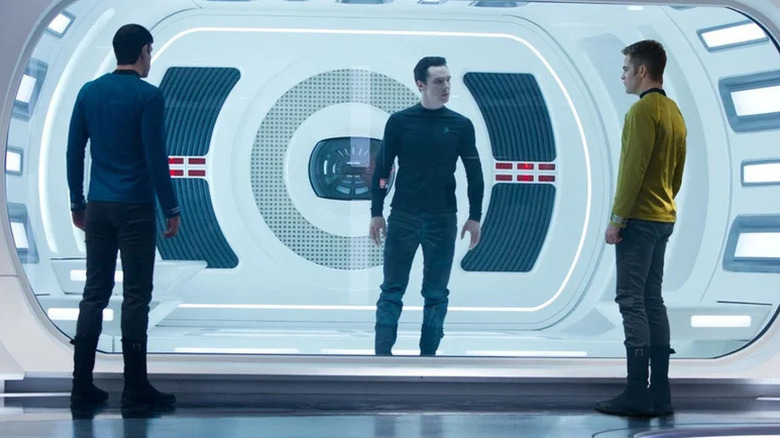
Imagine the famous "Star Trek" Mirror Universe, but instead of everyone being evil, they're action heroes. Such is the basic premise of the Kelvin timeline, which J.J. Abrams specifically created as a more kinetic offshoot of the Prime Universe.
The entire "Star Trek" Kelvin timeline is an alternate take on "Star Trek: The Original Series," which remixes the events in several ways that sometimes alter the continuity to significant results (such as the planet Vulcan getting destroyed), but generally amount to molding key characters to fit Hollywood's tentpole movie aesthetics. The end result is a timeline where iconic villain Khan is played by Benedict Cumberbatch, and the once-cerebral Spock (Zachary Quinto) fistfights him in a climactic action scene. It's not bad, per se ... but is it "Star Trek?"
Named after the destruction of USS Kelvin and kicked off by the time-traveling Romulan villain Nero (Eric Bana), the Kelvin timeline starts with 2009's "Star Trek," and endures through sequel films "Star Trek Into Darkness" and the Justin Lin-directed "Star Trek Beyond." Since then, both "Star Trek" and Abrams have moved on to other things. With the 2025 announcement that Jonathan Goldstein and John Francis Daley are developing a new "Star Trek" film that's unconnected to the Kelvin timeline, it seems safe to assume that the bold experiment is over.
5. 25th century
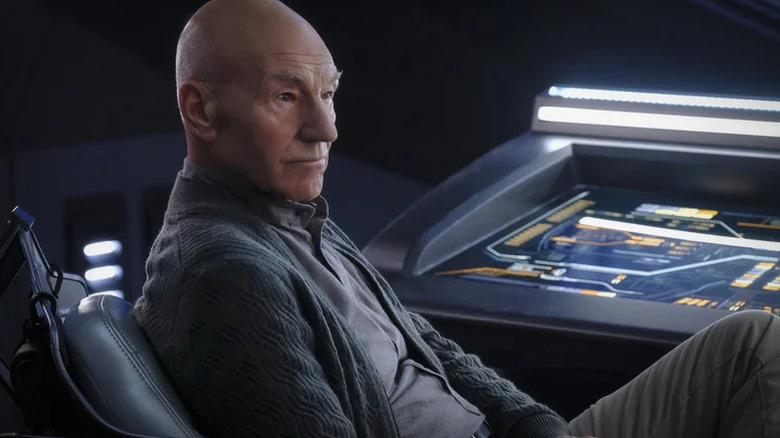
It might be just a matter of coverage, but the 25th century era of "Star Trek" isn't quite there yet. So far, only one show has featured this era in any major capacity: "Star Trek: Picard." This has left the 25th century era of "Star Trek" in the shadows compared to other Prime universe eras.
A lot of this is because "Picard" gets a little bit out of hand on the sliding scale of "Star Trek" timeline traditions. Season 1 begins in the year 2399, and Season 3 ends a bit over a century later. There's also plenty of alternate-universe shenanigans, courtesy of recurring "Star Trek: The Next Generation" fixture Q (John De Lancie), whose Season 2 antics move Jean-Luc Picard's timeline to an alternate past where humanity has taken a dark turn.
Because of the intricacies of its premise, Picard doesn't really give us a coherent, wide-spanning picture of what the its particular era of "Star Trek" is like — not in the way many other shows do. Perhaps future "Star Trek" projects will make us revise this era's ranking, but for now, it's hard to place it anywhere else but near the bottom.
4. 22nd Century
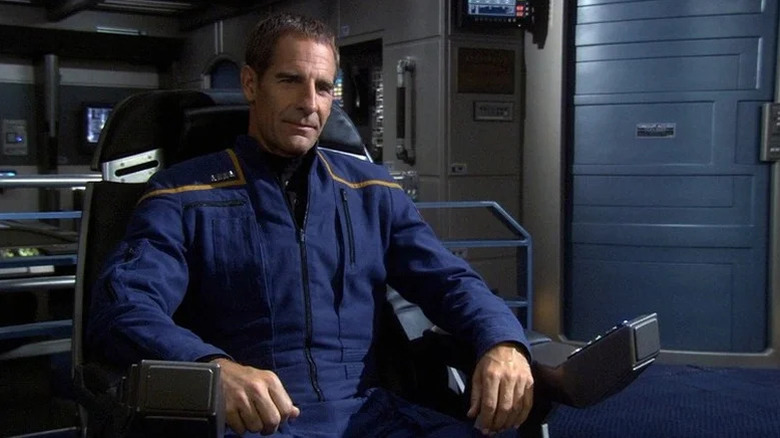
What we know about the 22nd century of "Star Trek" is what we see during the four seasons of the "Star Trek: The Original Series" prequel show "Star Trek: Enterprise." While this isn't necessarily a lot to go by, since a good chunk of the show takes place during the missions of USS Enterprise NX-01, this series does devote a whole bunch of time to show just how underdeveloped the technology of the era is, compared to "The Original Series" or "The Next Generation."
Here, the Enterprise crew lack what would later become basic Starfleet amenities, such as the universal translator or advanced replicators. Before the tractor beams, the crew utilizes a sci-fi version of pirate ship style grappler cables, and everyone is a bit wary of the newfangled "transporter" invention.
Everything's just that little bit less advanced, which is fitting considering the show's place in the grander timeline ... and the icing on the cake is that this "Star Trek" equivalent of a horse carriage was the absolute top dollar ride at Starfleet's disposal at the time. Regardless of how you feel about the show otherwise, it does a great job driving home all these little details that prove that "Enterprise" takes place in a harder time, far from the same century as other works.
3. 32nd century
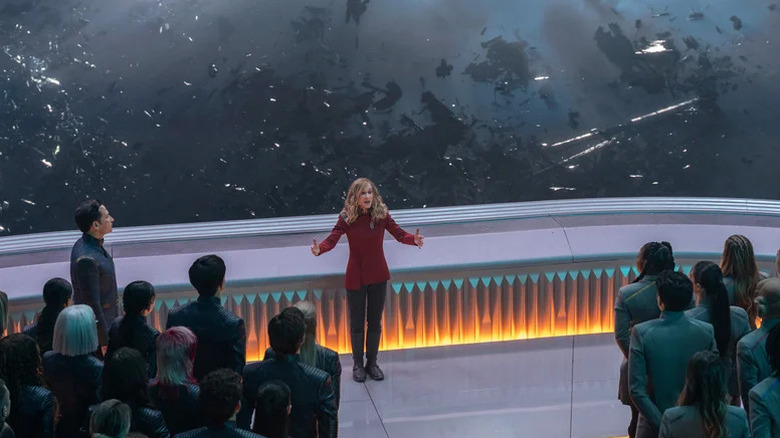
The 31st century Burn event might be one of the more controversial "Star Trek" events this side of the Kelvin timeline, but it led to some pretty interesting things. The "Star Trek: Discovery" time skip to the 32nd century at the end of Season 2 introduced "Star Trek" fans to a galaxy that's been fractured and left without any meaningful order, thanks to the wide-scale destruction of all active dilithium-using starships and the resulting planetary reactions.
Klingons are hovering on the brink of extinction, the Federation is a pale shadow of its former self, and everything is in chaos. In other words, it's an exciting, different scenario with countless possibilities, and one that's still completely faithful to the "Star Trek" ethos.
"Discovery" spends quite some time mining this era, but "Star Trek: Starfleet Academy" is the show that really makes it pop. The first course of Starfleet Academy cadets in this strange new reality is the perfect viewpoint group for experiencing the reality of the fractured, yet oddly optimistic 32nd century, and all the possibilities it entails. It's still "Star Trek," but it manages to convey both the vastly developed technology of this far-future era, and the remaining post-Burn lawlessness and danger. Time will tell how well the franchise intends to use this century, but it certainly has potential for greatness.
2. 24th Century
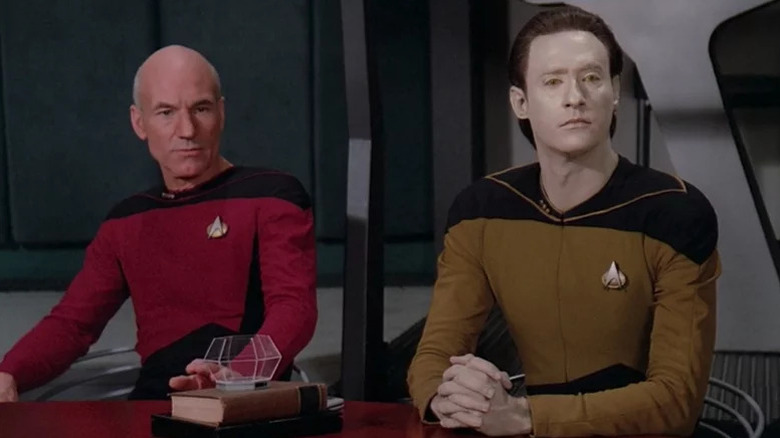
The 24th century of "Star Trek" is the focal point of what might just be the golden age of the franchise. This is the century the "Star Trek: The Next Generation" takes place in, and it's the era that showed franchise fans, both old and new, what "Star Trek" could be — at least, once "The Next Generation's" low-ranking first season was out of the way and the show began its journey towards becoming genuinely great.
"The Next Generation," "Star Trek: Deep Space Nine," "Star Trek: Voyager," "Star Trek: Lower Decks," "Star Trek: Prodigy, and to a lesser extent "Star Trek: Picard" have all explored this century in some length, which makes the 24th century the most immaculately charted, best-documented era in the franchise's history. The sheer number of projects set during this era, in many ways, has become baseline "Star Trek." It's probably fair to say that this is the age many "Star Trek" fans think of when they reflect on the franchise.
1. 23rd century
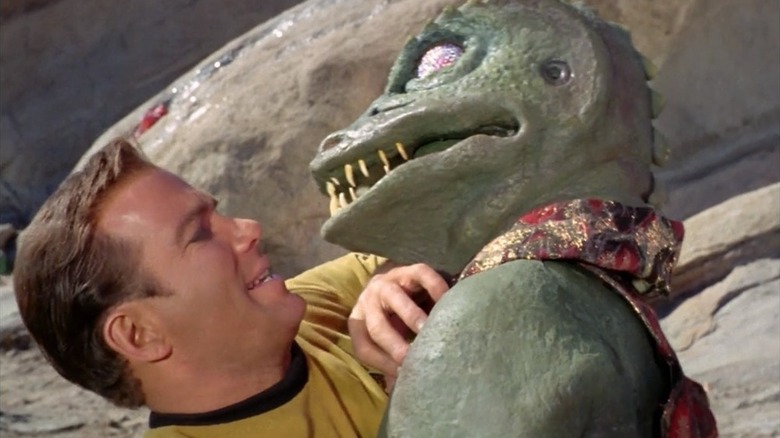
There's no forgetting the classics, and nothing on "Star Trek" is more classic than "The Original Series." As sci-fi technology goes, the 23rd century that the show takes place in is fancier than the "Star Trek: Enterprise" era, but also considerably less sophisticated than "The Next Generation" period. It's a time of whimsy, exploration, diplomacy, and mayhem, where colorful new adventures await around every corner. It would take the Burn to bring the franchise close to this combination of gleeful lawlessness and peaceful coexistence.
Apart from "The Original Series" and its often overlooked sequel series, "The Animated Series," later "Trek" shows "Star Trek: Strange New Worlds" and the early seasons of "Star Trek: Discovery" explore this era. The 23rd century is far from the most advanced era in the franchise, but it's the one that birthed it all — and by this virtue alone, the most iconic age by a long margin.