

5 Horror Movie Flops That Changed The Genre Forever
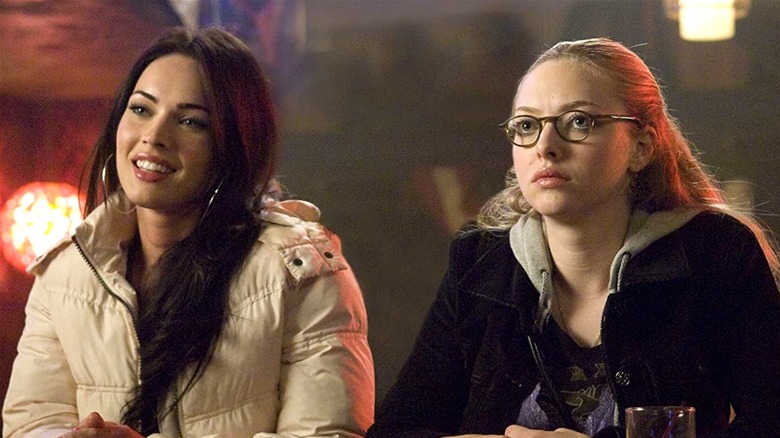
The beauty of film — and art in general — is that it's eternal. Take the horror genre, for example. A movie might spook its way into theaters but not make as much of a splash as the filmmaker might have anticipated. In fact, it turns into something of a non-event. Class is permanent, though, so as the years progress, the attitude toward the film shifts and it turns into a bona fide classic that changes the genre overall.
Sure, the studio heads may need to dry their eyes with singular dollar bills rather than the big 100s in these instances, but hey, life is unpredictable and that's showbiz, baby. At the end of the day, if the art finds its audience, then it's mission accomplished.
So, let's pause and rewind for a minute to explore the horror movie flops that changed the genre forever. Each of them brought something new to the party, and horror as a whole is better off because they exist.
The Thing
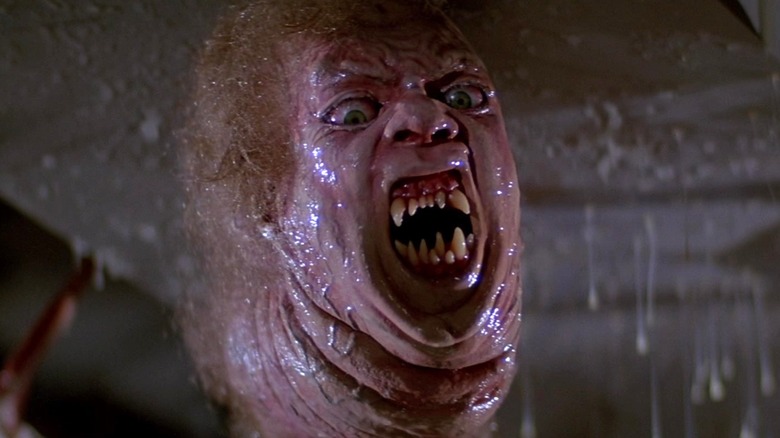
Nowadays, there are plenty who regard John Carpenter's "The Thing" as the best sci-fi horror movie of all time. Yet upon arrival in 1982, that wasn't the case. Instead, viewers were far more infatuated with a big-headed alien wanting to go home in Steven Spielberg's "E.T. the Extra-Terrestrial," which would go on to make nearly $800 million worldwide from a $10.5 million budget. By comparison, "The Thing" made less than $20 million on a $15 million budget.
When it comes to filmmaking, though, Carpenter is like Tony Stark in a cave; he's able to assemble extraordinary things out of nuts and bolts. The filmmaker spent around $1.5 million of the budget on the special effects for the shapeshifting creature at the center of the story, and this proved to be the greatest investment. While the narrative itself keeps viewers on the edge of their seats, wondering who's real and who's not, the monster designs are haunting.
The influence of these creations continue to be felt decades later, such as in the design of the creatures in "Stranger Things." The Duffer Brothers confirmed this to Den of Geek, stating how they find the realism of practical effects much scarier than CGI. "The movies that we grew up with, like 'Hellraiser,' 'The Thing,' and 'Alien,' it's hard to gauge this stuff because we're now adults and not kids, but nothing scares us as much as those things do. So we wanted to go back to that feeling," they said.
Event Horizon
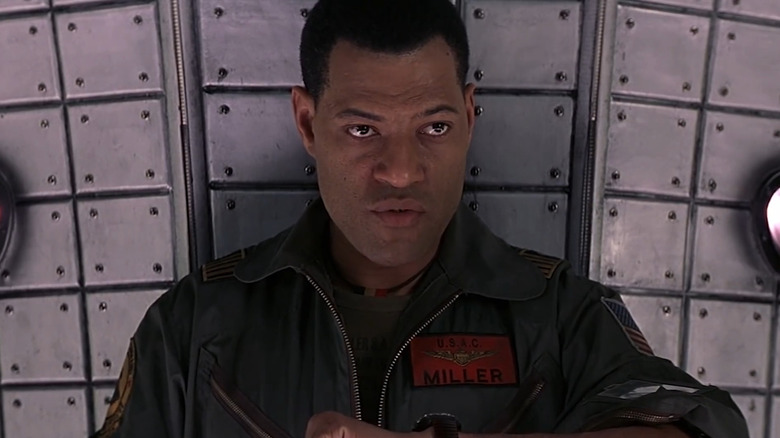
After delivering a flawless victory with 1995's "Mortal Kombat" movie, director Paul W. S. Anderson moved into the horror realm, tackling 1997's "Event Horizon." The film cost around $60 million to make but struggled to recoup its production costs. It didn't excite the critics either, judging by its feeble 36% critical approval rating on Rotten Tomatoes.
Since the release of "Event Horizon," it's become well-documented how the theatrical cut of the film omitted footage that would have included more scares and gore. As it stands, though, it's a frightening space horror that amplified what Ridley Scott had done years earlier with 1979's "Alien." This isn't about a monster in space; it's about the crew unlocking a gateway to Hell where they witness their greatest fears and are tormented in ways that would make the Cenobites from "Hellraiser" cheer on gleefully from the rafters.
Fresh eyes offer a new perspective, and several publications have reassessed the film since its release. In modern times, the general consensus is that "Event Horizon" stands out as one of best and scariest sci-fi horrors ever made. Without question, Anderson figured out a way in which to combine the natural horrors of space with some of our greatest fears we hold as humans to unleash a wicked cosmic epic.
Jennifer's Body
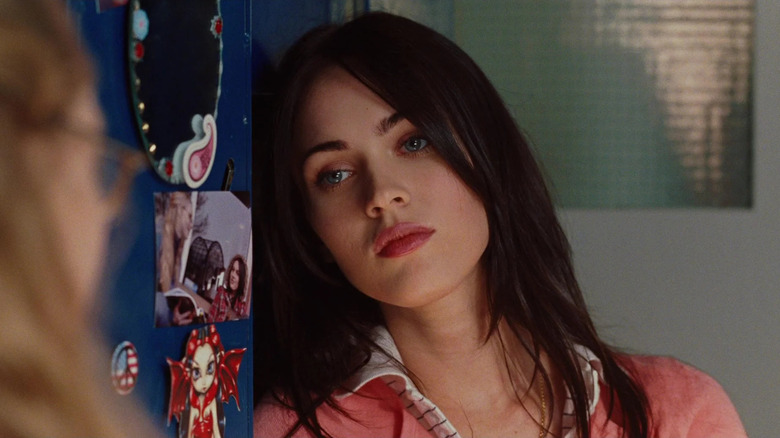
Not every horror film needs to be outright scary; sometimes, a little bit of humor goes a long way to solidifying the message. Take Karyn Kusama's "Jennifer's Body" as a prime example. The film sees Megan Fox's Jennifer Check turn into a succubus and embark on a mission to consume as much flesh as possible. It's up to Jennifer's best friend, Anita "Needy" Lesnicki (Amanda Seyfried), to stop her rampage.
In 2009, Fox was still riding high on her "Transformers" popularity, so much was expected of "Jennifer's Body" at the box office. In the end, it underperformed with $31.6 million from a $16 million budget. On Rotten Tomatoes, it only garnered 47% critical approval. Screenwriter Diablo Cody suggested the marketing of the movie focused too much on selling Fox to the male audience rather than what the film is about.
In the years since its release, viewers and critics have come to defend "Jennifer's Body" for being ahead of its time. It flips the script on the horror comedy genre being viewed through the male gaze to introduce a feminist-centric tale that explores the different aspects of the teenage experience, including one's own sexuality and power dynamics. "Jennifer's Body" laid the foundation for other smart horror comedies that chose to ascend beyond being just more goofy gore or silly scares.
Halloween III: Season of the Witch
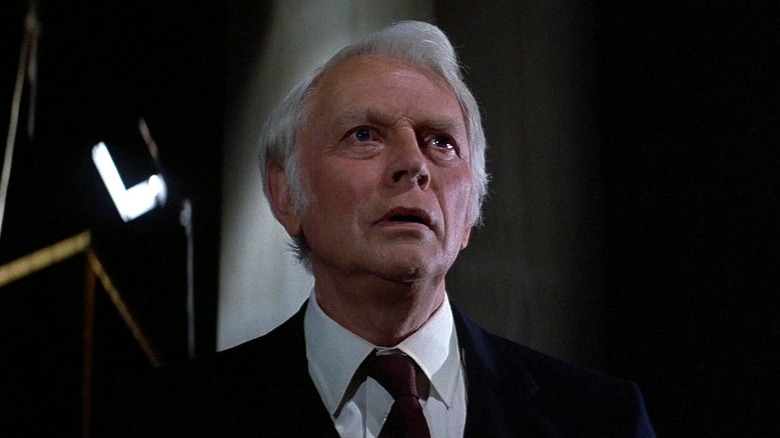
Halloween is meant to be about more than one thing. It isn't only ghouls and goblins; it's also about the strange and deranged. John Carpenter thought the same, hence the shift in gears to turn the franchise into an anthology with 1982's "Halloween III: Season of the Witch." The Tommy Lee Wallace-directed film isn't about Michael Myers slashing up Haddonfield; instead, it expands the "Halloween" story, venturing into sci-fi terrain with everything from androids to microchips in masks.
It's a bold decision to remove the face of the franchise in the effort of bolting down a new narrative path. Unfortunately, it didn't pay off at the time, as "Halloween III" became the lowest-performing movie in the franchise — and the second-worst overall after the release of "Halloween 5: The Revenge of Michael Myers."
The turned-up noses of those horror fans that initially panned the movie evolved into approving head nods over the years, though. This unique film captures the unpredictable and spooky nature of Halloween, resulting in a story that's both weird and charming in refusing to be a singular thing. It isn't too difficult to see its influence littered all over 2007's "Trick 'r Treat," which is much more acclaimed than "Halloween III" ever was. "There's a lot of weird stuff going on in that film, whether it's intentional or not," director Adam Wingard told Yahoo when discussing the 1982 anthology movie. "But people overlooked all of that initially, just because they were so mad that Michael Myers wasn't in the damn thing."
Near Dark
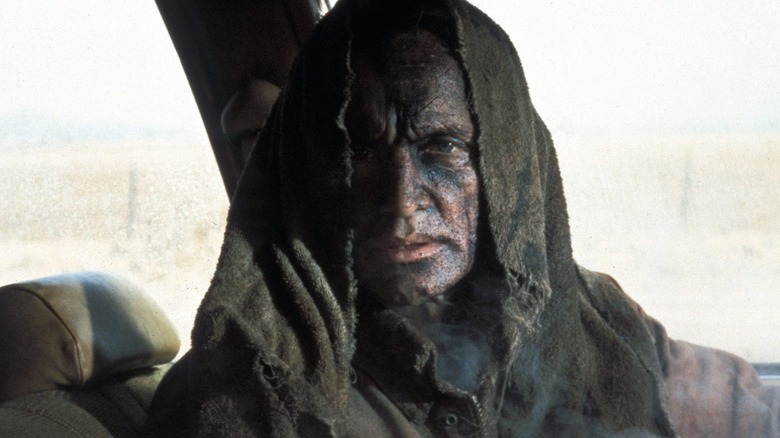
Kathryn Bigelow's "Near Dark" arrived in 1987. Its biggest sin? It was released a few months after Joel Schumacher's "The Lost Boys," which gobbled up all the praise and money at the box office. "Near Dark" received critical acclaim, scoring 81% on Rotten Tomatoes, but it failed to nibble at moviegoers' wallets, making only $3.3 million from a $5 million budget.
However, time has been kinder to this film than some of the characters in it. Critics have viewed it as a cult classic and one of the movies responsible for the rise of the American vampire subgenre. "Near Dark" combines tropes sourced from both horror and Westerns to create a dusty and grimy narrative about nomadic bloodsuckers. Sure, there's a subplot of romance here, but this becomes an exploration of where greed and power meet, as well as what family means.
"Near Dark" may not have got its dues back in the day, but it's a film that inspired a litany of other American vampire movies, such as John Carpenter's "Vampires" and Robert Rodriguez's "From Dusk Till Dawn." It's actually remarkable how two of the biggest vampire movies of 1987 shaped the genre — each in their own different way.