

Mercy Review: Chris Pratt's Sci-Fi Thriller Is Hollow And Soulless
- Moves at a quick pace and, mercifully, eventually it ends
- Ends up carrying water for AI and endorsing the trampling of civil liberties
- Hackneyed dialogue
- Bland performances
Oh, "Mercy" — you want to be "Minority Report" so bad, but you just don't have it in you.
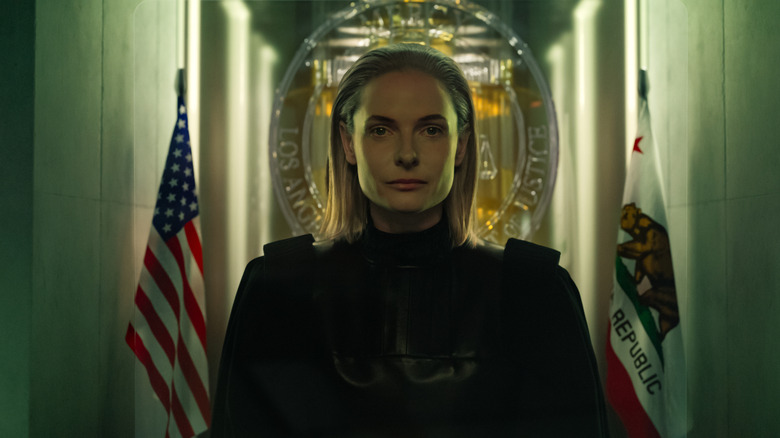
Although it's paced well, moving at a steady click, that's about the only kind thing I can say about "Mercy" (which has the potential to be one of 2026's box office flops). Underneath its extremely surface-level exploration of the dangers of AI — as Chris Pratt says at one point solemnly, "We all make mistakes ... human and AI" — is an insidious ugliness that makes "Mercy" an infuriating watch, especially in today's tension-filled political climate. Rebecca Ferguson is utterly wasted in a thankless role as the AI judge, so much so that I wonder why she even signed on to the project. But she's far from the only person committing unforced errors in this film. The entire thing comes across as fundamentally misjudged in both conception and execution, with few (if any) redeeming qualities.
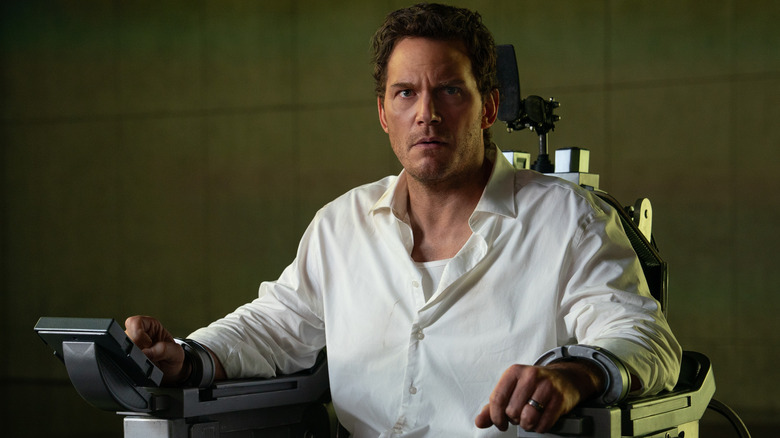
Detective Chris Raven (Pratt) begins "Mercy" by waking up in the least welcome of places. He discovers that he's on trial for his wife's murder, and his case is part of the new Mercy program implemented as the result of widespread civil unrest in Los Angeles. Prisoners have a cool 90 minutes to prove their innocence in front of an AI judge (Ferguson), or be executed on the spot. Raven is adamant that he didn't kill his wife, but in order to escape this killbox, he has to convince a supersmart computer of this — and the easiest way to do that, it seems, is to find the person who actually did kill her. With the entire city's online footprint and endless surveillance footage at his disposal, it's a race against time to figure out who Raven's metaphorical one-armed man is.
Who is the hero in this story?

But there's a problem here, and it's mostly down to who "Mercy" sees as its hero. The character we're supposed to empathize with is thoroughly repugnant, only made virtuous by the fact that he presumably didn't kill his wife. He still abuses alcohol, terrifies his daughter, and admits to breaking things that his wife cherished during an argument because he knew it would hurt her. He's also still an LAPD cop who was a staunch supporter of the new wildly unconstitutional AI court system until he found himself in the hot seat. So when he's framed as the noble but flawed hero of the piece, it's a little hard to swallow. At this particular juncture in time, I have a low threshold of patience for people who want to trample on civil liberties and then get all bent out of shape when their civil liberties are stomped on. By contrast, the "villain" (and I won't spoil who that is here) seems more or less justified in their actions, even if they admittedly take things a little far.
And then there are the murky politics surrounding the use of AI in "Mercy." It seems to want to have it both ways, where it can be a chilling dystopian sci-fi thriller about the dangers of allowing AI to hold too much power, but also at every turn depict it as a veritable godsend for law enforcement. We're supposed to be horrified at the idea of an AI court system that allows a computer to serve as judge, jury, and executioner — and we are, of course — but the AI judge is the only sympathetic character in the entire movie, and "Mercy" seems to be arguing that the computer can be trained to have more empathy. In other words, the AI court system is scary and bad ... but also maybe just needs to be finetuned a little bit before being foisted on the good people of Los Angeles.
Similarly, the idea that LA law enforcement forces everyone to house their entire digital footprint on the city's cloud feels like a tremendous breach of privacy — except that it's the only thing that allows Raven to prove his innocence. "Mercy" does not seem at all interested in addressing any of these inherent contradictions. It pays lip service to the idea that maybe it's not a good idea to have computers running everything when human nuance is crucial, but also ends up supporting the status quo (of a dystopian futurescape) as a necessary evil.
Mercy has a troubling view of AI
The only good quality of "Mercy" is that it's well-paced for an action movie, never allowing a single scene or plot point to drag. Although looking back, perhaps this is a strategy to avoid giving the audience time to really think about the implications of what they're watching. The impatient Raven literally ends phone calls before they're finished, the other person trailing off as the conversation floats away into the ether, as if to say, "On to the next thing — this whole story collapses like a house of cards if you look too closely."
"Mercy" is not a good movie, with hackneyed dialogue and stock performances that, ironically, seem like they themselves could have been generated by AI. But worse than that, it's a movie that pushes insidious views about AI, law enforcement, and privacy laws under the guise of a brains-off action thriller. You can tell from the very first scene, establishing Hollywood as a den of dangerous drug-addled criminals in a "red zone" that has literally been abandoned by polite society, that this film was created to play into a certain vision of American urban life. Ultimately, "Mercy" is what its production team wanted it to be — a hollow, soulless action film pushing a dangerous narrative.
"Mercy" lands in theaters on January 23.