

Audrey Hepburn's Only Western Is A Forgotten Gem Co-Starring Burt Lancaster
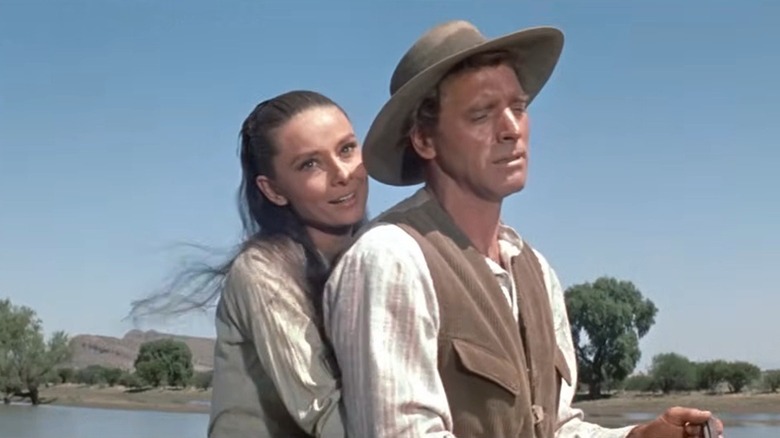
One of the most beautiful faces to ever light up the silver screen, Audrey Hepburn is synonymous with Hollywood glamour. With her "knockout cheekbones and alchemical charm" (per film critic Karina Wolf), Hepburn's short but glittering career is studded with gems like the romantic comedy "Breakfast at Tiffany's" and the thriller "Wait Until Dark." Given the actress's innate sophistication — and her famous Givenchy wardrobe — it's difficult to imagine Hepburn living in a cattle ranch on the lonely, windswept Texas frontier. Perhaps that explains why she starred in only one Western: 1960's "The Unforgiven."
"The Unforgiven" (not to be confused with Clint Eastwood's seminal 1992 Western "Unforgiven") pairs Hepburn with Burt Lancaster, the towering tough guy star of "The Killers" and "Sweet Smell of Success." Directed by the legendary John Huston, "The Unforgiven" stars Hepburn as Rachel, a free-spirited young woman adopted by the Zachary family. Rachel is secretly in love with her overprotective "brother" Ben (Lancaster), but their peaceful frontier lives are disrupted by the arrival of Abe Kelsey (Joseph Wiseman), a vengeance-seeking associate of their late father who claims that the Zachary family patriarch stole Rachel from the Kiowa tribe as an infant.
Criminally underseen today, "The Unforgiven" had a troubled production: co-star Audie Murphy nearly drowned in a lake while shooting, Hepburn broke her back falling off a horse during rehearsals, and Huston reportedly disowned the finished film. The result is an uneven but fascinating Western and a unique entry in Hepburn's filmography.
The Unforgiven is a challenging revisionist Western
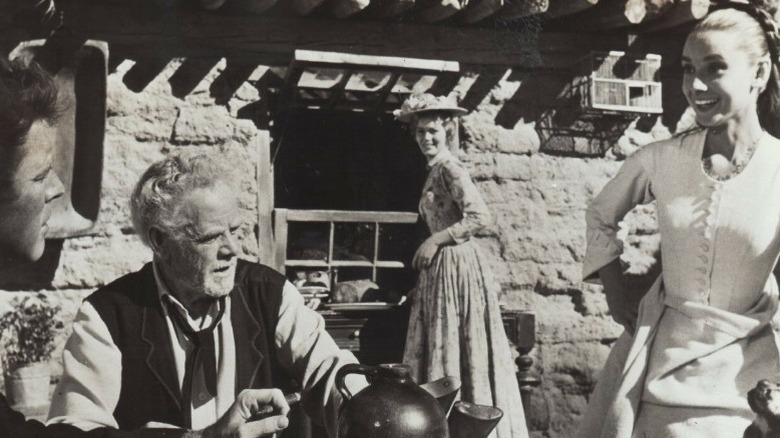
It bears repeating that "The Unforgiven" stars Audrey Hepburn as a Native American woman. While she gives a sympathetic performance, this whitewashing complicates the intended message against anti-Native American racism. "The Unforgiven" is a revisionist Western that reverses the trope of "savage" Indigenous people kidnapping white children, as depicted in Westerns like John Ford's "The Searchers." (Notably, both "The Unforgiven" and "The Searchers" were based on books by Alan Le May.) Rachel is a Kiowa girl kidnapped by "civilized" settlers, with her biological brother Lost Bird (Carlos Rivas) returning to claim her.
The 1960 film is forward-thinking in its depiction of an "interracial" romance between Rachel and Ben, and it condemns the abuse thrown at Rachel when the townspeople reject her based on her true heritage. The anti-racist message is muddled, however, by a predictably violent third act that strips away much of the film's nuance.
"The Unforgiven" functions best as a riveting drama about a family torn apart by a horrible secret from their past. It features hauntingly cinematic scenes such as Kelsey's first ghostly appearance atop his horse in the fog, and Rachel's adopted mother (former silent movie star Lillian Gish) playing piano for the Kiowa warriors in a short-lived moment of peace. The film's contradictory aims make it a strangely engaging viewing experience, and the subversive, quasi-incestuous passion between Hepburn and Burt Lancaster's characters will not be forgotten by anyone who sees it.
"The Unforgiven" is currently streaming on MGM+.