

'80s Action Movies That Would Never Get Made Today
Let's be real for a second: '80s action movies hit like a burger and shake after a night out. It was a time in which the testosterone was enough to power a planet, and the hero's muscles had their own muscles. Names like Stallone, Schwarzenegger, Van Damme, Seagal, and Norris were gods among men, as everyone knew who to call when end-of-the-world stakes and gun-toting bad guys were looming in the distance.
However, the decade was also a much different time. What was deemed acceptable then might not be seen in the same light today. Look, hindsight is 20/20, and it's easy to sit here and say, "Hey, that aged like a slice of cheese stored in a sock," so let's not blast these films for being products of their era.
What is fair, however, is to look at '80s action movies that would struggle to get made in the modern day. Maybe they glamorize something problematic, contain negative stereotypes, or feature a bizarre premise that would have everyone scratching their heads and lighting up Reddit with questions about how everything went from flexed to perplexed. Ready for the ultimate truth bomb? Great — let's dive right in!
American Ninja
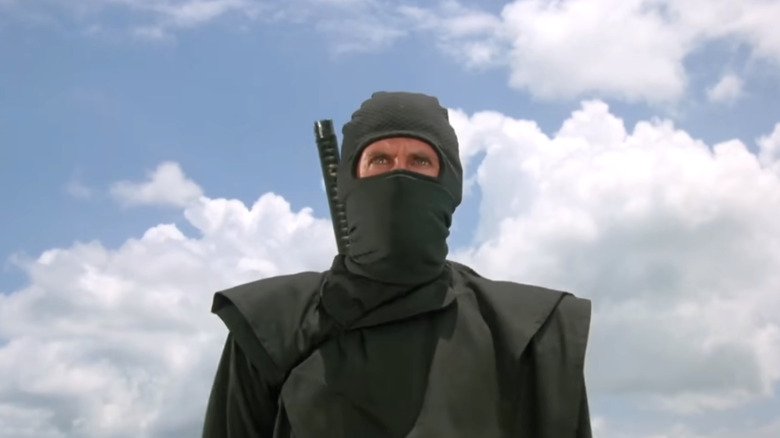
In 1985's "American Ninja," Michael Dudikoff (an action star Hollywood won't cast nowadays) becomes the ultimate weapon as Joe Armstrong. The amnesiac Joe is forced to go into the army or to jail, so he chooses the former. On one mission, he encounters the Black Star Order and impresses everyone by kicking the ninjas' butts. But where did Joe learn such skill, and what will he do when the Black Star strikes again? That's for Joe and his army buddies to find out as the film unfolds.
There was a fascination surrounding martial arts in Western cinema in the '80s and early '90s. However, it wasn't simply a case of a protagonist learning the craft and fighting off the bad guys in an interesting plot; there was a branding element that needed to showcase the "American" part somehow. It was "American Ninja" or "American Samurai," since the fact the hero was American — and Caucasian — needed to be pointed out and shouted from the rooftops. Heck, the poster's tagline for "American Ninja" reads, "The deadliest art of the Orient is now in the hands of an American," all but indicating that the good guys now had the edge.
Nowadays, filmmakers and studios remain far more aware about portraying white savior stereotypes, as well as avoiding deliberate military propaganda. In the case of "American Ninja," parts of it could be redone, but the title would need to change, as well as some of the bigger storyline elements.
No Retreat, No Surrender
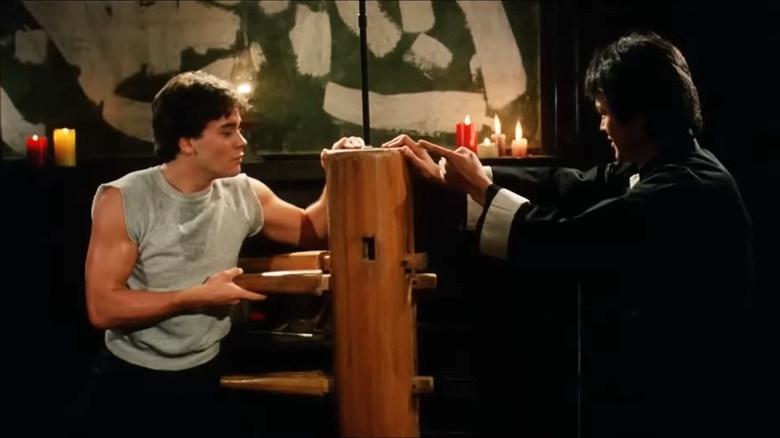
"No Retreat, No Surrender" is one of Jean-Claude Van Damme's earliest films. In this '80s action movie, Van Damme portrays the villainous Ivan "the Russian" Kraschinsky. What happens here is that Jason Stillwell (Kurt McKinney) trains at his father Tom's (Timothy D. Baker) karate dojo, sharpening his skills to become like his idol, Bruce Lee. One day, Ivan and the rest of his goons visit the dojo, resulting in them beating up Tom and preventing Jason from helping his father. So, Jason embarks on a quest to become the best and defeat Ivan; one of the ways he does this is by summoning the ghost of Bruce Lee (Kim Tai-chung) to guide him.
To be fair, "No Retreat, No Surrender" contains the basic plot of nearly every action movie whereby the protagonist gets handed a major blow, then needs to climb to the top of the mountain. There's nothing too offensive about that. Yet, the whole inclusion of Bruce Lee's ghost is on the odd side and would prove to be controversial in modern times — especially since it would likely be brought to life through the use of AI or a hologram now.
As it stands, there's already a lot of debate about people using AI and holograms of deceased celebrities. For most people, it feels wrong, since someone else is effectively cashing in on a departed person's legacy. Maybe the memory of a martial arts icon like Lee needs to left as it is.
Cobra

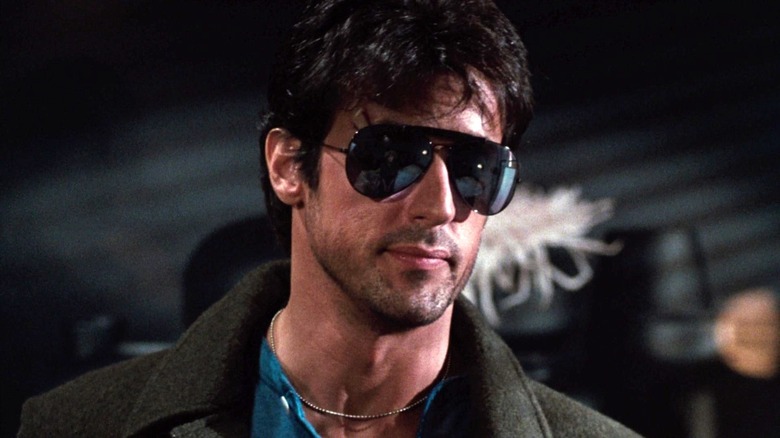
Sylvester Stallone's Marion "Cobra" Cobretti exudes all the attitude in George P. Cosmatos' "Cobra." In this all-out action affair, Cobretti turns into a one-man army against the insidious New World, who go on a killing spree to cull the supposedly weak. However, Cobretti isn't about to let them get away with it, and he'll bring down this dastardly cult and its leader, known as the Night Slasher (Brian Thompson), by any means necessary.
Yeah, 1986's "Cobra" is Stallone's attempt at his own "Dirty Harry," as he portrays a cop who refuses to play by the rules. He won't be tied down to processes and regulations, because lives are at stake. Bureaucracy is only for the paper-pushers, right?
Maybe in an '80s action movie. However, modern times has seen far too many cases of the police going rogue and being a law unto themselves, so the whole rule-breaking cop persona doesn't have the same impact as before. Romanticizing police brutality is also not a good look for any movie nowadays, since society still has a raw wound after George Floyd's murder at the hands of those who are meant to serve and protect. People want to be able to trust the police to work within the confines of the law, not outside of it. Sorry, but Cobretti would need to change his mindset and methods for "Cobra" to work now.
Indiana Jones and the Temple of Doom
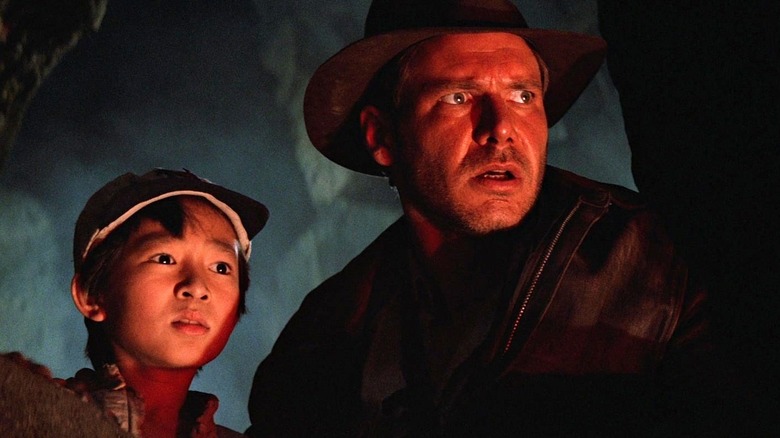
Harrison Ford's whip-snapping Indiana Jones returns in 1984's "Indiana Jones and the Temple of Doom." In this adventure, Indy ends up in a village in India, whereby the villagers plead for his assistance. They want him to retrieve an important and precious stone, as well as to stop the Thuggee cult, who are into all kinds of black magic and human sacrifices. Of course, Indy obliges, because that's what wisecracking, hat-wearing heroes do.
There are two major issues with "Indiana Jones and the Temple of Doom" that would see it never get made today, though. One, Indy is portrayed as a white savior, since the villagers have been waiting for a Western hero to arrive and save them from Thuggee. And two, the portrayal of Indians and their culture is pretty darn racist from beginning to end.
Again, this was a different time in cinema whereby stereotypes were far more prevalent than ever, and filmmakers leaned into them. Having said that, this wouldn't fly in modern times. Instead, a story like this would need to have more nuance and care in terms of how it would be presented to audiences, resulting in a completely different movie.