

5 Harry Potter Hogwarts Rules That Make No Sense
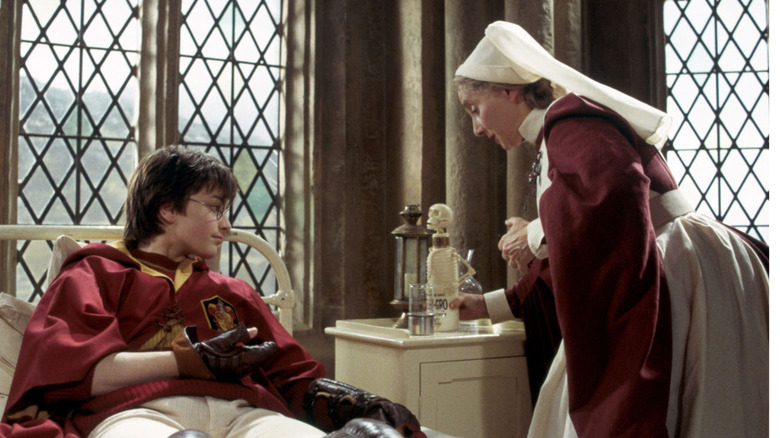
It's not out of bounds to read the "Harry Potter" books and assume that Harry (played by Daniel Radcliffe in the films) and his friends' experience at a private boarding school in Scotland isn't familiar to the experience of any private boarding school student, minus the magic. But the rules at Hogwarts often feel either too strict or dangerously vague.
For one thing, they should print out announcements and rules, as many children have a hard time retaining information delivered solely through verbal expression. For another, girls are not allowed to wear trousers as a part of their uniform, which is simply cruel and out of date from administrators of a remote, northern boarding school. Without electric heating. There are many questionable things in the "Harry Potter" canon that we ignore, but the rules of Hogwarts feel especially egregious.
The no-trousers rule for girls is just the tip of a deep iceberg. Heck, we won't even be going in-depth to explain why closing off an entire level of a castle is asinine when the stairs move on their own. The third-floor rule only existed in the first film and book of the series ("Harry Potter and the Sorcerer's Stone") to keep kids away from Fluffy the (enormous) three-headed dog. We also won't go into any of Dolores Umbridge's (Imelda Staunton) hateful proclamations from film and book five ("Harry Potter and the Order of the Phoenix"). Hopefully the evil of Dolores Umbridge will always be self-explanatory.
The rules we discuss below were true for Harry's entire time at Hogwarts, unlike the even weirder regulations from the series' more eventful or particular years, although those wild moments probably instigated even more strange directives for a lot of children.
The point system is highly subjective
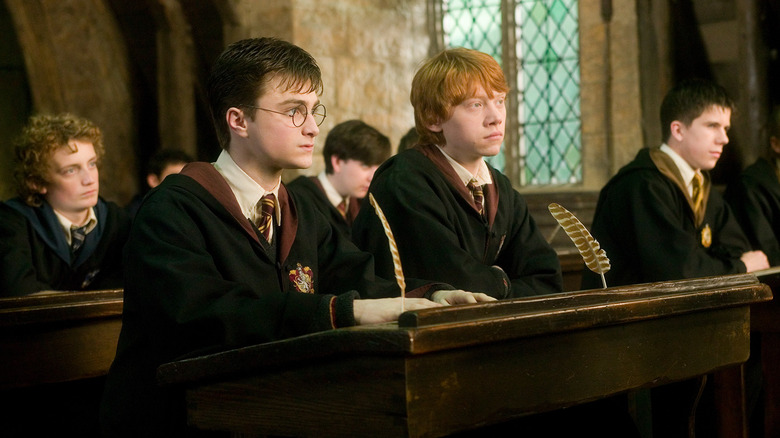
Despite the still-growing canon of J.K. Rowling's "Harry Potter" universe, there is no reliable document outlining the specific rules for distributing points to the houses of particular students, much less deducting them. This means that all of the school's professors and authority figures are allowed to award and deduct points at their own discretion. Not only that, but prefects — student leaders who manage the students in their houses and after school hours — are also able to give and take away points from students.
Obviously, people take advantage of this. Well, the Slytherins take advantage of it. And Albus Dumbledore (portrayed by Richard Harris and Michael Gambon).
Everyone else seemingly uses the points system honorably, which is absurd even before one remembers that Severus Snape (Alan Rickman) was the pettiest man alive. If the magical world were more like the real world, an exposé could have easily been published on the disparity between Snape's point allocations and deductions. It's wild that he was never punished for it.
It is also beyond belief that he wasn't reprimanded for constantly berating children, but Albus Dumbledore is his boss. Dumbledore, who awarded his favorite house with just enough points at the year-end feast to beat Slytherin in the house cup competition. Sure, Harry and his friends did good work, but maybe Dumbledore shouldn't have added the extra points to top them off. Favoritism; it's a dead giveaway.
Prefects live like royalty
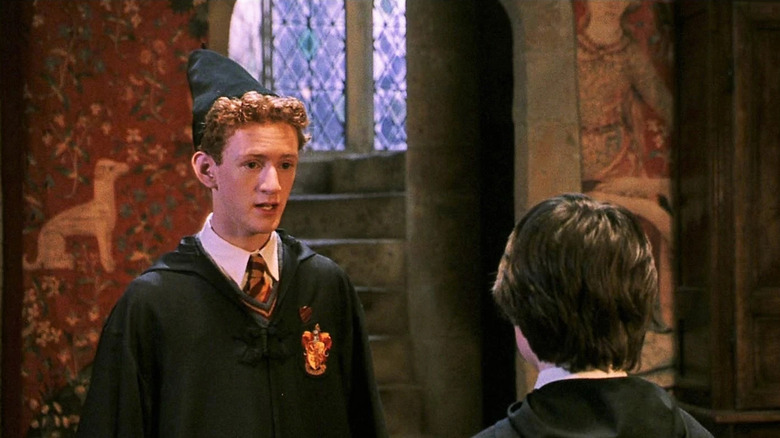
In a school like Hogwarts, where after-hours access to something like the library can potentially change the course of an entire school year, there's a lot more gravity in the choice to promote students to "prefect" status. Sure, they have work to do; patrolling after hours, mostly, and the faculty choose students they believe will take the role seriously and responsibly. Regardless, prefects still have vastly more freedom of movement than the rest of the student body.
Sure, they probably couldn't make a habit of late night wandering beyond their patrol routines, but they can always play the "I got my days mixed up" card if they go on a mission and get caught. Also, Draco Malfoy (Tom Felton) is named a prefect in his fifth year, and there's simply no way someone could spend more than a day around that kid without realizing that he will press every advantage against the people he dislikes.
Malfoy makes particular use of the fact that he is allowed to give out and deduct points to and from students. Any prefect can do so, they just can't take points away from a fellow prefect. Which is yet another advantage that comes with being a prefect.
The prefects also have access to an incredible bathroom that Harry is fortunate enough to be able to use in his fourth year, courtesy of Cedric Diggory (Robert Pattinson). In the books, Harry describes the space in "Harry Potter and the Goblet of Fire" as "a luxurious, marble-filled chamber with a huge, sunken, swimming pool-sized tub surrounded by a hundred golden taps, each releasing different enchanted waters, bubbles, and perfumes." What in the Mar-a-Lago is this doing in a school?
Students have access to powerful magic
It's actually amazing that Hogwarts has a restricted section in its library. For some reason, the founders of the school genuinely attempted to protect their pupils from the most dangerous, darkest magic there, which, when one considers the lack of a ban on Quidditch, is pretty incredible.
Unfortunately, there are many ways for students to get around these restrictions. The section is cordoned off from the rest of the library by a velvet rope, with no enchantments or spells to enforce the separation. In "Harry Potter and the Sorcerer's Stone," Harry easily enters the restricted section after hours by donning his invisibility cloak. True invisibility cloaks are very rare (in fact there might only be the one), but the next school year Hermione (Emma Watson) easily uses an autograph from Professor Lockhart (Kenneth Branagh) to get a different book from the section.
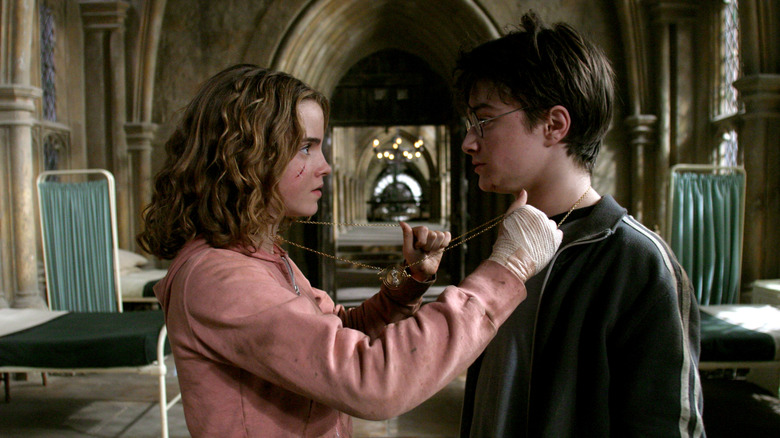
The restricted section feels wildly unprotected, considering it holds the information that taught Lord Voldemort (Ralph Fiennes) how to create horcruxes, but it's not the most ridiculous magic students can access during their time at Hogwarts. In "Harry Potter and the Prisoner of Azkaban," Hermione takes more classes than physically possible after Dumbledore and McGonagall (Maggie Smith) give her a time-turner.
Hermione uses the time-turner to double up on classes, but she could very easily use it, instead, to alter the course of human history. That potential is examined in "The Cursed Child," J.K. Rowling's canonical stage play in which Harry's son, Albus, attempts to save Cedric Diggory's life with one. It's time travel. And they give it to 13-year-olds so they can take Ancient Runes and Divination at the same time. Very safe.
Inter-house relations are discouraged
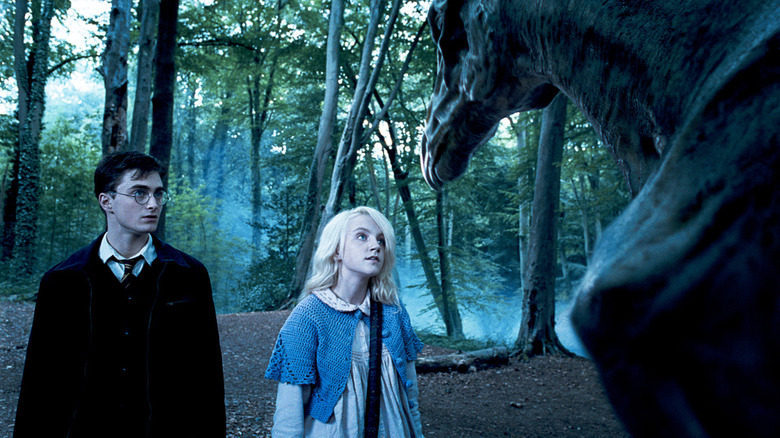
It's already intense to essentially greet a bunch of 11-year-olds with a seconds-long moment that will determine the course of their entire life — this, of course, describes the Hogwarts sorting hat procedure — but it becomes practically draconian in context with Hogwarts' rules about houses. Not only are students absolutely not allowed in the common rooms of any house to which they do not belong without express permission from an authority figure, but they can't even utilize mixed-house seating in the Great Hall during breakfast or dinner (one assumes lunch is a compromise). School is meant to broaden horizons, not entrench children in one of four personality types for the rest of their life.
There's a difference between the fun of attempting to self-sort into a Hogwarts House and what actual Hogwarts students have to do, which is face the ramifications of a decision made by a magical object when they were fresh out of elementary school. Rowling's stories have shown time and again that house identity has a ton to do with what people think of others, even if its been decades since they've attended Hogwarts.
Slytherins, for example, are generally expected to be rotten, evil schemers. Whenever a character shows even a remote sign of cleverness, Ravenclaw is mentioned. Courage, etc, and so forth. It's not like it's easy to find alternatives. There are only seven magical schools in the world, according to Rowling's narrow canon, and the next closest to Hogwarts is Beauxbatons in France. This doesn't sound like a sustainable solution for the magical population.
Quidditch is potentially deadly
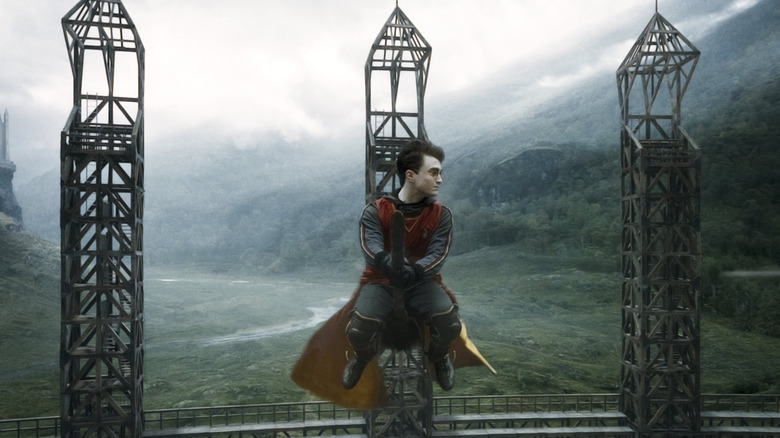
In the "Harry Potter" movie franchise, only one person wears a helmet during Quidditch, and it's Ron Weasley (Rupert Grint). The helmet is meant to appear dorky (and is described to some extent as such in the books), yet Ron is the only player who has a chance of avoiding a concussion.
Throughout his time at Hogwarts, Harry plays Quidditch as the seeker for the Gryffindor House team. In his first game, all three of Gryffindor's chasers are aggressively immobilized by the Slytherin team. Wood (Sean Biggerstaff), the Gryffindor keeper, takes a beater to the gut and falls about 40 feet into a thin layer of sand over gravel. Harry — after narrowly hanging on during an extended broom jinx from the insidious Professor Quirrell (Ian Hart) — trips over his Nimbus 2000, tumbles onto the ground, and nearly swallows the golden snitch.
Hermione states several times throughout the series that Quidditch is barbaric, and she's right. There are two whole people on every team — beaters — whose job it is to attack the other team's players with balls of iron called bludgers. And none of these people wear helmets.
The sport itself is wild, but it's ludicrous that a school — with potential players found in their preteen years — would allow students to play it with no adjustments. They don't even use safety bludgers. Surely there must be a way to magically accommodate a safer playing style for a group of minors. Hogwarts is not the World Cup. Maybe only adults familiar with Harry Potter notice how disturbingly violent Quidditch is, but it's more likely that kids choose to focus on the flying part. It's cool, but nothing about Hogwarts is safe.