

Audrey Hepburn Appeared In An '80s Steven Spielberg Movie That Everyone Forgot About
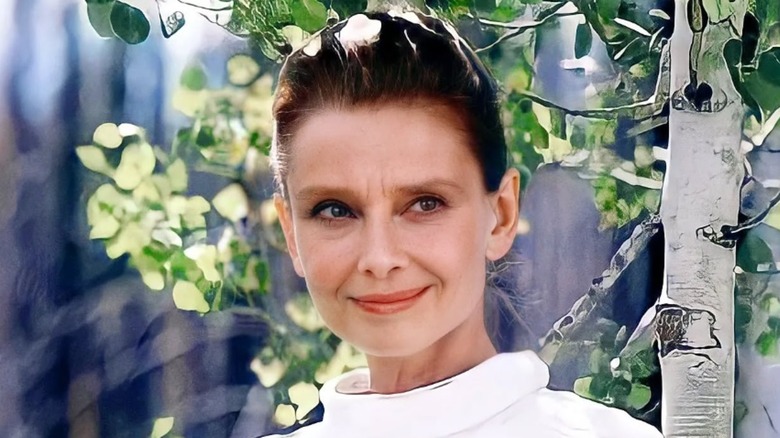
If you sit down to watch the 1989 saccharine romantic drama "Always" today, you'll understand why it's never mentioned when the best Steven Spielberg movies are discussed. Although its principal themes of love, friendship, and grief — alongside the visual flair that's characteristic of Spielberg's output — are permeated throughout the movie, they never stand out or come together in a potent way. The most memorable thing about "Always" is that it was Audrey Hepburn's last film before she died in 1993. The cinema icon appears as an Angel in two short scenes for a few minutes, which, sadly, don't feel anywhere near as meaningful as they were clearly meant to be.
In essence, "Always" is a vague time capsule of an era where romantic fantasies like "Ghost," "Three Wishes," and "Somewhere in Time" were still in fashion. Its commercial success at the time clearly underlines that, as the movie made over $74 million against an estimated budget of $31 million. But the syrupy charm that enticed audiences back then simply feels way too mawkish now, with this fairy tale between two lovers coming across as cringe-worthy today. Spielberg's feature was a product of its time, with an exaggerated expression of love and its complications, replete with heavy-handed tonal shifts that often couldn't find the balance between screwball comedy and melodrama.
A maudlin love story through Spielberg's eyes

One of the early signs that "Always" is a pretty old movie is that the exposition to establish the main (and quite uncomplicated) characters seems to go on forever. Granted, Steven Spielberg wrings as much suspense and sense of adventure out of Richard Dreyfuss' protagonist, Pete Sandich, as possible in the first half. Pete is an aerial firefighter, and a damn good one at that. But he probably loves his job a little more than he does his girlfriend, Dorinda Durston (a fierce Holly Hunter). As a pilot and air traffic controller, she's well aware of the risks and dangers her boyfriend has to take, but she also knows that Pete is a little too reckless.
Landing after doing one of his crazy moves to put out a fire, Dorinda doesn't hold back in telling him how she feels about his foolhardiness. But she also loves Pete too much to be mad at him for long, especially when he charms his way into her arms despite their many ongoing squabbles. It takes about 40 minutes until the story really begins when Pete is called in on his day off to help put out a raging fire alongside his best buddy, Al (John Goodman), and he suddenly dies while saving his life.
As you may have already guessed, Pete returns as a spirit, tasked with being the guardian angel of a young, aspiring pilot called Ted (Brad Johnson) — who happens to be the next guy Dorinda falls for while trying to process and move on from losing Pete. Unfortunately, "Always" never utilizes this proven formula to do anything remotely interesting. In fact, Jerry Belson's screenplay (which is based on a World War II movie from the 1940s called "A Guy Named Joe") flunks many of the humorous and moving aspects of the story.
Always became forgotten for a reason
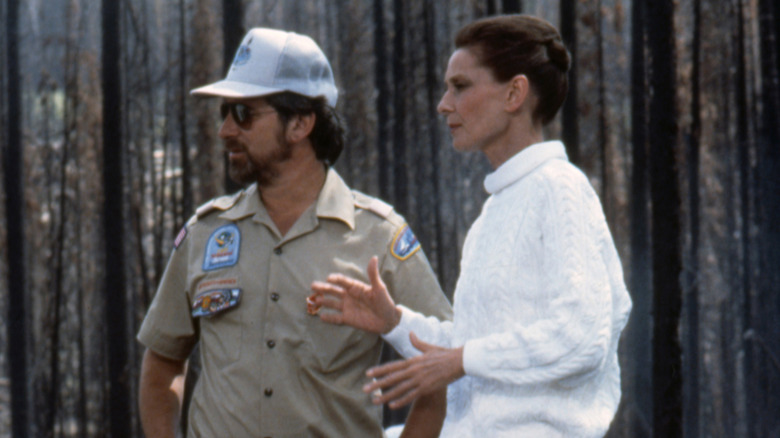
Despite Steven Spielberg doing as much of his cinematic magic as the story allows — the aerial sequences are legitimately thrilling — his touch isn't enough to counterbalance everything that's wrong with "Always," and that includes the recurring hamming from the cast. For a while, you can pardon Richard Dreyfuss and Holly Hunter's exaggerated and overacted love quarrels on account of their very nature, but there comes a point when the crocodile tears and harsh emotional outbursts can't be read as anything other than poor acting.
John Goodman has his silly and humorous moments as the comic relief/supportive friend (which are easily the highlights of "Always"), but even he makes some rather odd choices when it comes to conveying the heaviness of losing his best friend. Make no mistake, the performances here aren't utter garbage (after all, we're talking about seasoned and accomplished actors), but they're far from Oscar-worthy. And that includes Brad Johnson, who's practically an empty puppet as Dorinda's new beau, existing entirely in service of the plot rather than as a character viewers can relate to.
Overall, the entire approach and structure of "Always" (from its story to its humor to its characters) feels tired and outdated. There are some appealing sparks here and there — Dreyfuss' comedic and occasionally moving commentary as a ghost trapped in his worst nightmare, for example — which make the movie passable in brief moments, but they never last long enough to make the story as effective and sweet as it could have been. Viewers hungry for a romantic and poignant fantasy are better off rewatching Patrick Swayze and Demi Moore's crowd-pleaser "Ghost."