

Hugo Hercules: The First Superhero Explained
If we're honest, being a superhero fan can sometimes feel like working a full time job. You've got to track hundreds of interconnected storylines, remember countless deaths and rebirths, and understand the intricacies of a multiverse. You could spend dozens of hours studying up and barely scratch the surface of the lore that a single comic book publisher has put together.
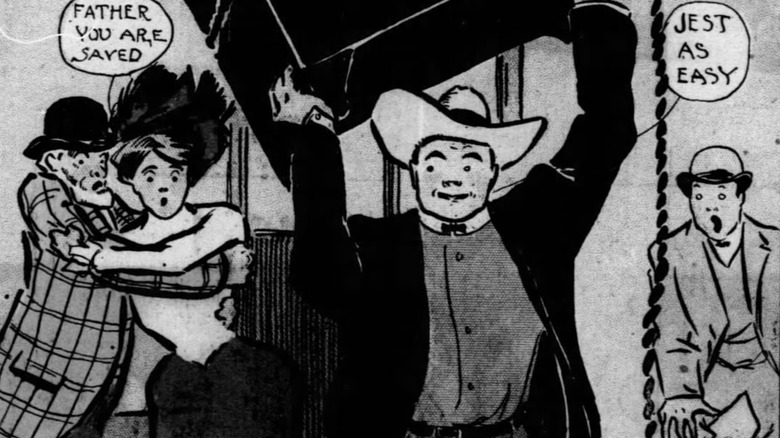
Believe it or not, superheroes weren't always this complicated. Before Marvel and DC were dreamed up, the world's first superhero came with an extremely straightforward sales pitch: He's a guy who can lift really heavy things. Meet Hugo Hercules, the first superhero in comics. Artist Wilhelm Heinrich Detlev Körner began publishing stories about Hugo in the pages of the Chicago Tribune on September 7, 1902. The newspaper continued publishing small comic strips about his adventures for five months.
Unlike modern heroes, Hugo doesn't have an epic origin tale, and he never battles any powerful comic book supervillains. Instead he uses his super strength to help ordinary people solve fairly mundane problems, and in 1902 that was enough. At that time, the idea of a character with a super power was the freshest thing in comics, and though Hugo himself didn't stick around for very long, the down-to-earth hero helped pave the way for the mega-sized comic book universes that we know and love today.
Whatever happened to Hugo Hercules?
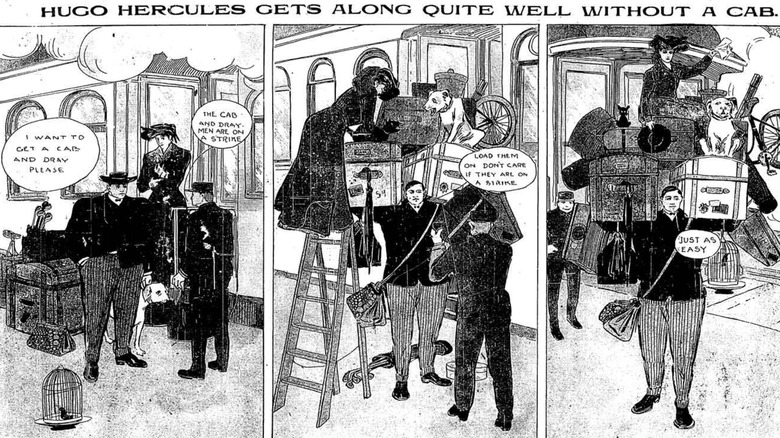
In his handful of comic strip appearances, Hugo Hercules used his super strength to rescue derailed trains, catch families falling from buildings, and even aid firetrucks in getting to their destination. Hugo's feats of strength kicked off the superhero tradition, and he also started another comic hero staple: catch phrases. "Just as easy" was one of Hugo's go-to phrases, and another of his slogans sounds awfully like something Captain America in the Marvel Cinematic Universe might say: "I could do this forever."
Forever wasn't in the cards for Hugo, though. His creator Wilhelm Heinrich Detlev Körner gave up on the hero after just five months. When The Saturday Evening Post commissioned drawings of the Western frontier, Körner's artistic interests shifted. Körner stopped drawing Hugo and became famous for his frontier paintings, some of which have ended up in the White House.
The uniqueness of Hugo as a character made a big impression in the comic strip world, however, and superheroes began popping up all over the place. Decades after Hugo debuted, "Detective Comics" began its legendary run, and modern-day superheroes began to make their first appearances. The year that Körner died was also the year that the very first issue of "Action Comics" was published. The rest is history.