

Jason Momoa Gets Emotional Speaking About Almost Losing Emilia Clarke
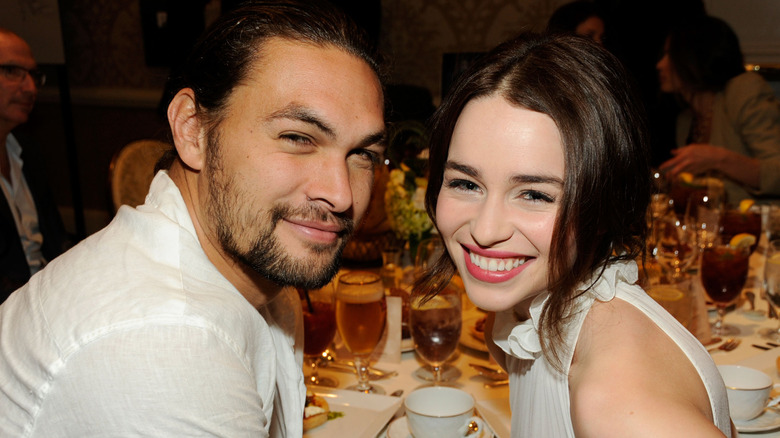
Nothing can break the bond between one of the most memorable couples in "Game of Thrones." Jason Momoa, who played Khal Drogo on the first season of the fantasy drama, got emotional when discussing his on-screen wife Emilia Clarke's health battle that almost took her life — twice. The Daenerys Targaryen actress revealed in 2019 that she had previously suffered two brain aneurysms, the first of which came in 2011, just as "Game of Thrones" was taking off.
Speaking with ET at the "Game of Thrones" Season 8 premiere in April 2019, Momoa, whose Khal Drogo was married to Daenerys prior to his death, praised Clarke's courage and tenacity during the hardest time in her life.
"I've kind of been a part of that whole situation for a very long time, so we've had so many scares and trying to find the right way to come out and help. I'm very sad, because we almost lost her the first time," he said. "So, I love her to bits and she's here and she's going to do great things with it and teach the world. I just think it's beautiful that... she's so brave in helping the world and trying to raise awareness."
Emilia Clarke detailed her agonizing experience in print
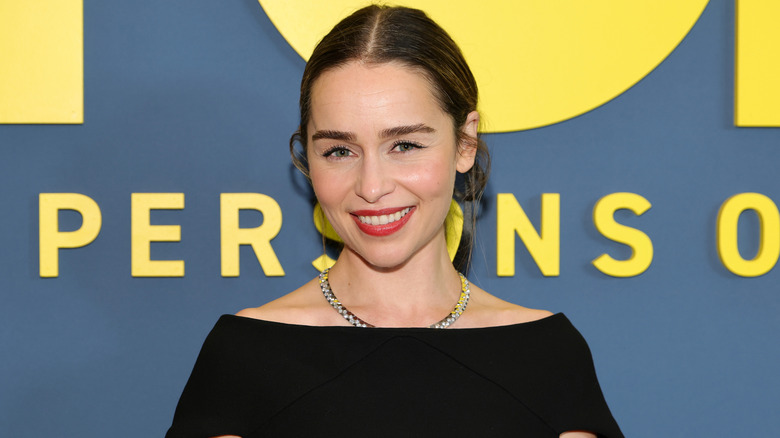
In March of 2019, Emilia Clarke penned a moving essay for The New Yorker in which she detailed that she had experienced a brain aneurysm at the age of 24, and then was stuck with a brain bleed two years later while doctors attempted to reduce the size of the original aneurysm.
"Just when all my childhood dreams seemed to have come true, I nearly lost my mind and then my life," wrote Clarke. "The diagnosis was quick and ominous: a subarachnoid hemorrhage (SAH), a life-threatening type of stroke, caused by bleeding into the space surrounding the brain. I'd had an aneurysm, an arterial rupture. As I later learned, about a third of SAH patients die immediately or soon thereafter."
The actress opened up about the "minimally invasive" emergency three-hour surgery she underwent to seal off the aneurysm, as well as the aphasia (loss of ability to understand and/or express speech) and constricted vision she experienced afterward. Clarke then detailed the second operation required to "take care of" the expanding growth in her brain — plus the subsequent surgery needed when that operation failed and left her with a "massive bleed."
Of her second and third surgeries, she said, "The recovery was even more painful than it had been after the first surgery. I looked as though I had been through a war more gruesome than any that Daenerys experienced ... And there was, above all, the constant worry about cognitive or sensory losses. Would it be concentration? Memory? Peripheral vision? Now I tell people that what it robbed me of is good taste in men."
Emilia Clarke kept working through her ordeal
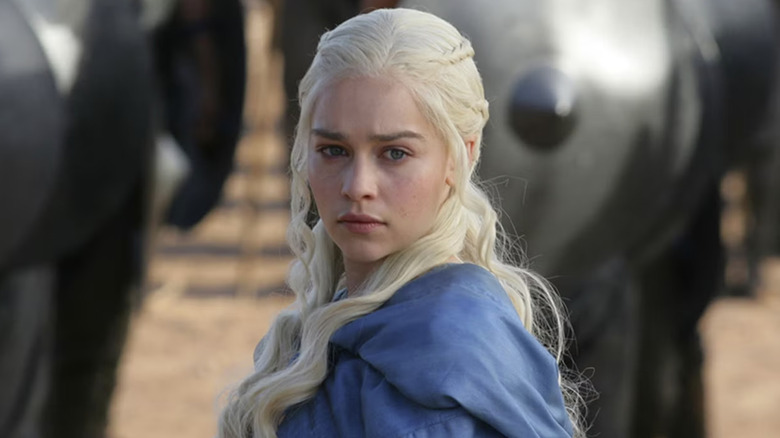
In the midst of all this hardship and double-brush with death, Emilia Clarke was actively filming "Game of Thrones," as well as rehearsing for the 2013 Broadway rendition of "Breakfast at Tiffany's." Though she kept her composure, told virtually no one about what she had been through, and even denied the genuinely accurate reports that she had experienced life-threatening trauma, Clarke was overwhelmed with exhaustion and anxiety.
"On the first day of shooting for ['Game of Thrones'] Season 2, in Dubrovnik ... I barely made it back to the hotel before I collapsed of exhaustion," wrote Clarke. "If I am truly being honest, every minute of every day I thought I was going to die. There was terrible anxiety, panic attacks. I was raised never to say, 'It's not fair'; I was taught to remember that there is always someone who is worse off than you. But, going through this experience for the second time, all hope receded. I felt like a shell of myself."
But, like the fireproof Mother of Dragons she played, Clarke was resilient and determined, and came out on the other side with a renewed sense of hope and purpose. After bravely sharing her story with the public, Clarke announced that she had partnered with executives in the United States and the United Kingdom to develop a charity called SameYou, which works to provide additional and more immediate rehabilitation options for young people who have suffered brain injuries, as well as to fund research, advocate for policy change, and "facilitate innovations in specialist nurse training."